If you need more carrying room in a 2023–2026 Honda CR-V, this Roof CR-V Roof Rack Crossbars review examines a drill-free aluminum setup for luggage, bikes, kayaks, and cargo boxes.
The listing emphasizes factory-rail compatibility, a 300-pound evenly distributed capacity, and a low-profile aerodynamic shape.
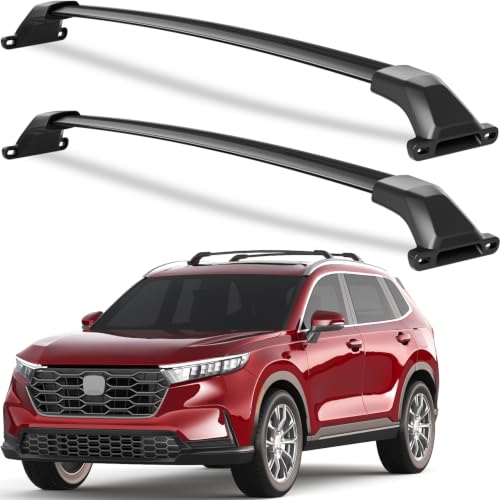
Table of Contents
- CR-V Roof Rack Crossbars Review Summary
- Key Features and Specifications of CR-V Roof Rack Crossbars
- Pros and Cons of CR-V Roof Rack Crossbars
- Who Should Buy CR-V Roof Rack Crossbars?
- How the CR-V Roof Rack Crossbars Fit Real-World Travel
- Alternatives to CR-V Roof Rack Crossbars
- Is CR-V Roof Rack Crossbars Worth It?
CR-V Roof Rack Crossbars Review Summary
The Roof CR-V Roof Rack Crossbars are aimed at Honda CR-V owners who already have factory side roof rails and want a flexible platform for trips, camping, and everyday hauling.
Their strongest case is versatility: one pair of crossbars can support several kinds of rooftop equipment while preserving cabin space for passengers and soft luggage.
Buy them if your CR-V matches the stated model and rail configuration and you want a broad-use rack with an all-metal aluminum construction.
The available product evidence comes from the manufacturer’s listing rather than hands-on testing, so the scores below are editorial assessments of the stated design and included equipment—not laboratory measurements.
Review Scorecard
| Category | Score | Buyer assessment |
|---|---|---|
| Vehicle compatibility | 9/10 | Covers multiple 2023–2026 CR-V trims when factory side rails are present; verification is still essential. |
| Load capacity | 9/10 | The stated 300 lb (136 kg) rating is substantial when weight is evenly distributed. |
| Cargo versatility | 9/10 | Intended for boxes, baskets, luggage, bikes, kayaks, canoes, skis, and snowboards. |
| Construction | 8/10 | High-strength, aircraft-grade aluminum and stainless-steel hardware offer a sensible durability profile. |
| Aerodynamics | 8/10 | Wing-shaped, low-profile bars are designed to reduce drag and highway wind noise. |
| Installation | 8/10 | Drill-free mounting, labeled components, tools, spare parts, and instructions simplify the job. |
| Ownership support | 8/10 | The listing includes a 24-month warranty and responsive customer-support promise. |
In short, this is a practical accessory for expanding the CR-V’s usable capacity.
The main buying risk is not the feature list; it is fitment.
A rack that is excellent for a compatible factory-rail model is the wrong purchase for a vehicle without those rails or with a different roof arrangement.
Key Features and Specifications of CR-V Roof Rack Crossbars
Compatibility comes first
The listing identifies compatibility with 2023, 2024, 2025, and 2026 Honda CR-V models, including LX, EX, Sport Hybrid, EX-L, Sport Touring Hybrid, Hybrid Sport, and Hybrid Sport Touring versions.
The important condition is that the vehicle must have factory side roof rails.
Check the year, make, model, trim, and actual rail configuration before ordering. Trim names can vary by market or model year, and the presence of side rails is a decisive fitment detail.
Aluminum structure with a high stated capacity
The crossbars use high-strength aluminum, while the mounting feet are described as upgraded 19.1 mm thick aluminum.
The advertised maximum is 300 pounds, or 136 kilograms, of evenly distributed weight.
That number is useful as a headline capacity, but buyers should treat it as a system limit rather than an invitation to load the roof indiscriminately.
The vehicle, factory rails, attached carrier, and carrier instructions may each impose their own limits.
Always use the lowest applicable limit and distribute cargo carefully.
The powder-coated aluminum construction is intended to resist rust, corrosion, and fading.
That makes the material choice attractive for owners who expect exposure to rain, road spray, camping conditions, or winter weather.
Aluminum also keeps the bars relatively lightweight compared with a steel design, although the evidence does not provide a total package weight.
A broad range of uses
The product is designed to carry more than a rooftop box.
The listing specifically names luggage, cargo boxes, baskets, bikes, kayaks, canoes, skis, and snowboards.
This makes the pair particularly interesting for households whose needs change by season: a box for family travel, a bike carrier for weekends, or water-sport equipment for summer outings.
Crossbars are also a useful space-management upgrade.
Bulky, dirty, or awkward equipment can move outside the passenger compartment, leaving the CR-V’s interior more comfortable.
The bars themselves are a foundation, however; many activities require a compatible carrier or attachment.
Buyers should confirm that their chosen accessory fits the bar profile and mounting hardware.
Low-profile wing design
The low-profile aerodynamic wing shape is intended to reduce wind noise and drag at highway speeds.
That is a meaningful design goal for a rack that may stay on the vehicle between trips.
A lower-profile bar can also look less obtrusive than a tall, boxy crossbar, though the actual noise level will depend on vehicle shape, load, carrier accessories, installation, and driving conditions.
What arrives in the package
The package is described as containing two crossbars, four mounting bases, stainless-steel hardware, installation tools, spare parts, and an instruction manual.
This is a reasonably complete kit for the stated drill-free installation method.
Clearly labeled components and instructions should help reduce confusion during assembly, while spare parts are a useful inclusion if a small piece is misplaced.
Pros and Cons of CR-V Roof Rack Crossbars
Pros
- High advertised capacity: The 300-pound evenly distributed rating gives buyers room for substantial rooftop equipment, subject to all vehicle and accessory limits.
- Useful across seasons: The design supports luggage, boxes, baskets, bikes, kayaks, canoes, skis, and snowboards.
- All-metal aluminum construction: High-strength, aircraft-grade aluminum and powder coating target a balance of low weight and weather resistance.
- Drill-free installation: The bars mount to factory side rails, with tools and labeled hardware included.
- Highway-minded shape: The low-profile wing design is intended to limit drag and wind noise.
- Warranty included: A stated 24-month warranty and customer support add reassurance for fitment or replacement-part questions.
Cons
- Strict fitment requirement: These are not a universal solution; the CR-V must have the specified factory side rails.
- No vehicle-specific load context: The product’s 300-pound rating may exceed the safe limit of a particular vehicle or carrier, so buyers must check every applicable specification.
- Accessory required for specialized cargo: The bars are a base system, not a complete kayak, bike, ski, or cargo-box solution.
- No hands-on noise or durability result: The evidence describes intended performance, but it does not confirm real-world sound levels, installation time, or long-term wear.
Who Should Buy CR-V Roof Rack Crossbars?
These crossbars make the most sense for 2023–2026 Honda CR-V owners with factory side rails who regularly travel with more gear than the cabin can comfortably hold.
Families taking road trips can use the roof for luggage or a cargo box.
Campers and outdoor enthusiasts can create room for kayaks, bikes, skis, or snowboards, provided they add the correct carrier and stay within the real vehicle limit.
They are also a good fit for an owner who prefers a removable, drill-free upgrade rather than a permanent modification.
The included tools, spare parts, and instructions support a do-it-yourself installation approach, while the low-profile design is appealing to buyers who care about a quieter, less conspicuous rack.
Skip this model if your CR-V lacks factory side rails, if your vehicle is outside the listed model years, or if you cannot verify the trim and roof configuration.
It is also worth pausing if you need a complete cargo solution immediately: these crossbars provide the base, but specialized loads need compatible attachments.
Finally, buyers hauling unusually heavy equipment should compare the 300-pound product claim with the CR-V roof limit and the ratings of every accessory involved.
How the CR-V Roof Rack Crossbars Fit Real-World Travel
Road-trip packing
For family travel, the crossbars can move luggage or a rooftop cargo box outside the cabin, helping preserve passenger and legroom.
The value is greatest when the extra capacity is used thoughtfully: keep weight evenly distributed, secure every item, and follow the carrier and vehicle limits.
Outdoor equipment flexibility
The stated compatibility with bikes, kayaks, canoes, skis, and snowboards gives the rack a wider role than a luggage-only system.
Owners who participate in different activities may get more use from one crossbar foundation than from a single-purpose solution, but each activity still requires a suitable attachment.
Weather and maintenance considerations
Powder-coated aluminum and stainless-steel hardware are sensible choices for outdoor exposure, with the listing claiming resistance to rust, corrosion, and fading.
That does not eliminate the need for normal care.
Inspect fasteners, mounting points, and accessories periodically, especially after bad weather or transporting large loads.
Installation and fitment check
The drill-free design should keep installation approachable, but “easy” is conditional on correct fitment and careful assembly.
Read the instructions before mounting, identify the labeled components, and verify that the bars sit correctly on the factory rails.
A careful initial setup matters more than rushing to get the rack on the roof.
Alternatives to CR-V Roof Rack Crossbars
If this system does not match your roof or your planned use, consider these credible Amazon-available alternatives and compare their exact fitment before buying:
- Thule WingBar Evo: A well-known aerodynamic crossbar line for buyers prioritizing an established modular roof-rack ecosystem.
- Yakima JetStream: An aluminum aerodynamic option worth considering when Yakima accessories or installation hardware better suit your setup.
- Rhino-Rack Vortex: A broad crossbar family for shoppers comparing bar profiles, mounting systems, and outdoor-carry accessories.
- CURT roof rack cross bars: A practical brand-led search option for comparing CR-V-compatible equipment and bundled hardware.
Is CR-V Roof Rack Crossbars Worth It?
So, is Roof CR-V Roof Rack Crossbars worth it?
For a compatible 2023–2026 Honda CR-V with factory side rails, it is a compelling utility upgrade when you need flexible rooftop capacity without drilling. The combination of a stated 300-pound evenly distributed capacity, aluminum construction, low-profile wing design, broad equipment compatibility, included installation kit, and 24-month warranty covers the major buyer priorities.
The decision depends on verification and expectations.
This is a crossbar foundation, not a complete carrier for every activity, and the product rating cannot override the vehicle’s own roof limit.
If your CR-V matches the required configuration and you will use the bars for road trips, camping, or outdoor gear, the feature set supports a confident purchase.
If fitment is uncertain, resolve that question first; otherwise, choose a model-specific alternative.