The Oil Extractor Pump 12V 80W review focuses on a simple maintenance goal: removing used oil through the dipstick tube instead of opening a drain plug.
This compact electric fluid transfer pump suits DIY owners who want a cleaner topsider oil change for compatible vehicles and equipment.
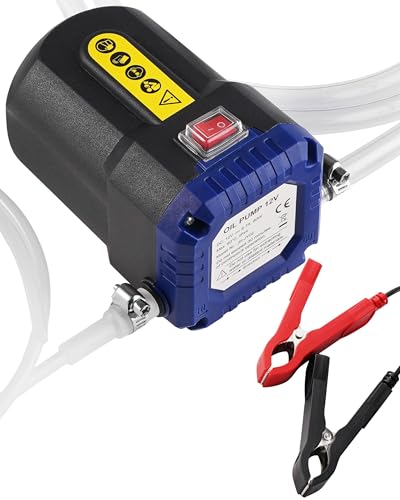
Table of Contents
Oil Extractor Pump Review Summary
The Oil Extractor Pump 12V 80W is worth considering for DIY oil changes when access through the dipstick tube is more convenient than getting beneath a vehicle.
Its 12V DC power, built-in switch, copper motor, and stated overload protection make it a practical category choice for motor oil, gear oil, and transmission fluid.
The strongest fit is a car, motorcycle, lawn mower, boat, or Jet Ski owner who already understands the correct extraction procedure and wants to reduce spills and cleanup.
It is not a universal fluid pump: the listing specifically excludes gasoline, diesel, and water.
Review Scorecard
| Category | Editorial score | Buyer-focused rationale |
|---|---|---|
| Topsider oil-change usefulness | 9/10 | Removes old oil through the engine dipstick tube, avoiding drain-plug access. |
| Power and portability | 8/10 | Uses widely practical 12V DC power in an 80W format. |
| Fluid compatibility | 7/10 | Supports motor, gear, and transmission oil, but excludes gasoline, diesel, and water. |
| Spill-control design | 8/10 | The built-in switch includes a stated emergency-stop function for hose slip-offs or overfilling. |
| Protection features | 8/10 | Overcurrent protection is described as shutting the pump off when foreign objects are detected. |
| Flow expectations | 6/10 | The listed rate is up to 0.5 L/min of motor oil, so it is aimed at controlled DIY service rather than speed. |
This is an editorial assessment based on the supplied listing information, not a laboratory test.
The key question behind “is Oil Extractor Pump 12V 80W worth it?” is whether you value easier access and cleaner handling more than maximum pumping speed or broad fluid compatibility.
Key Features and Specifications of Oil Extractor Pump
The defining feature is the topsider design.
Rather than relying on a drain plug, the pump is intended to draw old oil through an engine’s dipstick tube.
That can make routine maintenance less awkward, especially where a vehicle is parked on a driveway or where crawling underneath is undesirable.
It also reduces the need to wait for slow draining and eliminates manual pumping.
The pump runs on 12V DC and uses an 80W motor.
The listing describes a copper motor intended to provide fast, stable suction.
The stated pumping capacity is up to 0.5 L/min of motor oil.
That number is best understood as a maximum listing specification rather than a promise for every oil temperature, hose arrangement, or engine.
Oil viscosity and the extraction setup can affect real-world results.
The built-in power switch is more useful than a basic on/off convenience.
The listing describes a one-touch emergency stop intended to help prevent spills if a hose slips off or a container begins to overfill.
It also says the design helps avoid accidental start-ups and reduces plug-in arcing, with the stated goal of extending motor life.
Those are sensible details for a pump used around slippery fluids, although careful supervision remains necessary.
Another advertised safeguard is upgraded overcurrent protection.
According to the supplied product information, the pump powers off if foreign objects are detected.
That may help protect the motor during an obstruction, but it does not remove the need to keep the intake path clean and positioned correctly.
The supported applications are broad within the oil category.
The listing names motor oil, gear oil, and transmission fluid, and identifies cars, motorcycles, lawn mowers, boats, and Jet Skis as intended uses.
The exclusions matter just as much: this pump is not for gasoline, diesel, or water.
Buyers should treat those limitations as firm selection criteria rather than minor caveats.
Pros and Cons of Oil Extractor Pump
Pros
- Cleaner access for routine oil changes: Extraction through the dipstick tube can avoid drain-plug work, under-car access, and slow dripping.
- Useful 12V format: The 12V DC design is appropriate for many vehicle and equipment maintenance situations.
- Multiple oil applications: Motor oil, gear oil, and transmission fluid are listed uses across cars, motorcycles, mowers, boats, and Jet Skis.
- Helpful control features: A built-in switch and stated emergency-stop function give the operator a direct way to stop the pump.
- Motor protection: The listing includes overcurrent protection that shuts down when foreign objects are detected.
Cons
- Limited fluid range: It is explicitly not for gasoline, diesel, or water, so it cannot serve as a general-purpose transfer pump.
- Moderate stated flow: Up to 0.5 L/min of motor oil favors controlled extraction over rapid service.
- Technique still matters: The pump depends on proper dipstick-tube placement, suitable collection setup, and supervision to avoid hose slips or overfilling.
- No supplied detailed specs: The provided record does not include hose dimensions, cable length, noise information, or a duty-cycle recommendation, making fit harder to judge before purchase.
Who Should Buy Oil Extractor Pump?
This pump is a good match for a DIY vehicle owner who prefers topsider oil changes and wants to keep the job above ground.
It is especially relevant for cars, motorcycles, lawn mowers, boats, and Jet Skis named in the listing.
Owners who perform maintenance on more than one of those categories may also appreciate the ability to handle motor, gear, and transmission oil with one dedicated oil-transfer tool.
The 12V requirement makes it most suitable for a setup with an appropriate DC power source.
The built-in switch is useful for anyone who wants closer control during filling and emptying, while the stated overcurrent protection adds reassurance around possible obstructions.
Still, neither feature replaces monitoring the collection container and checking that the hose remains secure.
Skip it if you need to move gasoline, diesel, or water, or if you expect a high-speed commercial extraction tool.
Buyers who require exact hose dimensions, a long lead, or a defined continuous-duty rating should confirm those details before ordering because they are not supplied in the available product evidence.
It is also a poor fit for someone who wants a completely hands-off process; extraction still calls for correct positioning and attention to capacity.
How the Oil Extractor Pump Works for DIY Maintenance
Dipstick-tube extraction
The pump’s main advantage is access.
Inserted through the engine dipstick tube, the intake path is intended to remove old oil without opening the drain plug.
That can simplify a driveway or garage oil change where underbody access is inconvenient.
Matching the fluid
The product is designed around oil transfer, not unrestricted liquid handling.
Motor oil, gear oil, and transmission fluid are named applications, while gasoline, diesel, and water are excluded.
Choosing the pump makes sense only when the fluid in your maintenance plan stays within that boundary.
Managing flow and overflow
The stated maximum is up to 0.5 L/min of motor oil, which suggests a measured process.
The emergency-stop switch is intended to help if a hose slips or the container nears overfilling, but the operator should still watch the hose and collection vessel throughout the job.
Protection against interruption
The listing’s overcurrent protection is designed to shut the pump down when foreign objects are detected.
That is a useful protective layer for a small motor, though clean hose routing and a clear intake remain part of responsible operation.
Alternatives to Oil Extractor Pump
The best alternative depends on whether you want a different power arrangement, a more established brand, or a different extraction style.
These options are reasonable comparison points to investigate on Amazon, but their specifications and compatibility should be checked against your vehicle and fluid requirements.
- Mityvac fluid extractor is a recognizable comparison for buyers who want a dedicated fluid-extraction line and are willing to compare manual or powered configurations.
- TOPSIDE oil extractor pump is a useful search category for shoppers focused specifically on dipstick-tube oil changes.
- Electric oil extractor pump 12V lets buyers compare other 12V designs, stated flow rates, switches, and included accessories.
- Pela oil extractor is another established-style comparison for topsider extraction, particularly for buyers evaluating manual vacuum-based approaches.
Is Oil Extractor Pump Worth It?
The Oil Extractor Pump 12V 80W is a focused tool with a clear use case.
Its 12V DC, 80W motor, dipstick-tube extraction method, built-in stop switch, and stated overcurrent protection address the main annoyances of DIY topsider oil changes.
The listed support for motor, gear, and transmission oil also gives it useful range across common vehicle and equipment maintenance.
The decision is less favorable if you need to pump fuel or water, expect fast commercial-grade throughput, or require specifications that are not provided here.
For the right buyer, though, the combination of cleaner access and straightforward control makes this a sensible option.
Buy it if your maintenance involves compatible oils and you want a dedicated, above-ground extraction method; skip it if your fluid needs fall outside those limits.