If you need a backup camera for a trailer, truck, RV, or hitching job without drilling and permanent wiring, this Magnetic Solar Wireless Backup Camera review examines the AP7’s practical strengths and limitations.
Its strongest appeal is a removable magnetic camera with solar and USB-C charging, paired with a 7-inch 1080P monitor and DVR.
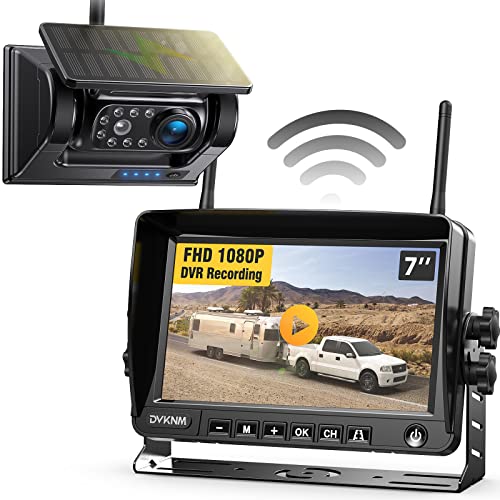
Table of Contents
Magnetic AP7 Review Summary
The Magnetic AP7 is designed for buyers who want extra rear visibility without committing to a conventional wired installation.
The camera attaches to a metal vehicle surface, while the monitor displays the feed on a 7-inch full-HD IPS panel.
That combination suits people who move one camera between vehicles, trailers, or different mounting positions, especially when drilling and routing cable are undesirable.
The listing describes a rechargeable 9,600 mAh camera battery, solar charging while driving in sunny weather, Type-C charging, infrared night vision, IP69 waterproofing, and a claimed unobstructed transmission range of up to 328 feet.
It also includes DVR loop recording with automatic overwriting and impact-protected footage.
This is a feature-rich solution for temporary or flexible trailer-camera use, but buyers should have a suitable metal mounting surface and realistic expectations about wireless conditions.
Review Scorecard
| Category | Score | Editorial assessment |
|---|---|---|
| Installation flexibility | 9/10 | Magnetic mounting and plug-and-play operation avoid drilling and vehicle wiring. |
| Trailer and hitch visibility | 8/10 | A dedicated 7-inch monitor and rear camera are well suited to hitching and reversing. |
| Image presentation | 8/10 | The listing specifies a 1080P CMOS sensor and full-HD IPS display. |
| Power convenience | 8/10 | Solar and Type-C charging give the rechargeable camera two power options. |
| Weather protection | 8/10 | The manufacturer describes IP69 waterproofing using a commercial-grade potting process. |
| Recording usefulness | 8/10 | Loop recording refreshes storage, while impact protection is intended to preserve important clips. |
| Wireless confidence | 7/10 | A signal booster and long antenna are promising, though actual performance depends on obstacles and vehicle layout. |
Key Features and Specifications of Magnetic AP7
The Magnetic AP7’s design centers on portability.
Instead of permanently installing a camera into a bumper or drilling through a trailer, you place its magnetic base on a metal surface.
The listing says the base is strong enough to remain attached while the vehicle is moving, and the camera can be removed and repositioned as needed.
That makes the system particularly interesting for trailers and tow vehicles that do not justify a dedicated wired camera installation.
The monitor is a 7-inch full-HD IPS panel.
A larger display can be easier to reference while hitching than a small dashboard screen, and the IPS specification is intended to provide a clear, color-capable image.
The camera uses a 1080P CMOS image sensor.
These are listing specifications rather than independent test results, so the final view will still depend on lighting, camera placement, and the condition of the wireless connection.
Power is handled through a rechargeable camera battery rated at 9,600 mAh.
The camera supports solar charging and Type-C charging.
Solar charging is most useful as a maintenance feature during sunny travel; it should not be treated as a guarantee that the camera will remain fully charged in every season, parking position, or weather condition.
Type-C charging provides a more predictable way to top it up before a trip.
For low-light use, the listing includes nine infrared night-vision LEDs and says the camera can show a view in total darkness.
That feature is valuable when backing into a campsite, loading area, or trailer space after sunset.
As with any infrared camera, the usefulness of the image will depend on the scene, distance, and reflective surfaces around the vehicle.
The housing is described as IP69 waterproof, with the manufacturer attributing its durability to a commercial-grade potting process.
That is an important specification for an exterior camera exposed to road spray and changing weather.
Still, the magnetic connection itself requires a suitable metal surface, and buyers should consider whether the chosen location is clean, flat enough, and positioned to provide the desired field of view.
Wireless range is listed as up to 328 feet without obstacles.
The system includes a built-in signal booster receiver and a long antenna intended to improve reception.
The claimed range is useful context for large RVs, horse trailers, and fifth wheels, but real-world wireless performance can change with trailer construction, obstructions, electromagnetic interference, and the relative positions of the camera, receiver, and monitor.
Finally, the AP7 includes DVR loop recording.
Older footage is automatically overwritten to keep storage refreshed, while the listing says the system automatically protects a video segment after an accident or impact.
Recorded footage is stored on a memory card inserted by the buyer, so storage capacity and card compatibility should be confirmed before purchase.
Pros and Cons of Magnetic AP7
Pros
- No-drill, no-wire installation: The magnetic camera and plug-and-play monitor reduce the work normally associated with a trailer camera.
- Flexible power options: Solar charging can help during sunny travel, while Type-C charging offers a direct backup.
- Useful display size: The 7-inch full-HD IPS monitor is designed for a clear, dedicated rear view.
- Built for exterior use: The listing specifies IP69 waterproofing and a durable potting process.
- Safety-oriented recording: DVR loop recording and impact-protected clips add value beyond live viewing.
- Night visibility: Nine infrared LEDs are included for dark conditions.
Cons
- Magnetic mounting is surface-dependent: It needs a suitable metal location, so it is not equally convenient for every vehicle or trailer body.
- Solar charging is weather-dependent: Cloud, shade, storage position, and seasonal daylight can limit its benefit.
- Wireless range is a claim, not a guarantee: The advertised distance is for an unobstructed environment, not every trailer configuration.
- Memory card is part of the ownership decision: Recorded video requires buyer-supplied storage.
- Not an independent installation review: The available evidence comes from the product listing, not hands-on testing.
Who Should Buy Magnetic AP7?
The AP7 is a strong match for RV owners, fifth-wheel users, horse-trailer owners, gooseneck operators, and truck drivers who want a removable rear camera.
It is also a sensible option for people who tow different loads and want to reposition a camera instead of installing a separate system on each one.
Hitching, reversing, and checking a trailer behind a larger vehicle are the clearest use cases.
It should also appeal to buyers who value recorded footage.
The DVR can continuously refresh storage through loop recording, while the stated impact-protection feature is intended to keep important segments from being overwritten.
Skip it if you need a fully concealed, permanently wired camera, have no suitable metal mounting surface, or require a wireless system whose performance is guaranteed through a specific trailer construction.
Buyers who regularly park the vehicle in shade or rely on uninterrupted operation should also plan to use Type-C charging rather than depending on solar power alone.
How Magnetic AP7 Fits Trailer Camera Decisions
Removable versus permanent installation
The AP7’s central tradeoff is flexibility.
A magnetic camera can be attached, removed, and repositioned without drilling, which is convenient for occasional towing.
A permanently wired camera may be better for buyers who want an always-ready setup and do not expect to change vehicles or mounting positions.
Solar assistance versus direct charging
Solar charging reduces the need to remove the camera for every recharge, especially during sunny travel.
The Type-C input matters because it gives the owner a dependable charging alternative when the camera is parked indoors, shaded, or used during darker seasons.
Live view versus recorded evidence
Many backup cameras focus only on displaying the rear image.
The AP7 adds DVR loop recording and a stated impact-protection function, making it more useful when the buyer wants a record of what happened around the vehicle.
That extra capability also means remembering to install suitable memory-card storage.
Range versus vehicle layout
The advertised 328-foot unobstructed range and signal-booster receiver are encouraging for long trailers.
However, the practical question is how the camera, trailer, receiver, and monitor are arranged.
Buyers should treat the range figure as a best-case reference and prioritize antenna placement and a clear signal path.
Alternatives to Magnetic AP7
If you want a more permanent installation, compare the AUTO-VOX wired backup camera systems on Amazon.
They are worth considering when fixed wiring and a dedicated vehicle installation matter more than portability.
For a different wireless approach, browse Furrion backup camera systems.
These are a natural comparison for RV owners looking for trailer-oriented camera equipment and monitor combinations.
Buyers who want a dash-camera ecosystem with rear-camera options can also compare Garmin backup camera products.
Garmin is a useful alternative category when integration with other vehicle electronics is more important than a magnetic solar design.
For simpler, budget-oriented vehicle coverage, search wireless trailer backup camera systems and compare mounting, power, monitor size, and recording support carefully.
The key question is whether each option provides the removable installation and dual charging that define the AP7.
Is Magnetic AP7 Worth It?
The Magnetic AP7 is worth considering if your priority is a flexible trailer camera that avoids drilling and permanent wiring.
Its 7-inch 1080P monitor, magnetic base, rechargeable 9,600 mAh battery, solar and Type-C charging, infrared night vision, weather-resistant construction, and DVR recording form a practical feature set for RVs, trucks, and trailers.
Buy it if you have a suitable metal mounting surface and value portability, hitching visibility, and recorded footage. Choose a permanently wired system instead if you want a concealed installation or cannot rely on a stable magnetic position.
For the right towing setup, the AP7’s convenience is its main advantage—and the reason it can be a sensible alternative to a more involved camera installation.