The best rotary tools for home mechanics can handle far more than light crafting. With the right speed range, accessories, and control, one compact tool can help with deburring, polishing, sanding, cutting, grinding, and detail work around the garage.
This roundup compares 10 practical options, from established Dremel and Milwaukee models to high-value kits with flex shafts and extensive accessory assortments. Use the buying guide below to match your workspace, materials, and typical repairs to the right tool.
Table of Contents
- Best 10 Rotary Tools for Home Mechanics Picks for 2026
- Power & Control Pick – Dremel 4000-2/32 Rotary Tool
- Cordless Shop Pick – Milwaukee 12.0V Rotary Tool
- Full-Feature Kit – Dremel 4300-5/40 Rotary Tool
- Budget Flex-Shaft Pick – WEN 2305 Rotary Tool Kit
- Power Pick – HARDELL 180W Rotary Tool Kit
- Detail-Friendly Choice – WEN 23114 Variable Speed Rotary Tool
- Most Complete Kit – NEU MASTER 200W Rotary Tool
- Best All-Around Starter Kit – PHALANX 180W Rotary Tool Kit
- Best for Speed Range – 200W Rotary Tool with Keyless Chuck
- Best for Controlled Handling – DEKOPRO Rotary Tool Kit
- How We Picked the Best Rotary Tools for Home Mechanics
- Quick Comparison
- Key Buying Factors for Rotary Tools for Home Mechanics
- Who Should Buy Which Rotary Tools for Home Mechanics?
Best 10 Rotary Tools for Home Mechanics Picks for 2026
Power & Control Pick

- 1.6-amp motor with 5,000–35,000 RPM range
- Electronic speed control and ergonomic grip
- Includes two attachments and 32 accessories
Best For: Extended bench work and varied detail tasks
Cordless Shop Pick

- Cordless 12-volt design for portable work
- Lightweight 1.3-pound body with variable speed
- 1/8-inch collet and durability-focused construction
Best For: Portable repairs around vehicles and workshops
Full-Feature Kit
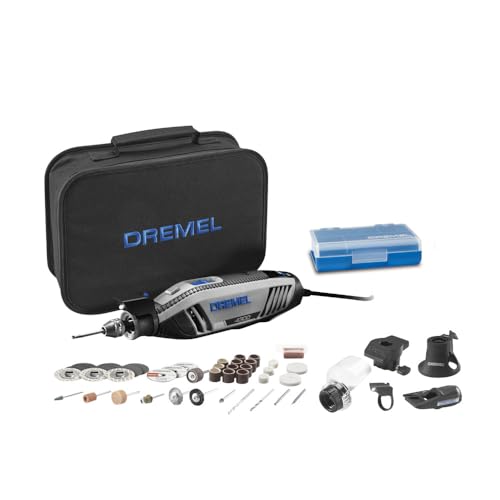
- 5,000–35,000 RPM with electronic feedback
- Universal three-jaw chuck and pivot light
- Five attachments, 40 accessories, and case
Best For: A broad, organized home workshop setup
Budget Flex-Shaft Pick
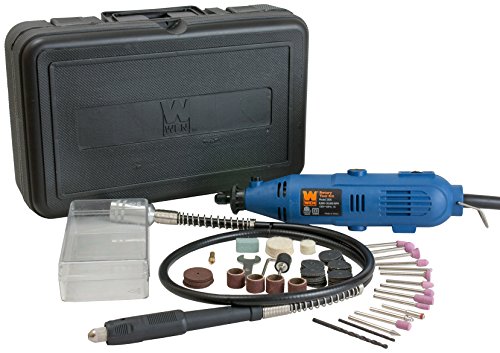
- 80-piece accessory set for varied tasks
- Included flex shaft for detail work
- 8,000–30,000 RPM and two collets
Best For: Entry-level users needing accessory variety and reach
Power Pick

- 180W motor with 8,000–35,000 RPM range
- 61 accessories for varied DIY tasks
- Ventilated, ergonomic body for controlled use
Best For: General home repair, grinding, polishing, and rust removal
Detail-Friendly Choice
WEN 23114 Variable Speed Rotary Tool
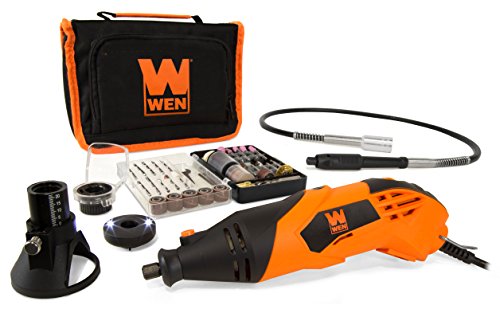
- 1.4-amp motor reaches 35,000 RPM
- Flex shaft supports intricate detail work
- Includes LED, guide, and debris-shield collars
Best For: Detailed repairs, routing, cutting, and precision work
Most Complete Kit

- 200W motor with 10,000–35,000 RPM control
- Includes 160 accessories, flex shaft, and case
- Supports 1/8-inch and 3/32-inch collets
Best For: Broad workshop use and accessory-heavy DIY projects
Best All-Around Starter Kit

- 180W motor with six speed settings
- Flexible shaft for detailed work
- 139-piece accessory kit
Best For: Home mechanics wanting broad accessory coverage in a starter-friendly kit
Best for Speed Range
200W Rotary Tool with Keyless Chuck
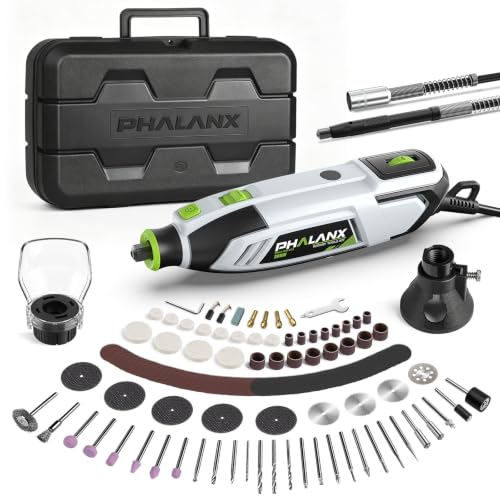
- 200W motor reaches 38,000 RPM
- Keyless chuck speeds up bit changes
- 132-piece accessory kit included
Best For: Home mechanics seeking higher power and convenient accessory changes
Best for Controlled Handling

- 42-inch flex shaft for detailed control
- Soft grip and assist handle
- 129 accessories with cover shield
Best For: Beginners and mechanics who want steadier two-handed handling
Power & Control Pick – Dremel 4000-2/32 Rotary Tool
For home mechanics who need dependable control across deburring, grinding, polishing, sanding, and cutting, the corded Dremel 4000-2/32 combines a 1.6-amp motor with a broad 5,000–35,000 RPM range. Its ergonomic grip and included accessories make it a versatile choice among rotary tools for home mechanics.
Best For: Extended bench work and varied repair, finishing, and detail tasks.
Pros:
- Powerful 1.6-amp motor with electronic speed control.
- Variable speed from 5,000 to 35,000 RPM.
- Includes two attachments and 32 accessories.
- 360-degree grip zone and airflow system support comfortable, cooler operation.
Cons:
- Corded design requires access to a 120-volt outlet.
- At 3 pounds, it is heavier than the listed Milwaukee tool.
The Dremel 4000 is a strong all-around option when sustained power and accessory variety matter more than cordless convenience.
Cordless Shop Pick – Milwaukee 12.0V Rotary Tool
The Milwaukee 12.0V rotary tool is a practical fit for home mechanics who value portability around a vehicle or workshop. Its cordless format, compact 1.3-pound body, and 5,000–32,000 RPM variable-speed range cover cutting, grinding, sanding, and polishing tasks.
Best For: Portable repairs and work areas where managing a power cord is inconvenient.
Pros:
- Cordless design supports flexible positioning around a project.
- Compact 9.5-inch body weighs 1.3 pounds.
- 1/8-inch collet works with current rotary tool accessories.
- Protected front bearing and grinder-style exhaust ports are designed for durability.
Cons:
- Its 32,000 RPM maximum is lower than the Dremel corded models listed.
- Supplied components are limited to a wrench, guide, cutting wheel, and mandrel.
- Battery operation requires charging or an available battery.
Choose the Milwaukee when cordless mobility and a lightweight, durable format are priorities for hands-on mechanical work.
Full-Feature Kit – Dremel 4300-5/40 Rotary Tool
The Dremel 4300-5/40 is aimed at home mechanics who want a broad, organized setup for cutting, grinding, sanding, sharpening, and detail work. It pairs a high-performance corded motor and electronic feedback with five attachments, 40 accessories, and a pivoting light for harder-to-see areas.
Best For: Users who want extensive accessory coverage and added lighting in one kit.
Pros:
- 5,000–35,000 RPM variable speed with electronic feedback.
- Universal three-jaw chuck accepts all Dremel accessory shank sizes.
- Includes five attachments, 40 accessories, and a storage case.
- Pivot light helps illuminate hard-to-reach work areas.
Cons:
- Corded operation limits mobility away from a 120-volt outlet.
- The large accessory package may be more than needed for occasional jobs.
With its chuck compatibility, replaceable brushes, and extensive attachments, the 4300 is the most complete choice here for building a versatile home workshop setup.
Budget Flex-Shaft Pick – WEN 2305 Rotary Tool Kit
The WEN 2305 gives home mechanics a broad set of basic capabilities at a straightforward starting point. Its 8,000–30,000 RPM variable speed, 80-piece accessory set, and included flex shaft support cutting, sanding, polishing, shaping, drilling, deburring, and grinding.
Best For: Entry-level users who want many accessories and better reach for detail work.
Pros:
- Includes an 80-piece set of bits, discs, pads, mandrels, and more.
- Flex shaft supports intricate detail and precision work.
- Spindle lock makes bit changes quicker.
- Includes both 2.3mm and 3.2mm collets.
Cons:
- Its 8,000 RPM minimum is higher than the listed Dremel and Milwaukee tools.
- Its 30,000 RPM maximum is the lowest among these four options.
- The corded design requires a 120-volt outlet.
The WEN 2305 is a sensible starter kit when accessory quantity and flex-shaft reach are more important than the widest speed range or maximum power.
Power Pick – HARDELL 180W Rotary Tool Kit
For home mechanics who want corded power and a broad accessory selection, the HARDELL 180W is a practical choice among rotary tools for home mechanics. Its six-speed range covers delicate polishing through heavier grinding, while the compact rubber-grip body supports controlled work on metal, plastic, wood, and glass.
Best For: Grinding, polishing, sanding, rust removal, engraving, and drilling during general home and DIY repair projects.
Pros:
- Strong 180W motor with speeds from 8,000 to 35,000 RPM
- Includes 61 accessories for common cutting, grinding, sanding, polishing, and drilling tasks
- Ventilation system helps manage heat during longer sessions
- Ergonomic soft-rubber grip and slim body promote control
Cons:
- Corded design requires access to a power outlet
- Accessory selection may require sorting to find the right attachment
The HARDELL balances useful power, variable speed, and kit versatility in a straightforward corded package. It is well suited to mechanics and DIY users who value a substantial accessory bundle over cordless portability.
Detail-Friendly Choice – WEN 23114 Variable Speed Rotary Tool
The WEN 23114 stands out for home mechanics who need attachments for both routine repairs and detailed work. This corded rotary tool combines a 1.4-amp variable-speed motor with a flex shaft, LED collar, cutting and routing guide, debris shield, carrying case, and more than 100 accessories.
Best For: Intricate detailing, cutting, drilling, grinding, polishing, and sanding where added visibility or reach is useful.
Pros:
- 1.4-amp motor with an 8,000–35,000 RPM variable-speed range
- Three useful collars include an LED light, drilling/routing guide, and spark/debris shield
- Three-foot flex shaft helps with intricate and complex detail work
- Carrying case organizes the tool, attachments, and 100-plus accessories
Cons:
- Corded operation limits mobility away from outlets
- The large accessory assortment may take time to organize and learn
With its flex shaft and task-specific collars, the WEN offers more setup flexibility than a basic rotary tool. It is a strong fit when precision access and work-area visibility matter as much as motor power.
Most Complete Kit – NEU MASTER 200W Rotary Tool
For home mechanics seeking an all-in-one setup, the NEU MASTER 200W kit pairs the highest listed motor rating here with 160 accessories. Its six-speed control, flex shaft, two collets, storage case, and clear cover make it adaptable for cutting, sanding, grinding, polishing, engraving, and drilling.
Best For: Users who want a broad, organized accessory kit for mixed repair, craft, and workshop tasks.
Pros:
- 200W motor with six speeds from 10,000 to 35,000 RPM
- Includes 160 accessories plus a flexible shaft and clear protective cover
- 1/8-inch and 3/32-inch collets support a range of compatible accessories
- Comes with a storage case and a two-year warranty
Cons:
- At 4.1 pounds, the listed kit weight is relatively substantial
- Its extensive accessory assortment may be more than occasional users need
- Corded operation requires a nearby outlet
The NEU MASTER is the most comprehensive option of the three for buyers who want many attachments without immediately purchasing extras. Its flex shaft improves access for detailed work, while the higher 200W rating suits a wide range of workshop tasks.
Best All-Around Starter Kit – PHALANX 180W Rotary Tool Kit
For home mechanics who want one compact tool for varied maintenance and DIY tasks, the PHALANX is a versatile choice among rotary tools for home mechanics. Its 180W motor, six speed settings, flexible shaft, and broad accessory selection cover cutting, grinding, sanding, polishing, drilling, and engraving.
Best For: Home mechanics and DIYers who want a versatile corded kit with extensive accessories and a flexible shaft for detailed work.
Pros:
- 180W motor with six speeds from 8,000 to 32,000 RPM.
- Flexible shaft supports pen-like handling for detailed or corner work.
- 139-piece kit includes multiple collets and accessories for cutting, grinding, sanding, and polishing.
- Ventilation and a gear-protection blocker help support comfortable, controlled use.
Cons:
- The chuck must be tightened with a spanner before use.
- The kit is corded, so it requires access to an AC outlet.
Its combination of variable speed, accessory coverage, and flexible-shaft control makes it a practical starter set for mechanics handling small repairs and finishing work.
Best for Speed Range – 200W Rotary Tool with Keyless Chuck
This 200W rotary tool stands out for its higher power rating and wide 10,000–38,000 RPM range. For rotary tools for home mechanics, the keyless chuck and included collets make it convenient to switch between accessories for cutting, grinding, polishing, sanding, drilling, and engraving.
Best For: Home mechanics who prioritize a strong motor, high maximum speed, and quick accessory changes.
Pros:
- 200W motor with six speed settings and a top speed of 38,000 RPM.
- Keyless chuck allows accessory changes without wrench adjustments.
- Four included collets support several common shank sizes.
- 132-piece accessory kit covers a range of DIY and workshop tasks.
Cons:
- The supplied notes do not specify a flexible-shaft accessory.
- It is an AC-powered tool, so it is not cordless.
The higher output and keyless chuck give this model a convenience-focused profile, especially for users who frequently change bits and need both controlled and high-speed operation.
Best for Controlled Handling – DEKOPRO Rotary Tool Kit
The DEKOPRO combines six-speed control with a 42-inch flex shaft, soft rubber housing, and assist handle. Those features make it a compelling option among rotary tools for home mechanics who want steadier handling for deburring, shaping, sanding, carving, cutting, and other small-project work.
Best For: Beginners and home mechanics who value flexible-shaft precision, two-handed control, and a broad selection of included accessories.
Pros:
- Six speed settings cover 8,000 to 35,000 RPM.
- 42-inch flexible shaft helps improve control during detailed work.
- Soft rubber body and assist handle support comfortable two-handed operation.
- 129-piece kit includes a cover shield, drill locator, buffing wheel, and multiple collets.
Cons:
- The tool is corded rather than battery powered.
- The listed voltage is 220 volts, so buyers should confirm outlet compatibility.
- Its 1.86 kg listed weight may feel substantial during extended handheld use.
With its control-oriented design and included safety and positioning accessories, the DEKOPRO is well suited to users building a versatile home workshop setup.
How We Picked the Best Rotary Tools for Home Mechanics
We focused on the features that matter during real garage and household jobs: variable-speed control, usable RPM ranges, motor power, ergonomics, accessory compatibility, flex-shaft support, and corded versus cordless convenience. We also considered whether each kit includes practical attachments for cutting, sanding, polishing, grinding, and detail work.
Accessory counts can be useful, but they do not tell the whole story. A smaller kit with better control and a reliable collet may be more useful than a large assortment of lower-value bits. We therefore looked at overall versatility, handling, and value rather than counting accessories alone.
Quick Comparison
| Type | Best For | Main Advantage | Potential Trade-Off |
|---|---|---|---|
| Corded rotary tool | Long jobs and workshop use | Consistent power | Requires an outlet and cord management |
| Cordless rotary tool | Vehicle work and portability | Fast setup and easy movement | Battery runtime and charger compatibility matter |
| Flex-shaft kit | Detailed or awkward-position work | Improved reach and control | Requires setup and careful handling |
| Large accessory kit | General DIY use | Broad task coverage out of the box | Accessory quality may vary |
Key Buying Factors for Rotary Tools for Home Mechanics
Speed and Control
Variable speed is essential when moving between metal, plastic, wood, paint, and polishing compounds. Lower speeds help reduce heat and prevent melting or overworking delicate materials, while higher speeds suit grinding, cutting, and finishing. A tool with clearly marked settings is easier to control than one that is powerful but difficult to adjust.
Power and Runtime
Corded models are usually the better choice for extended grinding, cutting, or restoration work because they provide uninterrupted power. Cordless tools are more convenient around vehicles and tight spaces, especially when an outlet is unavailable, but check whether the battery and charger are included and whether replacement batteries are easy to obtain.
Collets, Attachments, and Flex Shafts
Confirm that the tool accepts the shank sizes used by your preferred bits and accessories. A flex shaft can improve precision for engraving, cleaning, and confined areas, while cutting guides and LED collars can make specific tasks easier. Do not assume every included accessory is suitable for heavy-duty metal work.
Comfort and Safety
Look for a manageable grip, balanced weight, accessible controls, and ventilation that does not become uncomfortable during longer sessions. Wear eye protection, secure the workpiece, use the correct bit for the material, and avoid forcing the tool through a cut. A dust mask and hearing protection may also be appropriate for grinding and sanding.
Who Should Buy Which Rotary Tools for Home Mechanics?
Choose a Dremel kit if you want a familiar all-purpose platform with established accessory support. Milwaukee is the logical fit for shoppers already invested in its cordless battery system or anyone prioritizing portability. WEN, DEKOPRO, HARDELL, NEU Master, and similar corded kits suit budget-conscious DIY users who want broad capability and included accessories.
For frequent workshop use, favor a corded model with variable speed and a comfortable grip. For occasional repairs, a comprehensive kit with a flex shaft may offer the best value. If your work is mostly detailed finishing or awkward-position tasks, prioritize control, low-speed performance, and ergonomics over the highest accessory count.