Working between studs, under sinks, inside cabinets, or around crowded mechanical systems calls for a reciprocating saw that can cut effectively without feeling oversized. Compact designs, one-handed controls, and short-stroke formats can make awkward cuts easier to manage.
This roundup compares 10 options across cordless, corded, pneumatic, and mini-saw categories. We focus on maneuverability, power, runtime, control, blade changes, and the practical limitations that matter when access is restricted.
Table of Contents
- Best 10 Reciprocating Saws for Tight Spaces Picks for 2026
- Best Compact One-Handed Pick – Milwaukee M18 Hackzall 2625-20
- Best Pneumatic Tight-Access Saw – Ingersoll Rand 429 Air Saw
- Best Brushless Performance Pick – Milwaukee M18 FUEL Hackzall 2719-20
- Best Mini DIY Option – Fanttik R11 Pro Cordless Mini Saw
- Compact Cordless Pick – BLACK+DECKER BDCR20C
- Versatile Corded Workhorse – GALAX PRO 6.0 Amp Reciprocating Saw
- Lightweight LED Choice – SEESII Cordless Reciprocating Saw
- Compact Kit Pick – FULLYEA 21V Cordless Reciprocating Saw
- Mobile DIY Option – 20V Cordless Reciprocating Saw
- High-Speed Cutting Pick – 20V Variable-Speed Cordless Reciprocating Saw
- How We Picked the Best Reciprocating Saws for Tight Spaces
- Quick Comparison
- Key Buying Factors for Reciprocating Saws for Tight Spaces
- Who Should Buy Which Reciprocating Saws for Tight Spaces?
Best 10 Reciprocating Saws for Tight Spaces Picks for 2026
Best Compact One-Handed Pick
Milwaukee M18 Hackzall 2625-20

- One-handed compact design
- LED work light
- Fast tool-free blade changes
Best For: M18 users cutting in tight or overhead spaces
Best Pneumatic Tight-Access Saw

- Inline 1.33-pound design
- Up to 10,000 SPM
- Includes six cutting blades
Best For: Compressed-air workshops cutting metal and plastics
Best Brushless Performance Pick
Milwaukee M18 FUEL Hackzall 2719-20
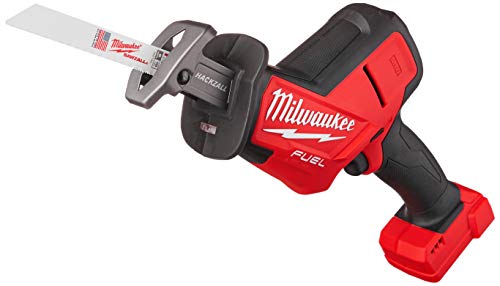
- Brushless POWERSTATE motor
- 7/8-inch stroke length
- Pivoting shoe for smoother cuts
Best For: M18 users needing powerful one-handed cutting
Best Mini DIY Option
Fanttik R11 Pro Cordless Mini Saw
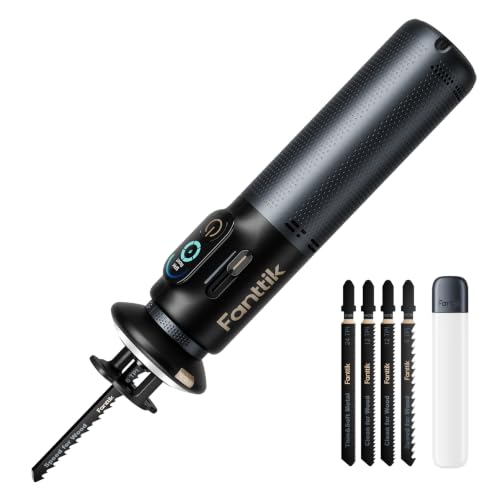
- Compact 8.92-inch body
- 0–2,200 SPM speed control
- Five-blade kit with Type-C charging
Best For: Light DIY cutting in wood and PVC
Compact Cordless Pick

- 20V cordless design for portable cutting
- Tool-free blade change and pivoting shoe
- Variable-speed trigger for better control
Best For: DIY wood-cutting projects where cord-free maneuverability matters
Lightweight LED Choice
SEESII Cordless Reciprocating Saw

- Built-in LED for dark cutting areas
- Two 4.0Ah batteries and fast charger included
- Brushless motor reaches up to 3500 RPM
Best For: Confined maintenance work where lighting and cordless runtime are useful
Best Compact One-Handed Pick – Milwaukee M18 Hackzall 2625-20
Milwaukee 2625-20 M18 18-Volt Lithium-Ion Cordless Hackzall Reciprocating Saw, Bare Tool
Check Price On AmazonFor reciprocating saws for tight spaces, the Milwaukee 2625-20 stands out with a compact, lightweight one-handed design. Its M18 battery compatibility, LED light, and tool-free blade clamp make it practical for controlled cuts where a full-size saw is cumbersome.
Best For: M18 users who need a compact saw for tight-access and overhead cutting.
Pros:
- One-handed design improves control in confined areas.
- Compact, lightweight body is easier to maneuver overhead.
- Tool-free QUIK-LOK blade clamp enables fast blade changes.
- Built-in LED illuminates the cutting surface.
Cons:
- Bare-tool package requires a compatible M18 battery and charger.
- Supplied details do not specify a variable-speed control.
This is a practical choice when access and handling matter more than maximum full-size reciprocating-saw capacity. The five-year tool warranty and broad M18 battery compatibility add useful ownership value.
Best Pneumatic Tight-Access Saw – Ingersoll Rand 429 Air Saw
The Ingersoll Rand 429 is a lightweight inline air saw designed for reciprocating saws for tight spaces. It reaches up to 10,000 strokes per minute and includes blades, an adjustable guide, and safety features for controlled work on metal, plastic, fiberglass, and aluminum.
Best For: Workshops and garages with an air compressor for detailed metal and material cutting.
Pros:
- Inline 1.33-pound design fits easily into tight areas.
- Up to 10,000 strokes per minute supports fast, precise cuts.
- Includes six high-speed steel blades and two hex wrenches.
- Lock-out lever and vibration reduction improve operating control.
Cons:
- Requires an air compressor supplying at least 8 CFM at 90 psi.
- Sold individually without a compressor.
- Pneumatic operation is less portable than cordless use.
Choose this model when you already have suitable compressed air and need a narrow, durable tool for hard-to-reach cuts. Its included accessories make it ready for varied material work out of the box.
Best Brushless Performance Pick – Milwaukee M18 FUEL Hackzall 2719-20
Milwaukee 2719-20 M18 FUEL Hackzall (Bare Tool), Red, Black, | Saw (Tool Only) Model 2719-20
Check Price On AmazonThe Milwaukee M18 FUEL Hackzall 2719-20 combines a one-handed form with a brushless POWERSTATE motor and REDLINK Plus electronics. For reciprocating saws for tight spaces, its 7/8-inch stroke, pivoting shoe, and cordless M18 platform offer a strong balance of access, cutting speed, and control.
Best For: M18 users who want higher-performance one-handed cutting in confined work areas.
Pros:
- One-handed format improves control in restricted spaces.
- Brushless motor delivers increased cutting speed and power.
- 7/8-inch stroke removes more material per stroke.
- Pivoting shoe helps maintain contact and reduce bucking.
Cons:
- Bare-tool package requires an M18 battery and charger.
- Larger and heavier than the listed mini saw.
- Supplied details do not list an included blade set.
This is the performance-oriented option in the group for buyers already invested in Milwaukee M18 batteries. Its electronics, brushless motor, and pivoting shoe make it especially appealing for demanding repeat cuts where maneuverability still matters.
Best Mini DIY Option – Fanttik R11 Pro Cordless Mini Saw
The Fanttik R11 Pro is an especially small cordless option for reciprocating saws for tight spaces, measuring 8.92 by 2.4 inches. Its brushless motor, stepless 0–2,200 SPM control, built-in battery, and included blades suit lighter DIY work in wood and PVC.
Best For: DIY users who need a portable saw for wood, PVC, and cuts up to 3/4 inch thick.
Pros:
- Very compact body is easy to store and carry.
- Dual counterweights help reduce vibration.
- Stepless speed control supports more precise cutting.
- Includes five four-inch blades and Type-C fast charging.
Cons:
- Recommended maximum cutting thickness is 3/4 inch.
- Designed for wood and PVC rather than general metal cutting.
- Built-in battery cannot be swapped like a standard tool battery.
The R11 Pro is best viewed as a lightweight convenience tool rather than a heavy-duty saw. Its small footprint, safety start, status display, and included blade kit make it well suited to occasional DIY and outdoor projects.
Compact Cordless Pick – BLACK+DECKER BDCR20C
The BLACK+DECKER BDCR20C is a practical cordless option for cutting in tight spaces where managing a power cord would be inconvenient. Its tool-free blade change, pivoting shoe, and variable-speed trigger provide useful control for wood-cutting tasks.
Best For: DIY users who want a portable reciprocating saw for wood projects and occasional cuts in confined areas.
Pros:
- Cordless 20V design improves portability around a work area.
- Tool-free blade changes make setup faster.
- Pivoting shoe and variable-speed trigger support controlled cutting.
- Includes a battery, charger, and reciprocating blade.
Cons:
- The supplied surface recommendation is wood, so material versatility is less clearly supported than with some alternatives.
- At 4.5 pounds, it is not the lightest option for extended overhead work.
For shoppers comparing reciprocating saws for tight spaces, the BDCR20C stands out for cordless convenience and straightforward controls. It is a sensible fit when portability matters more than a broad accessory package or heavy-duty material range.
Versatile Corded Workhorse – GALAX PRO 6.0 Amp Reciprocating Saw
The GALAX PRO 120V saw combines a 6.0-amp motor with a compact reciprocating format suited to renovation, plumbing, and demolition work. For reciprocating saws for tight spaces, its tool-less chuck, pivoting shoe, and ergonomic grip help simplify blade changes and positioning, though the cord requires access to an outlet.
Best For: DIYers and contractors who need a corded saw for wood, metal, PVC, and other listed materials.
Pros:
- 6.0-amp motor delivers up to 3000 SPM for consistent cutting.
- Tool-less blade change supports quick swaps in the work area.
- Pivoting shoe adjusts up to ±15 degrees and can help extend blade life.
- Includes five blades, an Allen key, and a lock-on button.
Cons:
- The corded design limits reach and mobility in tight or remote locations.
- At 17.32 inches long, it may be less convenient than shorter cordless models in especially confined spaces.
This GALAX PRO is a strong choice when continuous corded power and material flexibility are priorities. Its included blades and heat-dissipation features add practicality for longer home-improvement or job-site sessions.
Lightweight LED Choice – SEESII Cordless Reciprocating Saw
The SEESII cordless reciprocating saw is designed for maneuverability, with a one-handed form, built-in LED light, and tool-free blade changes. Those features make it appealing among reciprocating saws for tight spaces, especially when cutting beneath furniture, inside cabinets, or in dim basements.
Best For: Users who want a portable saw with lighting, multiple blades, and spare batteries for wood, plastic, and metal projects.
Pros:
- Built-in LED work light improves visibility in dark work areas.
- Includes two 4.0Ah batteries and a fast charger for reduced downtime.
- Brushless 200W motor offers variable speeds up to 3500 RPM.
- Comes with six blades, a storage bag, gloves, and safety glasses.
Cons:
- The listed item weight is 3.48 kg, so the product may not feel as lightweight as the one-handed marketing description suggests.
- The supplied dimensions indicate a relatively broad package, which may reduce convenience in the most restricted spaces.
The SEESII offers an unusually complete cordless package for users who value visibility and backup battery capacity. Its LED and accessory set are particularly useful for maintenance tasks in poorly lit, confined locations.
Compact Kit Pick – FULLYEA 21V Cordless Reciprocating Saw
For shoppers comparing reciprocating saws for tight spaces, this lightweight FULLYEA model emphasizes cordless portability and manageable control. Its variable-speed trigger, compact listed dimensions, LED light, and tool-free blade change make it suited to quick cutting tasks around the home, workshop, garage, or yard.
Best For: DIYers who want a portable, ready-to-use saw for wood, PVC, plastic, metal, drywall, branches, and light demolition.
Pros:
- Stepless 0–3500 SPM speed control helps match cutting speed to the task.
- Includes two 2.0Ah batteries, a fast charger, four blades, and a portable tool box.
- Tool-free blade change, LED light, ergonomic handle, and lightweight design support convenient use.
- Rated cutting depths include up to 80 mm in plastic, 50 mm in wood, and 20 mm in metal.
Cons:
- The included batteries are 2.0Ah, so heavier or extended work may require swapping batteries.
- The saw is positioned for home, DIY, renovation, and light-demolition work rather than specified heavy-duty applications.
Among these reciprocating saws for tight spaces, the FULLYEA stands out as the most complete compact kit. Its included batteries and accessories reduce the need for extra purchases, while the variable trigger gives users practical control in confined work areas.
Mobile DIY Option – 20V Cordless Reciprocating Saw
This 20V cordless saw is a straightforward option for reciprocating saws for tight spaces when freedom from a power cord matters most. It is designed for mobile use and supports variable-speed cutting across wood, metal, PVC, tree branches, and other household materials.
Best For: Home users, gardeners, and DIYers who need a cordless saw for varied cutting jobs and occasional project work.
Pros:
- Cordless design allows flexible movement without a tangled power cord.
- 0–3000 SPM variable speed provides adjustable cutting control.
- Tool-free blade changes make switching between tasks more convenient.
- Includes two batteries, a charger, and four saw blades for wood, metal, PVC, and tree cutting.
Cons:
- At 5.5 pounds, it may feel less convenient during prolonged overhead or awkward-position work.
- The supplied dimensions are relatively large, so buyers should verify clearance before using it in especially confined spaces.
- The notes do not specify cutting depths or battery capacity.
This model offers useful cordless flexibility and a practical accessory package, but its listed weight and dimensions are worth considering when tight access is the main priority. It is better suited to general home and garden cutting than extremely restricted work areas.
High-Speed Cutting Pick – 20V Variable-Speed Cordless Reciprocating Saw
For reciprocating saws for tight spaces that prioritize speed and cordless access, this 20V model offers a 0–3500 SPM variable-speed motor and a tool-free blade-change system. The included blades are intended for wood, PVC, metal pipe, tree cutting, and other listed materials.
Best For: DIY and maintenance users who want a cordless saw for varied wood, PVC, metal, pipe, and outdoor cutting tasks.
Pros:
- 0–3500 SPM variable speed supports faster cutting and adjustable operation.
- Cordless format provides mobility around the home, workshop, or yard.
- Tool-free blade change simplifies transitions between materials.
- Includes a battery, charger, four blades, and a second battery according to the product title.
Cons:
- The supplied details conflict on battery information: the title states two batteries, while the specifications list one 9V battery.
- The listed 13 x 8 x 9-inch dimensions may be bulky for the most restricted spaces.
- The notes do not provide cutting-depth figures or battery capacity.
This saw has a useful speed range and broad stated material coverage, making it versatile for household and outdoor work. Before buying, confirm the battery configuration and compare the listed dimensions with the space where you plan to use it.
How We Picked the Best Reciprocating Saws for Tight Spaces
We evaluated these tools for the characteristics that matter most in confined work areas: overall size, handle ergonomics, trigger control, cutting speed, blade-change convenience, power source, and expected portability. Compactness matters, but it is not the only consideration. A very small saw may be easier to position while offering less cutting capacity, whereas a larger professional model may provide better control and durability.
We also considered whether each saw is sold as a bare tool or complete kit, along with included batteries, chargers, blades, and compatibility with common replacement blades. Product specifications and intended use should be verified before purchase, particularly for models with limited cutting capacity or less-established support networks.
Quick Comparison
| Type | Best For | Main Advantage | Trade-Off |
|---|---|---|---|
| Compact cordless Hackzall-style saw | Plumbing, electrical, remodeling | Good balance of reach and control | Battery and tool cost |
| Mini cordless saw | Light-duty wood and PVC cuts | Smallest, easiest handling | Lower cutting capacity |
| Standard cordless reciprocating saw | General household projects | Versatility and convenience | Can feel bulky in very tight areas |
| Corded saw | Long cutting sessions | Consistent power | Power cord limits mobility |
| Pneumatic air saw | Workshops and bodywork | Compact body and no battery | Requires an air compressor |
Key Buying Factors for Reciprocating Saws for Tight Spaces
Size, Grip, and Blade Access
Measure the space before choosing a tool. A compact body and narrow nose can help when working between pipes or framing, while a comfortable grip reduces fatigue during awkward cuts. Tool-free blade changes are especially useful when access is limited.
Stroke Length and Speed Control
Shorter strokes can improve control and reduce movement near delicate components. Higher strokes per minute can speed through wood, plastic, or thin metal, but variable-speed control is more valuable when starting a cut or working near finished surfaces.
Power Source and Runtime
Cordless models are usually the most convenient for remote or overhead work. Check battery capacity, included batteries, charger availability, and compatibility with batteries you already own. Corded models suit workshops with nearby outlets, while pneumatic tools make sense only if you already have an adequately sized compressor.
Blade Compatibility and Safety
Look for standard reciprocating-saw blade compatibility and choose blades suited to the material. Use eye protection, secure the workpiece, keep hands clear of the shoe and blade path, and avoid forcing the tool through a cut.
Who Should Buy Which Reciprocating Saws for Tight Spaces?
Choose a professional compact cordless model if you regularly work in plumbing, electrical, HVAC, or remodeling environments and need dependable control in restricted spaces. A mini cordless saw is better for light-duty trimming, PVC, small wood pieces, and occasional household repairs.
For general DIY use, a complete cordless kit offers the simplest starting point, especially when it includes a battery, charger, and several blades. Pick a corded model if you prioritize uninterrupted runtime and normally work near an outlet. A pneumatic air saw is the specialist choice for garages and workshops that already have compressed-air equipment.
Before buying, confirm the tool’s dimensions, battery platform, included accessories, warranty, and suitability for your materials. The best option is the smallest saw that still provides enough power, runtime, and blade capacity for the work you actually plan to do.