Keeping a refrigerator cold during a blackout, road trip, or remote stay requires more than choosing the highest wattage panel. You also need enough battery capacity, suitable inverter output, dependable solar input, and a setup that can operate consistently in changing weather.
These portable solar panels for refrigerators include compact standalone panels and complete solar generator kits. The right option depends on your refrigerator’s startup surge, daily energy use, available sunlight, and how long you need backup power to last.
Table of Contents
- Best 10 Portable Solar Panels for Refrigerators Picks for 2026
- Best Overall – Jackery Explorer 2000 v2
- Best Compact Option – Anker SOLIX C1000 Gen 2
- Best High-Capacity Backup – Jackery HomePower 3600 Plus
- Best Value for Refrigerators – EcoFlow DELTA 3 Classic
- Best Overall Home Backup – Jackery HomePower 3000 Solar Generator Kit
- Best Lightweight Panel – SOKIOVOLA 100W Foldable Solar Panel
- Best Mid-Range Option – Jackery Solar Generator 1000 v2 Kit
- High-Output Pick – Twelseavan 400W Portable Solar Panel
- Balanced Fridge Backup – BougeRV 100W Foldable Solar Panel
- Most Portable – FlexSolar 100W Foldable Solar Panel
- How We Picked the Best Portable Solar Panels for Refrigerators
- Quick Comparison
- Key Buying Factors for Portable Solar Panels for Refrigerators
- Who Should Buy Which Portable Solar Panels for Refrigerators?
Best 10 Portable Solar Panels for Refrigerators Picks for 2026
Best Overall

- 2,042Wh capacity with 2,200W AC output
- Includes 2x200W solar panels
- 20ms UPS switching and LiFePO4 battery
Best For: Home backup, camping, and refrigerator power during outages
Best Compact Option

- 1,024Wh battery with 2,000W output
- Includes a 200W bifacial solar panel
- Under-10ms UPS and 1.8-hour solar recharge claim
Best For: Camping and compact refrigerator backup
Best High-Capacity Backup

- 3,584Wh capacity and 3,600W output
- Includes 2x200W solar panels
- Wheeled design and 6,000-cycle battery rating
Best For: Extended home backup and multiple appliances
Best Value for Refrigerators

- 1,800W output for refrigerators and essentials
- Includes a 220W bifacial solar panel
- Under-10ms UPS and LiFePO4 battery
Best For: Refrigerators, home essentials, and camping
Best Overall Home Backup
Jackery HomePower 3000 Solar Generator Kit

- 3,072Wh capacity with 3,600W AC output
- Includes two 200W SolarSaga panels
- UPS switches within 20ms
Best For: Extended refrigerator backup during home outages
Best Lightweight Panel
SOKIOVOLA 100W Foldable Solar Panel
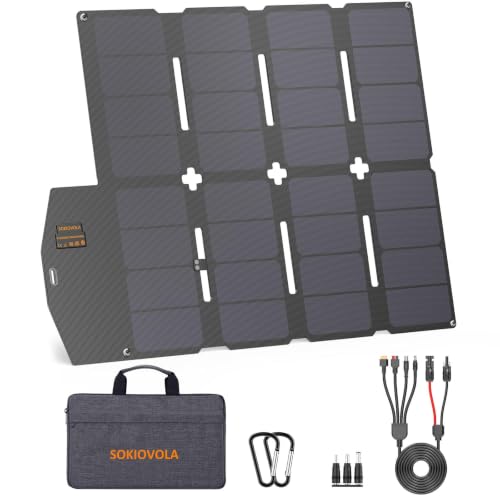
- Folds compactly and weighs 4.6 pounds
- Includes multi-connector cable and adapters
- IP68 dust and waterproof protection
Best For: Portable recharging of compatible small power stations
Best Mid-Range Option
Jackery Solar Generator 1000 v2 Kit

- 1,500W output with 3,000W surge capacity
- Includes a 200W solar panel
- Lightweight 23.4-pound design
Best For: Portable refrigerator backup for camping, RVs, and emergencies
High-Output Pick
Twelseavan 400W Portable Solar Panel

- 400W output with 24% stated efficiency
- Includes multiple MC4 and DC connection options
- Requires a power station rated above 46.9V
Best For: Large compatible power stations for RVs and emergency backup
Balanced Fridge Backup
BougeRV 100W Foldable Solar Panel

- 25% stated efficiency from N-Type cells
- Includes XT60, DC7909, and DC5521 connectors
- 6.9-pound foldable design with an 8.2-foot cable
Best For: Portable fridge batteries and compact camping power setups
Most Portable
FlexSolar 100W Foldable Solar Panel

- Only 4.1 pounds with a compact folded profile
- Offers 100W DC plus USB-C and USB-A outputs
- IP67-rated and includes four connector options
Best For: Lightweight emergency kits, camping, and compatible fridge power stations
Best Overall – Jackery Explorer 2000 v2
The Jackery Explorer 2000 v2 pairs a 2,042Wh battery with 2,200W of AC output, making it a strong all-around choice among portable solar panels for refrigerators. Its included 2x200W solar panels can recharge the station in about six hours under the stated conditions.
Best For: Home backup, camping, and refrigerator power during outages.
Pros:
- Large 2,042Wh capacity and 2,200W output support demanding appliances.
- Includes two 200W solar panels and offers a six-hour solar recharge time.
- 20ms UPS switching helps maintain power during interruptions.
- LiFePO4 battery and quiet operation suit indoor use.
Cons:
- The complete package weighs 66.8 pounds according to the listed specifications.
- The included solar-panel connection requires using the correct straight DC8020 plug.
With substantial capacity, high output, and UPS functionality, this package is a practical refrigerator-backup system when portability and extended runtime matter more than minimum size.
Best Compact Option – Anker SOLIX C1000 Gen 2
The Anker SOLIX C1000 Gen 2 is a compact solar generator with a 1,024Wh LiFePO4 battery and 2,000W output. For shoppers comparing portable solar panels for refrigerators, its included 200W bifacial panel and fast solar-recharge capability make it a convenient option for shorter backup periods.
Best For: Camping and compact refrigerator backup where portability is a priority.
Pros:
- 2,000W output and 3,000W peak capacity handle a range of devices.
- Includes a 200W bifacial portable solar panel.
- Supports up to 600W solar input and a stated 1.8-hour full solar recharge.
- Under-10ms UPS switching helps protect connected equipment.
Cons:
- The 1,024Wh capacity is lower than the larger stations in this roundup.
- The power station and solar panel ship as separate packages.
This is a useful middle-ground pick for users who want high output in a smaller package, though refrigerator runtime will depend on the appliance’s actual energy draw and available sunlight.
Best High-Capacity Backup – Jackery HomePower 3600 Plus
The Jackery HomePower 3600 Plus is built for larger backup needs, combining 3,584Wh of capacity with 3,600W of output and two included 200W solar panels. It stands out among portable solar panels for refrigerators when you need enough stored energy for a refrigerator plus other household loads.
Best For: Extended home backup and powering multiple appliances during outages.
Pros:
- Large 3,584Wh capacity and 3,600W output provide substantial reserve power.
- Solar recharge is listed at about four hours.
- Wheeled luggage-style design with a telescoping handle improves maneuverability.
- LiFePO4 battery is rated for 6,000 cycles and a 10-year lifespan.
Cons:
- At 77.2 pounds, it is the heaviest listed option.
- Its larger footprint is less convenient for lightweight camping use.
- The package may require separate handling for the solar-panel components.
The HomePower 3600 Plus is the capacity-focused choice here: its wheels help with movement, but its size and weight make it better suited to home backup than frequent carrying.
Best Value for Refrigerators – EcoFlow DELTA 3 Classic
The EcoFlow DELTA 3 Classic combines a 1,024Wh battery with 1,800W output and an included 220W bifacial solar panel. Its stated refrigerator support and under-10ms UPS make it a compelling option for shoppers seeking portable solar panels for refrigerators and essential electronics.
Best For: Refrigerators, home essentials, and camping with fast AC recharging.
Pros:
- Designed to power refrigerators and other common appliances with 1,800W output.
- Includes a 220W bifacial panel with up to 25% stated conversion efficiency.
- Solar recharge is listed at about 5.8 hours.
- LiFePO4 battery is rated for more than 10 years of daily use.
Cons:
- The 1,024Wh capacity may provide less stored energy than larger backup stations.
- The solar generator and panel may arrive separately.
- Its 1,800W output is lower than the two Jackery alternatives.
For users who want a refrigerator-capable station without moving up to a much larger system, the DELTA 3 Classic offers a balanced mix of output, solar capability, UPS protection, and fast AC charging.
Best Overall Home Backup – Jackery HomePower 3000 Solar Generator Kit
For shoppers seeking portable solar panels for refrigerators, the Jackery HomePower 3000 is a high-capacity solution built around a 3,072Wh power station and two 200W SolarSaga panels. Its 3,600W AC output and 7,200W surge capacity make it suitable for refrigerator backup alongside other household essentials.
Best For: Homeowners who want extended refrigerator backup and enough output for several essential appliances during outages.
Pros:
- 3,072Wh capacity and 3,600W AC output can support a refrigerator and other home essentials.
- Supplied with two 200W solar panels; Jackery states it can recharge to 80% in about 9 hours with them.
- UPS switching within 20ms helps keep compatible appliances and devices running during interruptions.
- LiFePO4 battery is rated for 4,000 cycles while retaining 70% capacity, with a five-year warranty.
Cons:
- At 59.5 pounds, it is considerably heavier than smaller portable power stations.
- The complete system takes more storage and transport space than a compact refrigerator backup unit.
The HomePower 3000 is the strongest choice here when refrigerator runtime and whole-home versatility matter more than minimizing weight. Its large battery, high output, included solar panels, and fast UPS response make it well suited to emergency preparedness.
Best Lightweight Panel – SOKIOVOLA 100W Foldable Solar Panel
If you already own a compatible power station, this 100W foldable panel offers a portable way to recharge it while using portable solar panels for refrigerators. Its compact folded design, 4.6-pound weight, and included multi-connector cable make it practical for camping, RV travel, or backup setups.
Best For: Owners of smaller compatible power stations who prioritize easy carrying and flexible connector options.
Pros:
- Folds to approximately 14.69 by 8.67 by 1.78 inches and weighs 4.6 pounds.
- Includes a 4-in-1 cable with MC4, XT60, DC5521, DC7909, and Anderson compatibility through the included adapters.
- ETFE construction, UV-resistant EVA, and IP68 dust and waterproof protection support outdoor use.
- Includes a carrying bag, extension cable, adapters, buckles, and a 12-month warranty.
Cons:
- Its 100W maximum output is better suited to recharging a power station than directly running a refrigerator.
- Actual charging may be limited by the connected power station’s maximum solar-input rating.
This panel is a useful add-on rather than a complete refrigerator backup system. Check your power station’s input limits and connector requirements before buying, especially if you need to recharge quickly or support a larger refrigerator setup.
Best Mid-Range Option – Jackery Solar Generator 1000 v2 Kit
The Jackery Solar Generator 1000 v2 pairs a 1,024Wh LiFePO4 power station with a 200W solar panel, making it a balanced option for portable solar panels for refrigerators. With 1,500W continuous output and a 3,000W surge rating, it can power fridges and other moderate loads while remaining portable at about 23.4 pounds.
Best For: Campers, RV users, and households wanting a lighter refrigerator-capable backup system with useful emergency features.
Pros:
- 1,500W AC output and 3,000W surge capacity are designed to handle appliances including refrigerators.
- Included 200W solar panel provides a ready-to-use recharging setup.
- 10ms UPS switching helps maintain power for supported devices during outages.
- LiFePO4 battery is rated for more than 4,000 cycles, and the unit includes five years of coverage.
Cons:
- The 1,024Wh capacity offers less stored energy than the HomePower 3000 for extended refrigerator runtime.
- The 50-minute emergency charging mode must be enabled in the Jackery app; the default charging mode is slower.
- Only two pure sine wave AC ports are listed, which may limit simultaneous AC appliance use.
This kit provides a practical middle ground between refrigerator-capable output and portability. It is easier to move than a large home backup system, but buyers needing multi-day refrigerator operation should consider its smaller battery capacity carefully.
High-Output Pick – Twelseavan 400W Portable Solar Panel
For shoppers comparing portable solar panels for refrigerators, the Twelseavan 400W model is a high-output option for a compatible portable power station. Its 24% conversion efficiency, foldable design, and included MC4 adapters make it practical for larger off-grid power setups, though its 46.9V open-circuit voltage requires careful compatibility checking.
Best For: RVs, emergency backup, and camping setups using a power station rated for more than 46.9V.
Pros:
- 400W maximum output and 24% stated conversion efficiency.
- Includes an 8-in-1 connector setup with MC4, Anderson, XT60, and DC adapters.
- Foldable fiberglass construction weighs about 22 pounds and includes four adjustable kickstands.
- IP65-rated, ETFE-laminated construction helps resist outdoor water, dust, and wear.
Cons:
- Its 46.9V open-circuit voltage is not suitable for small portable power stations.
- At roughly 22 pounds, it is heavier than the 100W alternatives.
This panel makes the most sense when your refrigerator power station can accept its voltage and benefit from higher solar input. Confirm the power station’s maximum supported voltage before buying.
Balanced Fridge Backup – BougeRV 100W Foldable Solar Panel
The BougeRV 100W is a practical choice among portable solar panels for refrigerators when you want a lighter, simpler panel for a compatible fridge battery or portable power station. Its N-Type cells, included connectors, and 8.2-foot extension cable support flexible campsite placement.
Best For: Portable refrigerators, camping, RV travel, and smaller power stations that use XT60, DC7909, or DC5521 connections.
Pros:
- N-Type solar cells provide a stated 25% conversion efficiency.
- Includes XT60, DC7909, and DC5521 connectors for plug-and-play setup with compatible devices.
- Fiberglass-reinforced construction is designed to resist cracking and abrasion.
- Weighs 6.9 pounds, folds for transport, and includes an 8.2-foot extension cable.
Cons:
- Its 100W maximum output is more limited than the 400W option.
- Compatibility still depends on the refrigerator battery or power station’s input connector and specifications.
Choose this model for a straightforward, portable setup rather than maximum charging capacity. The included cable length can help keep a power station in shade while the panel remains in direct sunlight.
Most Portable – FlexSolar 100W Foldable Solar Panel
The FlexSolar 100W stands out for shoppers seeking portable solar panels for refrigerators that are easy to carry and useful for more than one device. Alongside its 100W DC output, it offers USB-C and USB-A ports, making it suitable for charging a compatible power station while also powering smaller electronics.
Best For: Hikers, campers, road trippers, and emergency kits where low weight and multiple charging outputs matter.
Pros:
- Weighs 4.1 pounds and folds to a compact 12.99 by 10.43 by 2.17 inches.
- Provides 100W DC, 45W USB-C PD 3.0, and 18W USB-A outputs.
- Includes a 4-in-1 cable with DC5521, DC7909, Anderson, and XT60 connectors.
- IP67-rated construction offers protection from water and dust exposure.
Cons:
- Its 100W maximum output may be modest for refrigerator systems with higher energy demands.
- Charging a refrigerator requires a compatible power station or battery connection; the panel itself is not described as a refrigerator power source.
This is the easiest panel here to transport and the most versatile for small electronics. For refrigerator use, verify that your power station accepts the included DC connection and can provide the required output.
How We Picked the Best Portable Solar Panels for Refrigerators
We focused on panel-and-power-station combinations that can realistically support refrigerator use, along with standalone foldable panels for shoppers who already own a compatible battery system. We considered battery capacity, inverter output, solar input potential, portability, weather resistance, charging flexibility, and the practical demands of compressor appliances.
Large refrigerator-ready bundles generally provide the simplest setup because the battery, inverter, cables, and solar panels are designed to work together. Standalone 100W and 400W panels can cost less and travel more easily, but compatibility and total battery capacity become your responsibility.
Quick Comparison
| Setup type | Best for | Main advantage | Potential limitation |
|---|---|---|---|
| 100W standalone panel | Small power stations and short trips | Lightweight and portable | Slow charging for large batteries |
| 400W standalone panel | Faster solar replenishment | Higher charging potential | Larger, heavier, and cable compatibility matters |
| 1,024Wh generator bundle | Short outages and camping | Balanced portability and capacity | May need favorable sunlight for extended use |
| 2,000Wh or larger bundle | Longer outages and high-use refrigerators | More runtime and reserve power | Higher cost and less portability |
Key Buying Factors for Portable Solar Panels for Refrigerators
Battery Capacity and Refrigerator Runtime
Panel wattage determines how quickly you can recharge; battery watt-hours determine how long the refrigerator can run when solar production drops. A refrigerator’s compressor cycles on and off, so runtime varies with temperature, efficiency, door openings, and ambient heat. More capacity is valuable for overnight operation and cloudy conditions.
Inverter Output and Startup Surge
Check both continuous AC output and peak or surge output. Refrigerators can briefly draw substantially more power when the compressor starts. Choose a power station with comfortable headroom rather than matching only the refrigerator’s running wattage.
Solar Input, Connectors, and Weather Protection
Confirm the station’s permitted solar voltage, current, and maximum input before pairing it with a standalone panel. MC4 connectors are common, but adapters may still be required. Water-resistant construction helps with outdoor use, yet panels should be protected from standing water and severe weather.
Portability and Charging Options
Foldable panels are easier to position and store, while larger arrays can recharge a battery faster. AC charging is useful before an outage, and vehicle charging can provide a backup when sunlight is limited.
Who Should Buy Which Portable Solar Panels for Refrigerators?
Choose a 1,024Wh-class generator bundle for weekend camping, occasional outages, or a compact refrigerator setup. Move to a 2,000Wh-to-3,584Wh system if you need overnight reserve, longer outages, or additional appliances such as lights, fans, and communication equipment.
Choose a standalone 100W panel when portability and low cost matter most or when you already own a small compatible power station. A 400W panel is better for faster replenishment of larger batteries, provided its electrical specifications match your station. For emergency preparedness, prioritize battery capacity and inverter surge capability first, then select enough solar wattage to restore meaningful charge during the daylight hours available.