Solar power can keep a boat’s batteries topped up, reduce generator use, and support essential electronics while you are away from shore power. The right setup depends on available deck space, battery voltage, weather exposure, and how much energy you use.
These 10 portable solar panels for boats range from compact maintenance chargers to larger flexible arrays. Use the buying guide below to match panel output, construction, and charging hardware to your boat and cruising style.
Table of Contents
- Best 10 Portable Solar Panels for Boats Picks for 2026
- Best Flexible Panel – Lightweight 100W SunPower Panel
- Best Battery Maintainer – 30W MPPT Boat Charger
- Best Portable Power – 200W Foldable Flexible Panel
- Best High-Output Setup – 400W Bifacial Marine Panels
- Best for Easy Setup – 100W ETFE Marine Solar Panel
- Best for Everyday Use – 12W 12V Boat Trickle Charger
- Best Lightweight Panel – Renogy 100W Flexible Solar Panel
- Compact Battery Keeper – ECO-WORTHY 25W Solar Charger
- Flexible Deck Power – Renogy 200W Flexible Solar Panel
- Shade-Tolerant Marine Flexible – BougeRV Arch Pro 200W Flexible Panel
- How We Picked the Best Portable Solar Panels for Boats
- Quick Comparison
- Key Buying Factors for Portable Solar Panels for Boats
- Who Should Buy Which Portable Solar Panels for Boats?
Best 10 Portable Solar Panels for Boats Picks for 2026
Best Flexible Panel
Lightweight 100W SunPower Panel

- 22–25% efficient Maxeon monocrystalline cells
- 4.4-pound flexible polymer construction
- MC4 connectors and IP67 junction box
Best For: Lightweight boat and RV installations
Best Battery Maintainer

- Designed for maintaining 12V batteries
- Includes MPPT controller and adjustable bracket
- Waterproof tempered-glass aluminum frame
Best For: Keeping compatible boat batteries topped up
Best Portable Power

- 200W output with up to 23.5% efficiency
- About 10.14 pounds with a foldable design
- Four connector options for power stations
Best For: Portable power-station charging on boats
Best High-Output Setup

- Two 200W panels deliver up to 400W
- 25.6% efficient N-type 16BB cells
- Bifacial and partial-shade-tolerant design
Best For: Larger marine or off-grid installations
Best for Easy Setup
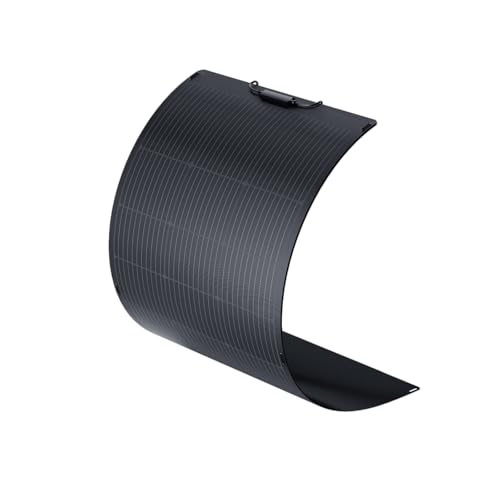
- 100W output with up to 25% efficiency
- 3mm flexible design suits curved boat surfaces
- IP68 waterproof and weather-resistant
Best For: Curved boat decks and off-grid power stations
Best for Everyday Use

- Maintains 12V batteries during storage
- Protection against common charging faults
- Includes clips, SAE cable, and suction cup
Best For: Preventing stored boat batteries from going flat
Best Lightweight Panel
Renogy 100W Flexible Solar Panel
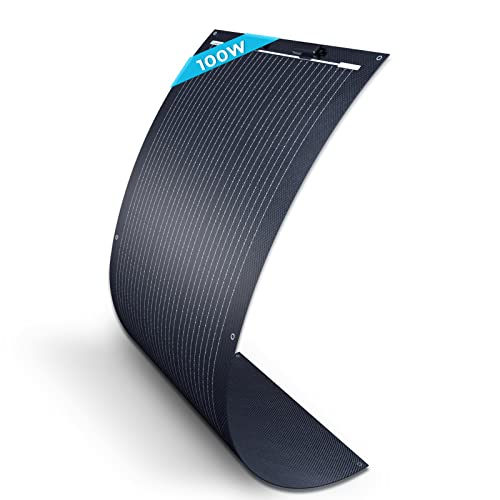
- 100W panel bends within 240 degrees
- Half-cut PERC cells support light capture
- IP67 junction box and mounting hardware
Best For: Curved 12V boat installations with low-profile mounting
Compact Battery Keeper

- 25W monocrystalline panel for 12V battery maintenance
- Waterproof controller with multiple battery protections
- Includes clips, O-ring cables, bracket, and mounting hardware
Best For: Maintaining 12V boat batteries during storage
Flexible Deck Power
Renogy 200W Flexible Solar Panel

- 200W output with up to 1,000Wh daily claim in five sun hours
- Bends within 240 degrees for curved mounting surfaces
- IP67 junction box and lightweight half-cut PERC construction
Best For: Curved boat installations needing higher charging capacity
Shade-Tolerant Marine Flexible
BougeRV Arch Pro 200W Flexible Panel

- 200W N-type panel with stated efficiency up to 25%
- Bends up to 270 degrees and weighs about 7.9 pounds
- ETFE surface and IP68-rated water and dust resistance
Best For: Curved, partially shaded boat installations
Best Flexible Panel – Lightweight 100W SunPower Panel
For boat owners prioritizing low weight and easy installation, this 100W flexible panel is a practical option among portable solar panels for boats. Its 4.4-pound polymer construction can flex up to 30 degrees, while built-in MC4 connectors and pre-drilled mounting holes simplify setup.
Best For: Boats, RVs, and campers needing a lightweight 100W panel that can conform to limited or curved mounting space.
Pros:
- High-efficiency SunPower Maxeon monocrystalline cells rated at 22–25% efficiency.
- Lightweight 4.4-pound design with flexibility up to 30 degrees.
- Weather-resistant construction with an IP67-rated micro junction box.
- MC4 connectors and pre-drilled holes support straightforward installation.
Cons:
- Its 100W output is lower than the larger panels in this roundup.
- The panel is flexible rather than a rigid framed design, which may not suit every mounting setup.
This panel is a strong fit when weight, portability, and adaptable installation matter more than maximum wattage. The included one-year warranty adds basic purchase support.
Best Battery Maintainer – 30W MPPT Boat Charger
This 30W kit is designed for maintaining 12V batteries rather than powering large onboard loads. For portable solar panels for boats, its adjustable bracket, waterproof framed construction, and MPPT controller make it a useful choice for keeping compatible batteries topped up between trips.
Best For: Boat owners who need a dedicated 12V battery maintainer for LiFePO4, lithium-ion, AGM, SLA, GEL, or EF batteries.
Pros:
- Includes an MPPT controller and 360-degree adjustable mounting bracket.
- Supports multiple 12V rechargeable battery types, including LiFePO4.
- Tempered glass and corrosion-resistant aluminum frame are waterproof and rustproof.
- LED indicators show solar connection, charging, and full-battery status.
Cons:
- 30W output is intended for charging and maintenance, not high-demand power use.
- At 2.04 kg, it is heavier than some flexible portable panels.
Choose this kit when battery upkeep is the priority. The included controller and status lights make it more self-contained than a bare panel, while the adjustable bracket helps with sun positioning.
Best Portable Power – 200W Foldable Flexible Panel
When you need more portable charging capacity, this 200W GRECELL panel combines a foldable format with multiple output connectors. It is a versatile pick among portable solar panels for boats, particularly for charging compatible power stations or, with a separate controller, 12V boat batteries.
Best For: Boat, camper, and off-grid users who want a high-output foldable panel for power stations and compatible battery systems.
Pros:
- 200W monocrystalline panel with conversion efficiency up to 23.5%.
- Folded size is 21.46 by 22.95 by 1.77 inches and weighs about 10.14 pounds.
- Includes DC7909/8, XT60, Aviation, and Anderson connectors.
- ETFE surface is flexible, scratch-resistant, and IP65 water-resistant.
Cons:
- Controller and alligator clips are not included for direct 12V battery charging.
- IP65 protection means it should not be left in rain or submerged.
This panel offers a useful balance of output and portability for boaters carrying a power station. Check your equipment’s connector and solar-input requirements before purchasing, especially if you plan to use it with a 12V battery.
Best High-Output Setup – 400W Bifacial Marine Panels
This two-panel Callsun system delivers up to 400W when the 200W panels are connected in series. For larger boats or fixed marine installations, it stands out among portable solar panels for boats with N-type cells, bifacial generation, partial-shade tolerance, and a durable framed design.
Best For: Marine, RV, and off-grid setups with enough mounting space for two rigid 200W panels and compatible 12V/24V or portable power-station equipment.
Pros:
- N-type 16BB cells provide up to 25.6% conversion efficiency.
- Bifacial construction can capture direct, reflected, and diffuse light from both sides.
- Dual-module design helps limit output loss from partial shading.
- Tempered glass, an aluminum frame, and an IP68 junction box support outdoor use.
Cons:
- Each panel weighs 23.8 pounds and measures 51.3 by 30.3 by 1.4 inches.
- Rigid panels require substantially more mounting space than flexible or foldable options.
- Series operation requires checking the power station’s voltage and current limits.
This is the strongest choice here for higher-output, semi-permanent marine charging where installation space is available. Its bifacial and shade-tolerant design may help in challenging locations, but the larger size and weight make it less convenient for frequent carrying.
Best for Easy Setup – 100W ETFE Marine Solar Panel
For boat owners seeking portable solar panels for boats that can follow curved deck or cabin surfaces, the ALLPOWERS SF100 combines 100W output with a 3mm-thick flexible design. Its ETFE coating, IP68 rating, and pre-drilled mounting holes make it a practical option for off-grid charging setups.
Best For: Boat decks, cabins, RVs, and other curved surfaces needing a lightweight 100W panel.
Pros:
- 22%-25% conversion efficiency with 100W maximum output.
- Flexible 3mm design bends into a U-shape for curved surfaces.
- IP68 waterproofing and operating range from -20°C to 85°C.
- Includes six mounting holes and supports adhesive-tape installation.
Cons:
- At 2.4kg, it is not the lightest flexible 100W option.
- Its 25.5V working voltage may require compatibility checking with your charge controller or power station.
The SF100 is a strong choice when marine durability and installation flexibility matter more than minimal weight. Confirm your system’s voltage and connector requirements before installation.
Best for Everyday Use – 12W 12V Boat Trickle Charger
If your main goal is preventing a boat’s 12V battery from going flat during storage, this compact 12W maintainer is a straightforward pick among portable solar panels for boats. It uses trickle charging, status LEDs, and multiple connection options for simple seasonal or dockside use.
Best For: Maintaining 12V boat batteries, along with batteries in cars, RVs, motorcycles, and other vehicles.
Pros:
- Designed to maintain 12V batteries without disconnecting them.
- Built-in protection against overcharge, overvoltage, short circuits, and reverse charging.
- LED indicators show standby, charging, and fully charged status.
- Includes SAE cable, alligator clips, carabiner, and suction cup.
Cons:
- Its 12W output is intended for battery maintenance, not rapid charging or large power loads.
- It is designed around 12V battery systems, limiting broader solar-system applications.
This panel makes sense for keeping a stored boat ready without routinely starting the engine. Choose a higher-output panel if you need to power onboard equipment or recharge a deeply discharged battery.
Best Lightweight Panel – Renogy 100W Flexible Solar Panel
The Renogy 100W panel is a practical option for boat owners comparing portable solar panels for boats that need to conform to curved surfaces. Its 240-degree bend capability, half-cut PERC cells, and lightweight construction support permanent or temporary marine installations.
Best For: Curved boat roofs, cabins, vans, and other 12V off-grid systems where a low-profile panel is preferred.
Pros:
- 100W output and approximately 22% efficiency.
- Bends within 240 degrees to fit many curved surfaces.
- Half-cut PERC technology is designed to improve light capture and output.
- IP67 waterproof junction box, solar connectors, mounting holes, and 2.3-foot cables included.
Cons:
- At 5.3 pounds, it is heavier than the ALLPOWERS SF100 listed here.
- IP67 protection is below the IP68 rating offered by some marine-oriented alternatives.
Renogy’s panel balances flexibility, familiar solar connectors, and useful 100W capacity. It is a good fit for a curved 12V installation, provided its mounting location is compatible with the panel’s dimensions and weather-exposure needs.
Compact Battery Keeper – ECO-WORTHY 25W Solar Charger
For boat owners seeking portable solar panels for boats, the ECO-WORTHY 25W kit is a compact option for maintaining a 12V battery between uses. Its monocrystalline panel, waterproof controller, adjustable bracket, and included connection hardware make it suited to basic off-grid battery upkeep.
Best For: Maintaining 12V boat, RV, trailer, motorcycle, and other rechargeable batteries.
Pros:
- Supports several 12V battery types, including LiFePO4, AGM, SLA, GEL, and lithium-ion.
- Includes a waterproof charge controller with battery and circuit protection features.
- Comes with alligator clips, O-ring cables, mounting hardware, and an adjustable bracket.
- Its aluminum frame and tempered-glass surface are designed for outdoor weather exposure.
Cons:
- At 25W, it is intended for battery maintenance rather than high-demand onboard power.
- The included PWM controller may be less efficient than an MPPT controller.
This is a practical low-power choice when the main goal is keeping a 12V boat battery charged during storage or light off-grid use. Choose a higher-wattage panel if you need to run substantial marine appliances.
Flexible Deck Power – Renogy 200W Flexible Solar Panel
The Renogy 200W panel is a strong fit for boat owners comparing portable solar panels for boats that must follow curved surfaces. Its 240-degree bendability, low-profile design, and 200W output suit larger marine, RV, cabin, and off-grid charging setups.
Best For: Boats with curved mounting areas and higher energy needs than a small battery maintainer can support.
Pros:
- 200W output is rated to provide an average of 1,000Wh per day with five hours of sunlight.
- Flexible construction bends within 240 degrees for curved boat surfaces.
- Half-cut PERC cells offer a stated 22% efficiency and improved light capture.
- Lightweight design, pre-drilled holes, and included solar connector cables simplify installation.
Cons:
- It weighs 10.8 pounds, so it is not as portable as smaller panels.
- The panel itself does not include a charge controller or mounting adhesive.
- Actual output will vary with sunlight, panel angle, and temperature.
Renogy’s panel offers a useful balance of marine-friendly flexibility and substantial charging capacity. Verify that your boat has a suitable charge controller, battery setup, and mounting method before installation.
Shade-Tolerant Marine Flexible – BougeRV Arch Pro 200W Flexible Panel
The BougeRV Arch Pro is designed for boat owners who need portable solar panels for boats with curved or partially shaded mounting areas. Its fiberglass construction bends up to 270 degrees, while bypass-diode technology is intended to help stabilize output when some of the panel is shaded.
Best For: Curved boat roofs or decks where low weight, weather resistance, and partial-shade performance are priorities.
Pros:
- 200W panel uses N-type 16BB cells with a stated conversion rate of up to 25%.
- Bypass diodes and shade-tolerant diode technology help reduce output loss and hot-spot risk.
- ETFE coating is described as scratch-resistant, self-cleaning, and sand-resistant.
- At about 7.9 pounds and 2.5mm thick, it is lighter and thinner than the Renogy option.
Cons:
- The stated open-circuit voltage is about 36V, so compatibility with some power stations must be checked carefully.
- It includes the panel and cables but not a charge controller or mounting adhesive.
- Output varies with sunlight, angle, temperature, and shading conditions.
This panel stands out for tight, curved installations and environments where shade or abrasion is a concern. Confirm voltage compatibility with your boat’s controller or power station before buying, especially for a 12V system.
How We Picked the Best Portable Solar Panels for Boats
We focused on panel size, rated wattage, flexibility, weather resistance, connector compatibility, and intended charging use. The selection includes small 12V maintainers for keeping batteries from slowly discharging, mid-size flexible panels for everyday auxiliary power, and larger 200W to 400W systems for power stations or higher-demand onboard equipment.
We also considered practical marine requirements: panels should tolerate moisture and outdoor exposure, fit available mounting areas, and work with a suitable charge controller or power station. A high wattage rating alone does not guarantee useful output in changing marine conditions, so installation, shading, orientation, and battery compatibility remain important.
Quick Comparison
- Best for battery maintenance: 12W, 25W, and 30W trickle-charger models.
- Best all-around size: 100W flexible panels offer a useful balance of output, portability, and installation flexibility.
- Best for larger power needs: 200W panels provide more charging capacity for power stations and auxiliary systems.
- Best for maximum output: A 400W bifacial, dual-module setup can suit larger 12V or 24V battery systems where space and mounting hardware allow.
- Best for difficult mounting areas: Ultra-flexible panels can conform to curved cabin tops, decks, or other non-flat surfaces.
Key Buying Factors for Portable Solar Panels for Boats
Output and Battery Purpose
Choose wattage according to the job. Small maintainers are suitable for offsetting standby drain when a boat is stored, but they will not quickly recharge a deeply discharged battery. Larger panels are better for regular onboard loads, although actual production varies with sun, shade, angle, and temperature.
Voltage and Charge Control
Confirm whether the panel is intended for a 12V or 24V system and check the charging method before connecting it to a battery. A proper solar charge controller helps regulate power and protect the battery. Some products include a controller; others require one separately. Verify connector polarity, operating voltage, and controller limits.
Marine Durability and Installation
Look for waterproof construction, sealed connections, corrosion-resistant hardware, and materials suited to prolonged UV exposure. Flexible panels are convenient on curved surfaces but need careful support and should not be sharply folded or walked on unless the manufacturer allows it. Leave room for ventilation and avoid locations where rigging, rails, or sails create frequent shade.
Portability and Expansion
MC4 connectors make many panels easier to integrate with controllers and compatible panels, while power-station-focused models may use different cables. If you may expand later, check series and parallel limits, fuse requirements, and whether the controller can handle the combined panel current.
Who Should Buy Which Portable Solar Panels for Boats?
Choose a 12W to 30W maintainer if your main goal is preserving a starter or house battery during storage. Choose a 100W flexible panel for a versatile solution on smaller boats, tenders, and weekend cruisers. Choose a 200W panel when you need faster charging or want to support a portable power station. Choose the 400W bifacial option for larger battery banks and installations with enough clear mounting area to justify its added size and wiring requirements.
Before buying, compare the panel’s dimensions with your available mounting surface and calculate your daily energy needs. For permanent marine installations, prioritize secure mounting, appropriate fusing, waterproof cable routing, and a correctly sized controller over peak wattage alone.