Reliable onboard power can make a major difference when you are away from shore power. The best portable solar panels for boating help maintain batteries, run small devices, or recharge a portable power station without adding unnecessary bulk.
This roundup compares compact chargers, foldable suitcase panels, and flexible high-output options so you can match panel size, connectors, weather resistance, and charging capacity to your boat and typical trips.
Table of Contents
- Best 10 Portable Solar Panels for Boating Picks for 2026
- Lightweight Flexible Pick – SunPower 100W Flexible Panel
- High-Output Marine Option – Callsun 400W Bifacial Solar Panel Set
- Most Portable Foldable Choice – SOKIOVOLA 100W Foldable Panel
- Flexible High-Wattage Pick – BougeRV Arch Pro 200W Panel
- Best Portable Battery Charger – DOKIO 150W Foldable Solar Panel
- Best Lightweight Marine Mount – Renogy 100W Flexible Solar Panel
- Best High-Output Power Station Panel – ZOUPW 450W Portable Solar Panel
- Lightweight Battery Maintainer – FlexSolar 20W 12V Solar Charger
- Best Heavy-Duty Pick – GRECELL UB200 200W Flexible Panel
- Simple Trickle-Charging Kit – 12W Waterproof 12V Battery Maintainer
- How We Picked the Best Portable Solar Panels for Boating
- Quick Comparison
- Key Buying Factors for Portable Solar Panels for Boating
- Who Should Buy Which Portable Solar Panels for Boating?
Best 10 Portable Solar Panels for Boating Picks for 2026
Lightweight Flexible Pick

- 4.4-pound flexible design
- 22–25% rated cell efficiency
- MC4 connectors and IP67 junction box
Best For: Boats and RVs with curved or space-limited mounting areas
High-Output Marine Option
Callsun 400W Bifacial Solar Panel Set

- 400W total from two 200W panels
- 25.6% rated N-type cell efficiency
- Bifacial and partial-shade design
Best For: Larger boats and systems with ample mounting space
Most Portable Foldable Choice
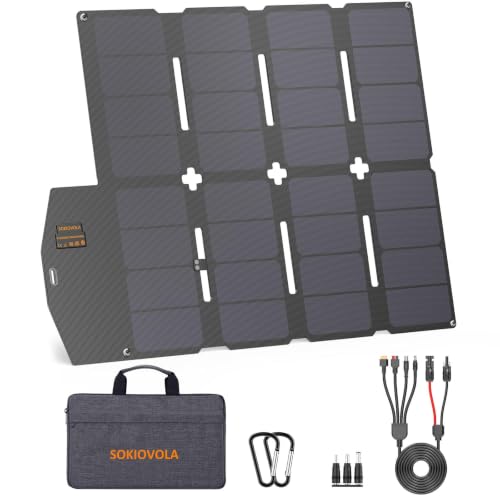
- Folds to 14.69 by 8.67 inches
- 4-in-1 cable for multiple power stations
- IP68-rated ETFE construction
Best For: Small boats and portable power-station charging
Flexible High-Wattage Pick

- 200W output at 7.9 pounds
- Bends up to 270 degrees
- ETFE surface and IP68 resistance
Best For: Curved boat surfaces needing more output than a 100W panel
Best Portable Battery Charger
DOKIO 150W Foldable Solar Panel

- 150W folding 12V charging setup
- Detachable PWM safety controller
- Adjustable bracket and 9.8-foot cable
Best For: Directly charging 12V boat batteries with a portable suitcase-style panel
Best Lightweight Marine Mount
Renogy 100W Flexible Solar Panel
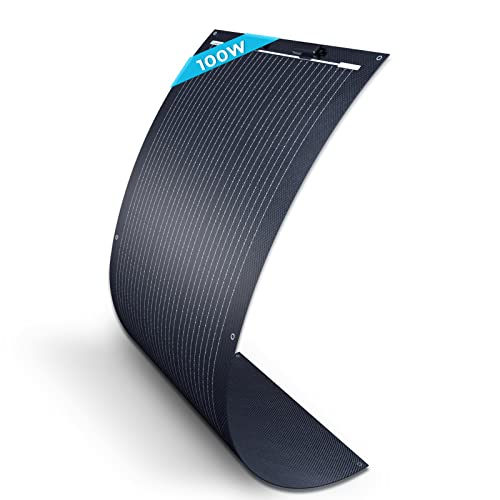
- Bends within 240 degrees for curved surfaces
- Lightweight 5.3-pound design
- IP67 junction box and 22% efficiency
Best For: Low-profile installation on curved boat decks, cabins, and other marine surfaces
Best High-Output Power Station Panel
ZOUPW 450W Portable Solar Panel

- 450W output with stated 25% efficiency
- Designed for 40–60V power-station input
- IP68 protection and included adapter kit
Best For: Rapidly charging compatible 2kWh-plus power stations aboard larger boats
Lightweight Battery Maintainer
FlexSolar 20W 12V Solar Charger
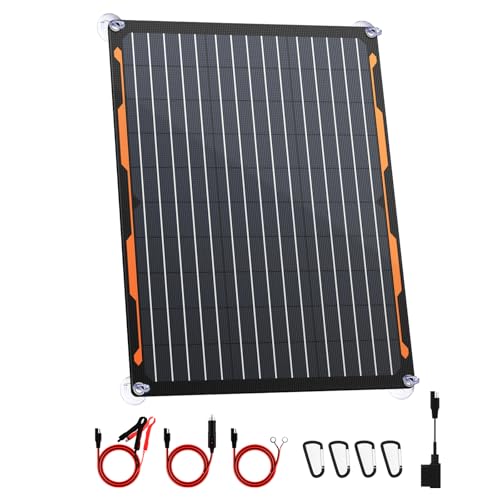
- 22%–24% claimed monocrystalline efficiency
- Built-in charge controller
- 380g portable design
Best For: Maintaining 12V boat batteries
Best Heavy-Duty Pick
GRECELL UB200 200W Flexible Panel

- 200W output with claimed 23.5% efficiency
- Foldable 10.14-pound design
- Four connector types included
Best For: Power stations and larger off-grid charging setups
Simple Trickle-Charging Kit
12W Waterproof 12V Battery Maintainer

- Designed for long-term 12V maintenance
- Multiple included connection accessories
- LED charging-status indicator
Best For: Keeping idle boat batteries topped up
Lightweight Flexible Pick – SunPower 100W Flexible Panel
For boat owners comparing portable solar panels for boating, this 100W flexible panel stands out for its low weight, compact profile, and easy MC4 connectivity. Its Maxeon monocrystalline cells are rated for up to 22–25% efficiency, while the flexible design can bend up to 30 degrees to fit available surfaces.
Best For: Boats, RVs, and campers that need a lightweight panel for curved or space-conscious mounting.
Pros:
- Weighs just 4.4 pounds and flexes up to 30 degrees.
- High-efficiency Maxeon monocrystalline cells.
- Includes MC4 connectors and pre-drilled mounting holes.
- IP67-protected junction box and weather-resistant construction.
Cons:
- At 100W, it provides less output than larger 200W panels.
- The 45.9-inch length may still require careful placement on smaller boats.
This is a practical choice when minimizing weight matters more than maximizing wattage. The flexible construction and straightforward MC4 setup make it especially convenient for marine installations with limited usable space.
High-Output Marine Option – Callsun 400W Bifacial Solar Panel Set
This two-panel Callsun set is aimed at boaters who want substantially more charging capacity from portable solar panels for boating. The pair provides 400W total in a series configuration, with bifacial cells, N-type technology, and a dual-module design intended to reduce the effect of partial shade.
Best For: Larger marine, RV, and off-grid systems with room for two framed panels and a compatible 60V-class power station input.
Pros:
- Two 200W panels provide up to 400W total output.
- 25.6% rated efficiency with N-type 16BB cells.
- Bifacial design can capture suitable reflected and diffuse light.
- Dual-module layout can limit losses from partial shading.
Cons:
- Each panel weighs 23.8 pounds, making this less convenient to move frequently.
- The 51.3-by-30.3-inch framed size requires significant deck or mounting space.
- Series operation and power-station voltage limits require compatibility checks.
With high combined wattage and shade-tolerant design features, this set makes sense for boats needing meaningful solar input rather than occasional trickle charging. Its framed construction is more installation-oriented than grab-and-go portable.
Most Portable Foldable Choice – SOKIOVOLA 100W Foldable Panel
If portability is the priority, this foldable 100W charger is a convenient contender among portable solar panels for boating. It folds to 14.69 by 8.67 inches, weighs 4.6 pounds, and includes a 4-in-1 cable for connecting with many common portable power stations.
Best For: Day trips, small boats, and boaters who want a packable panel for charging a portable power station.
Pros:
- Folds into a compact size and weighs 4.6 pounds.
- 4-in-1 output cable supports MC4, XT60, DC5521, DC7909, and Anderson connections.
- ETFE construction and IP68 dust- and water-resistance rating.
- Includes a carrying bag, adapters, and mounting buckles.
Cons:
- Power output may be limited by the connected power station’s maximum solar input.
- Its 100W rating is better suited to smaller loads than high-demand marine systems.
- Actual charging performance depends on sunlight and panel positioning.
The compact folded footprint and broad connector compatibility make this a flexible option for portable boating setups. Before buying, confirm that your power station accepts the panel’s output and connector configuration.
Flexible High-Wattage Pick – BougeRV Arch Pro 200W Panel
The BougeRV Arch Pro combines 200W output with an ultra-thin fiberglass construction, making it useful when portable solar panels for boating need to follow a curved surface. Its N-type 16BB cells are rated for up to 25% conversion, and bypass-diode technology is designed to improve output stability in partial shade.
Best For: Boats with curved roofs, decks, or other mounting surfaces where a rigid framed panel would be difficult to install.
Pros:
- 200W output in a 7.9-pound flexible panel.
- Can bend up to 270 degrees for curved surfaces.
- ETFE surface is described as scratch-resistant, self-cleaning, and sand-resistant.
- IP68-rated water and dust resistance with bypass-diode shade tolerance.
Cons:
- The approximately 36V open-circuit voltage may not suit every power station.
- Mounting tape is sold separately.
- Real-world output varies with sunlight, angle, and temperature.
This panel offers a strong middle ground between output and installation flexibility. Its voltage compatibility should be checked carefully before purchase, particularly if it will connect directly to a portable power station.
Best Portable Battery Charger – DOKIO 150W Foldable Solar Panel
For boaters who want a ready-to-use option among portable solar panels for boating, the DOKIO 150W combines a folding suitcase design with a standalone charge controller. It connects directly to a 12V battery with included alligator clips and provides up to 9.8 feet of cable for easier placement in the sun.
Best For: Charging 12V boat batteries, power stations, and other portable setups where easy deployment matters.
Pros:
- Detachable 12V PWM controller includes reverse-polarity, overcharge, overload, and short-circuit protection.
- Folds to 17.7 by 35.8 inches and includes a carrying handle and bag.
- Adjustable bracket helps optimize the panel angle toward the sun.
- Long cable supports more flexible panel placement and is useful for boat, RV, and camping applications.
Cons:
- At 22.4 pounds, it is heavier than a flexible panel.
- Users must pay attention to battery polarity when attaching the alligator clips.
- The included PWM controller is a basic option compared with more advanced controller types.
The DOKIO is a practical choice when direct 12V battery charging and portability are more important than minimizing weight. Its folding format, adjustable support, and replaceable controller make it convenient for occasional boating and emergency use.
Best Lightweight Marine Mount – Renogy 100W Flexible Solar Panel
The Renogy 100W is a strong fit for boaters who need portable solar panels for boating that can conform to curved surfaces. Its flexible construction bends within 240 degrees, weighs 5.3 pounds, and has a low-profile black appearance suited to cabin tops, decks, and other shaped mounting areas.
Best For: Lightweight, semi-permanent installation on curved boat surfaces where a rigid panel would be difficult to mount.
Pros:
- Flexible design bends within 240 degrees to suit curved surfaces.
- Weighs 5.3 pounds and has a thin, glare-free appearance.
- Half-cut PERC cells provide a stated 22% efficiency rating.
- IP67 waterproof junction box, pre-drilled mounting holes, and included connector cables simplify installation.
Cons:
- Its 100W output is lower than the larger panels in this roundup.
- The 2.3-foot included connector cable may require an extension for some boat layouts.
- It is designed for mounting rather than quick folding and repositioning.
Choose the Renogy when weight, profile, and surface conformity matter most. It is less of a grab-and-go charger than a folding panel, but its flexible form is well suited to marine installations with limited flat space.
Best High-Output Power Station Panel – ZOUPW 450W Portable Solar Panel
The ZOUPW 450W targets boaters powering large solar generators rather than directly maintaining a small 12V battery. Among portable solar panels for boating, it stands out for its high stated output, N-type 16BB cells, adjustable kickstands, marine-spray protection, and included connector kit. Check your power station’s input range before buying.
Best For: Fast-charging compatible 2kWh-plus power stations on larger boats or during extended off-grid trips.
Pros:
- 450W output and stated 25% efficiency are suited to high-capacity power stations.
- N-type 16BB cell design is intended to reduce micro-crack risks and maintain performance.
- IP68-rated panel construction, ETFE coating, and bypass diodes help address rain, spray, dust, and partial shading.
- Includes adjustable kickstands, a 13.12-foot extension cable, and a 4-in-1 connector cable.
Cons:
- Its 45.9V open-circuit voltage is not compatible with low-voltage units below 30V input, including several listed models.
- At 29.5 pounds, it is less convenient to carry than smaller panels.
- The manufacturer does not recommend long-term fixed, series, or parallel connections.
The ZOUPW makes sense when your boat uses a compatible high-voltage power station and fast replenishment is the priority. It is overkill for a basic 12V battery setup, so confirm voltage compatibility and allow room for its larger footprint before choosing it.
Lightweight Battery Maintainer – FlexSolar 20W 12V Solar Charger
For boat owners seeking portable solar panels for boating, this 20W FlexSolar kit is a compact option for maintaining a 12V battery. Its built-in charge controller, SAE connection, cigarette-lighter plug, and alligator clips support straightforward setup.
Best For: Maintaining 12V boat batteries during storage or periods of limited use.
Pros:
- Built-in charge controller helps simplify battery maintenance.
- Monocrystalline cells offer claimed 22%–24% conversion efficiency.
- Lightweight 380g design is easy to carry and position.
- Includes both a cigarette-lighter plug and alligator clips.
Cons:
- At 20W, it is intended for trickle charging and maintenance rather than rapid charging.
- The kit is designed for 12V applications, limiting broader power-station use.
This is a practical pick when portability and simple 12V battery maintenance matter more than high charging output. The integrated controller reduces the need for extra components.
Best Heavy-Duty Pick – GRECELL UB200 200W Flexible Panel
For boaters who need more energy than a trickle charger can provide, the GRECELL UB200 offers 200W of portable solar output. Its foldable format, multiple connector options, and adjustable kickstands make it suited to larger off-grid charging setups.
Best For: Recharging compatible power stations or, with a separate controller, supporting larger 12V boat-battery systems.
Pros:
- 200W monocrystalline panel with claimed efficiency up to 23.5%.
- Foldable, 10.14-pound design with four adjustable kickstands.
- Includes DC7909/8, XT60, aviation, and Anderson connector options.
- ETFE surface is described as flexible, scratch-resistant, and IP65 water-resistant.
Cons:
- Charge controller and alligator clips are not included for direct 12V battery charging.
- IP65 water resistance does not mean it should be placed in rain or submerged.
- Its larger folded footprint and 10.14-pound weight are less convenient than small maintainers.
The UB200 is the stronger choice for substantial portable power, particularly when paired with a compatible generator. Boaters should plan for additional charging hardware if connecting it directly to a battery.
Simple Trickle-Charging Kit – 12W Waterproof 12V Battery Maintainer
This 12W maintainer is a straightforward choice for boat owners comparing portable solar panels for boating. It is designed to keep idle 12V batteries topped up and includes several connection options for quick installation.
Best For: Preventing dead 12V boat batteries during storage or extended idle periods.
Pros:
- Designed for long-term 12V battery maintenance without disconnecting the battery.
- Built-in protection covers overcharge, overvoltage, short circuit, and reverse charging.
- LED indicators show standby, charging, full, and short-circuit status.
- Includes SAE cable, alligator clips, carabiner, suction cup, and cigarette-lighter connection.
Cons:
- 12W output and 0.67A capacity are intended for maintenance, not fast charging.
- It is limited to 12V battery applications.
With its low-maintenance setup and clear status lights, this panel suits boats that sit unused for weeks. The included mounting and connection accessories make it especially convenient for occasional battery upkeep.
How We Picked the Best Portable Solar Panels for Boating
We focused on practical specifications for marine use: rated wattage, panel construction, portability, connector compatibility, charging controls, and weather resistance. Flexible and foldable designs received attention because they are easier to store and position on boats, while larger rigid-style panels can provide more output when deck or dock space is available.
We also considered whether each option is better suited to battery maintenance, direct power-station charging, or a larger 12V or 24V system. A panel’s advertised wattage is a laboratory maximum, so real-world output depends on sun angle, shading, temperature, wiring, and the charge controller.
Quick Comparison
- For battery maintenance: Choose a 12W or 20W panel with a built-in controller or compatible maintenance setup.
- For compact emergency charging: A 100W foldable or flexible panel offers a useful balance of output and storage size.
- For more demanding loads: Consider a 150W to 200W panel, provided your power station and wiring support the input.
- For high-output systems: The 400W and 450W choices can recharge larger power stations faster, but they require more placement area and careful electrical matching.
Key Buying Factors for Portable Solar Panels for Boating
Wattage and Battery Compatibility
Estimate daily energy use before choosing a panel. Small trickle chargers are designed to offset standby drain, not rapidly recharge a depleted deep-cycle battery. For larger banks or power stations, verify the panel’s voltage, current, and maximum input limits before connecting it.
Flexible Versus Foldable Construction
Flexible panels can conform to curved surfaces and store easily, but they should be mounted according to the manufacturer’s instructions to prevent heat buildup and stress. Foldable suitcase panels are convenient to deploy on deck or dock and are usually easier to angle toward the sun.
Marine Durability and Shading
Look for waterproof construction, sealed connectors, corrosion-resistant hardware, and a robust outer surface. Boats frequently experience partial shade from masts, rails, and rigging, so anti-shading features or bypass-diode design can help preserve output. Even the best panel performs better when positioned in unobstructed sunlight.
Connectors and Charge Control
MC4 connectors are common, but your battery, controller, and power station may require adapters. A charge controller is essential when connecting a panel directly to a battery unless the battery system already includes suitable regulation. Never assume a panel can be connected directly without confirming the electrical specifications.
Who Should Buy Which Portable Solar Panels for Boating?
Choose a compact 12W or 20W model if your priority is maintaining a starter battery or small auxiliary battery during storage. Choose a 100W panel for portable electronics, modest power stations, or occasional off-grid use. Choose a 150W or 200W option when you need faster charging and have room to deploy a larger panel safely. Choose a 400W or 450W system for substantial power stations or larger battery setups, but confirm voltage limits, controller requirements, mounting space, and cable sizing first. For any option, secure the panel against wind and water exposure, and treat the manufacturer’s marine-use guidance as the final authority.