Reliable electricity can make an overlanding trip more comfortable, whether you need to recharge a power station, run communication gear, or keep essential devices ready for use.
These portable solar panels cover a range of output levels, designs, and weather-resistance ratings so you can match your setup to your vehicle, campsite, and energy demands.
Table of Contents
- Best 10 Portable Solar Panel for Overlanding Picks for 2026
- Best Lightweight Option – Renogy 200W Portable Solar Panel
- Best Weather-Ready Bifacial Panel – EF ECOFLOW 220W Portable Solar Panel
- Best High-Output Choice – ZOUPW 450W Portable Solar Panel
- Best Rugged 400W Panel – Renogy 400W Portable Solar Panel
- Flexible 200W Pick – SOKIOVOLA 200W Foldable Solar Panel
- Easy-Angle Premium Pick – EF ECOFLOW 220W Portable Solar Panel
- High-Output Overlanding Pick – ZOUPW 480W Bifacial Solar Panel
- Best with Extra Features – FlexSolar 100W Foldable Solar Panel
- Best Heavy-Duty Pick – EBL 200W Portable Solar Panel
- Best Power-Station Compatibility – ZOUPW 100W N-Type Solar Panel
- How We Picked the Best Portable Solar Panel for Overlanding
- Quick Comparison
- Key Buying Factors for a Portable Solar Panel for Overlanding
- Who Should Buy Which Portable Solar Panel for Overlanding?
Best 10 Portable Solar Panel for Overlanding Picks for 2026
Best Lightweight Option
Renogy 200W Portable Solar Panel

- 25% efficient N-Type 16BB cells
- 13.9-pound folding design
- USB-C and dual USB-A charging
Best For: Compact overlanding setups and direct device charging
Best Weather-Ready Bifacial Panel
EF ECOFLOW 220W Portable Solar Panel

- 25% efficient N-Type cells
- Bifacial design for additional energy collection
- IP68 waterproof and dust protection
Best For: EcoFlow users camping in varied weather
Best High-Output Choice
ZOUPW 450W Portable Solar Panel

- 450W output for large power stations
- 40-60V input design
- Includes adapter cable and extension cable
Best For: 2kWh-plus power stations on extended overlanding trips
Best Rugged 400W Panel
Renogy 400W Portable Solar Panel

- 400W foldable charging capacity
- Fiberglass and ETFE outdoor construction
- IP67 waterproofing and carry case
Best For: Rugged RV and overlanding power setups
Flexible 200W Pick
SOKIOVOLA 200W Foldable Solar Panel

- 25.5% claimed conversion efficiency
- IP68 ETFE construction
- Multi-connector cable included
Best For: Versatile RV and camping power setups
Easy-Angle Premium Pick
EF ECOFLOW 220W Portable Solar Panel

- 220W N-Type panel with 25% efficiency
- Built-in 30–60° adjustable bracket
- IP68 water and dust resistance
Best For: Quickly adjustable RV and overlanding setups
High-Output Overlanding Pick
ZOUPW 480W Bifacial Solar Panel

- 480W N-Type 16BB rated output
- Bifacial design for reflected-light gain
- 36-month warranty and ground stakes
Best For: Large power stations and serious off-grid travel
Best with Extra Features
FlexSolar 100W Foldable Solar Panel

- 4.1-pound foldable design with carry bag
- USB-C, USB-A, and DC outputs
- IP67 protection and 23%+ efficiency
Best For: Lightweight overlanding and direct device charging
Best Heavy-Duty Pick
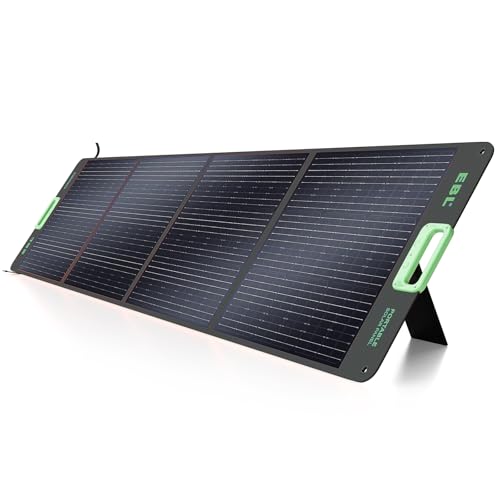
- 200W maximum power for larger systems
- Weather-resistant aluminum-frame construction
- Designed for RV, marine, and off-grid use
Best For: Higher-demand overlanding and RV power systems
Best Power-Station Compatibility

- 25% efficiency with N-Type 16BB cells
- Five-in-one cable for popular power stations
- IP67 protection with adjustable kickstands
Best For: Multi-brand portable power station users
Best Lightweight Option – Renogy 200W Portable Solar Panel
If you want a portable solar panel for overlanding that is easy to carry and set up, this 200W Renogy model combines a folding design with 25% efficiency. Its magnetic closure, four kickstands, and built-in USB outputs make it practical for charging smaller devices or compatible power stations at camp.
Best For: Overlanders who prioritize portability, direct USB charging, and a compact panel for RVs, SUVs, and campsites.
Pros:
- 25% efficiency from N-Type 16BB monocrystalline cells.
- Folds to 23.72 x 22.99 x 1.97 inches and weighs 13.9 pounds.
- USB-C PD 45W and dual USB-A ports can charge up to three devices directly.
- Four kickstands and multiple angle settings help with positioning.
Cons:
- Outputs through MC4; the 4-in-1 adapter is sold separately.
- Its 200W capacity is smaller than the high-output options in this roundup.
This is a sensible choice when storage space and easy handling matter more than maximum wattage. Verify your power station’s voltage and connector requirements before buying an adapter.
Best Weather-Ready Bifacial Panel – EF ECOFLOW 220W Portable Solar Panel
For a portable solar panel for overlanding built around efficient collection and weather resistance, the EF ECOFLOW 220W model offers N-Type cells, a bifacial design, and an IP68 rating. Its adjustable bracket and integrated angle guide make field positioning more straightforward.
Best For: Overlanders who use EcoFlow power stations and want a durable, adjustable panel for changing outdoor conditions.
Pros:
- 25% conversion efficiency with N-Type solar technology.
- Bifacial construction can collect up to 28% more energy in suitable conditions.
- IP68 water and dust protection with an ETFE coating.
- 30-60-degree adjustable bracket includes a solar angle guide.
Cons:
- At 15.4 pounds, it is heavier than the 200W Renogy option.
- Uses MC4 connectivity, so connector compatibility should be checked before purchase.
The bifacial design gives this panel extra potential when the ground or surroundings provide useful reflected light. Its performance will still depend on placement, sunlight, and the receiving power station’s limits.
Best High-Output Choice – ZOUPW 450W Portable Solar Panel
When your overlanding setup relies on a large power station, this 450W ZOUPW panel is designed to deliver higher input than compact folding models. Its 40-60V input profile, fiberglass construction, included adapter kit, and IP68 protection suit high-capacity off-grid systems.
Best For: Overlanders charging 2kWh-plus power stations such as compatible EcoFlow, Anker, or Bluetti systems.
Pros:
- 450W output and 25% claimed efficiency from N-Type 16BB cells.
- Designed for high-capacity power stations with 40-60V input.
- Includes a 4-in-1 connector cable, 13.12-foot extension cable, ground stakes, and storage bag.
- IP68-rated construction with bypass diodes for improved partial-shade performance.
Cons:
- Not compatible with low-voltage units requiring less than 30V input, including listed Jackery 1000/500/300 models.
- At 29.5 pounds, it requires more effort to transport and position.
- The manufacturer does not recommend long-term fixed, series, or parallel connections.
This is the strongest fit for demanding power stations, but voltage matching is essential. Confirm your generator’s solar input range before purchasing, since the panel is not intended for many lower-voltage units.
Best Rugged 400W Panel – Renogy 400W Portable Solar Panel
This Renogy 400W model is a practical portable solar panel for overlanding when you want substantial charging capacity in a foldable format. Fiberglass reinforcement, ETFE coating, IP67 waterproofing, and a carry case are aimed at frequent outdoor transport and rugged use.
Best For: RV and overlanding users charging compatible high-capacity power stations or 12V/24V battery systems with a suitable controller.
Pros:
- 400W maximum output with 23% claimed efficiency.
- Fiberglass reinforcement, ETFE coating, and IP67 waterproofing support outdoor durability.
- Parallel wiring helps reduce the effect of individual shadows.
- Folds to 27.9 x 33.7 inches and includes a carry case and kickstand.
Cons:
- MC4 output cables are included, but the Renogy 4-in-1 adapter is sold separately.
- At 30.2 pounds, it is less convenient to move than smaller panels.
- A compatible solar charge controller is required for 12V/24V battery systems and is not included.
Choose this panel if rugged materials and 400W-class charging are priorities. Before buying, compare its voltage, current, and connector requirements with your power station or battery setup.
Flexible 200W Pick – SOKIOVOLA 200W Foldable Solar Panel
If you want a portable solar panel for overlanding that balances useful output with manageable storage, this 200W SOKIOVOLA model is a practical option. It folds to about 21 by 23 inches, includes a carrying handle and bag, and works with many popular power stations through its included multi-connector cable.
Best For: Overlanders and campers who need a versatile 200W panel for RV trips, camping, and backup power.
Pros:
- 25.5% claimed conversion efficiency from monocrystalline cells.
- Foldable design with magnetic handle and mounting holes for RV use.
- IP68-rated ETFE construction for water and dust resistance.
- Includes connectors for XT60, DC5521, DC7909, DC8020 and Anderson inputs.
Cons:
- The supplied notes list the weight as 11.57 pounds in one place and 16.3 pounds in the specifications, so buyers should confirm the actual shipping or product weight.
- Its folded size and weight may be inconvenient for extended backpacking or hiking.
- Actual charging may be limited by a power station’s maximum solar-input rating.
This panel is a strong middle-ground choice when connector flexibility and weather resistance matter. Before buying, verify your power station’s input limits and connector requirements so the 200W capacity can be used effectively.
Easy-Angle Premium Pick – EF ECOFLOW 220W Portable Solar Panel
For overlanders who value simple positioning, the EF ECOFLOW 220W is a portable solar panel for overlanding with a built-in 30–60-degree adjustable bracket and solar angle guide. Its N-Type cells, foldable format and IP68 rating make it well suited to road trips where setup speed and weather resistance are important.
Best For: Overlanding, RV travel and camping users who want a foldable 220W panel with integrated angle adjustment.
Pros:
- 220W output with claimed 25% conversion efficiency using N-Type solar technology.
- Integrated adjustable kickstand supports 30–60-degree positioning.
- IP68 water and dust resistance with a durable ETFE coating.
- Includes a solar-to-XT60i cable and portable storage bag.
Cons:
- At 15.9 pounds, it is portable but not especially suited to long-distance carrying.
- The supplied package includes an XT60i cable rather than a broad multi-connector kit.
- It carries a one-year manufacturer warranty, which is shorter than some competing options.
The integrated angle guide is the main practical advantage here, reducing the need to improvise a stand at camp. Choose it if your power station accepts the included XT60i connection and you prefer a straightforward deployment routine.
High-Output Overlanding Pick – ZOUPW 480W Bifacial Solar Panel
The ZOUPW 480W is aimed at overlanders running larger power stations and needing more generation from a single deployable panel. Its bifacial design can capture reflected light from surfaces such as snow or sand, while the foldable composite construction keeps the stated weight to 22.5 pounds.
Best For: Large RV, expedition and off-grid setups using compatible high-input power stations.
Pros:
- 480W rated output with N-Type 16BB cells and a claimed 25% conversion rate.
- Bifacial design claims up to 30% extra gain on high-albedo surfaces.
- Includes a 13-foot extension cable, 4-in-1 connector cable and ground stakes.
- IP68 rating, composite coating and a stated 36-month warranty.
Cons:
- Its 42.5V architecture requires a compatible large power station or solar-input system.
- At 22.5 pounds, it is substantially heavier than smaller 200W–220W panels.
- Bifacial gains depend on reflective ground conditions and unobstructed placement.
This is the most capable option in the group for high-demand off-grid use, but compatibility should be your first check. Confirm your power station’s voltage, current and maximum solar-input specifications before relying on the full 480W rating.
Best with Extra Features – FlexSolar 100W Foldable Solar Panel
For overlanders who prioritize easy packing, the FlexSolar 100W is a highly portable solar panel for overlanding. It weighs 4.1 pounds, folds into a compact package, and provides USB-C, USB-A, and DC outputs for charging devices or compatible power stations.
Best For: Lightweight camping kits, road trips, phones, power banks, and smaller portable power stations.
Pros:
- Very light and compact, with an included carry bag.
- Offers PD 3.0 45W USB-C, USB-A, and 100W DC outputs.
- IP67-rated protection helps defend against rain, dust, and sand.
- 23%+ conversion efficiency and included multi-connector cable add versatility.
Cons:
- Its 100W capacity is better suited to smaller setups than high-demand appliances.
- The unfolded panel is relatively large despite its compact folded size.
The FlexSolar stands out when portability and direct device charging matter most. Its weather protection and broad output selection make it a practical overlanding backup, especially for travelers trying to keep weight and bulk down.
Best Heavy-Duty Pick – EBL 200W Portable Solar Panel
The EBL 200W delivers more rated power than the other panels in this roundup, making it a compelling solar panel for overlanding when you need greater charging capacity. Its monocrystalline construction is designed for RV, marine, camping, and off-grid applications.
Best For: RVs, larger battery systems, marine setups, and overlanders who need a 200W panel for higher-output charging.
Pros:
- 200W maximum power provides more capacity for compatible batteries and appliances.
- Monocrystalline construction is designed for high-efficiency charging.
- Weather-resistant materials and a sturdy aluminum frame support outdoor use.
- Pre-drilled holes and compatible connectors can simplify installation.
Cons:
- Its framed construction and larger dimensions may be less convenient to transport than compact foldable chargers.
- The supplied notes do not specify direct USB outputs or a broad adapter set.
The EBL is the capacity-focused choice. It makes the most sense when your overlanding setup can accommodate a larger panel and you want 200W of rated output for a battery or off-grid system rather than primarily charging small devices directly.
Best Power-Station Compatibility – ZOUPW 100W N-Type Solar Panel
The ZOUPW 100W combines a 25% efficiency rating with a five-in-one cable system, making it a versatile solar panel for overlanding. It is designed to connect with power stations from Jackery, EcoFlow, Bluetti, Anker, and other systems using the included connectors.
Best For: Overlanders using multiple brands of portable power stations who want broad connector compatibility and adjustable panel positioning.
Pros:
- N-Type 16BB cells are rated for up to 25% conversion efficiency and low-light performance.
- Five-in-one cable supports DC8020, XT60, Anderson, DC7909/8mm, and DC5521 connections.
- IP67 protection and ETFE lamination are suited to outdoor conditions.
- Adjustable kickstands allow positioning from 35 to 60 degrees.
Cons:
- At about 8 pounds, it is considerably heavier than the FlexSolar 100W option.
- It should not be immersed, despite its IP67 weather protection.
The ZOUPW is a strong fit for a mixed-device overlanding kit. Its included cable coverage reduces the need for extra adapters, while the kickstands make it easier to orient the panel toward the sun at camp.
How We Picked the Best Portable Solar Panel for Overlanding
We compared these panels by rated wattage, cell technology, portability, weather resistance, compatibility, and practical value for vehicle-based travel. Higher output can reduce charging time, while foldable designs are easier to store and deploy at camp. We also considered useful details such as bifacial construction, N-type cells, kickstands, carrying handles, connector options, and stated efficiency.
Keep in mind that rated output is measured under ideal sunlight. Shade, heat, panel angle, dust, cable losses, and the input limits of your power station can substantially reduce real-world charging performance.
Quick Comparison
| Output range | Best suited to | Main advantage |
|---|---|---|
| 100W | Small power stations and day trips | Lowest weight and easiest storage |
| 200–220W | General overlanding use | Balanced charging speed and portability |
| 400–480W | Large power stations and extended stays | More energy production in favorable sun |
Key Buying Factors for a Portable Solar Panel for Overlanding
Power Output and Station Compatibility
Choose a panel based on the solar input range and maximum wattage supported by your power station. A 400W panel will not charge faster if the station accepts only 200W, and some smaller stations may not accept the panel’s voltage or current. Verify connectors, voltage, amperage, and whether an adapter is included before buying.
Portability and Setup
Consider folded dimensions, weight, handles, hinges, and integrated stands. A lighter 100W or 200W panel may be the better choice when storage space is limited or you reposition camp often. Larger panels are more productive but require more room and a stable setup area.
Efficiency, Bifacial Cells, and Durability
Higher-efficiency N-type panels can produce more power from a smaller footprint, especially when sunlight is limited. Bifacial models may collect reflected light from bright ground surfaces, though their benefit depends on placement. For outdoor travel, IP67 or IP68 protection helps with rain and dust, but panels should still be stored dry and handled carefully.
Who Should Buy Which Portable Solar Panel for Overlanding?
Choose a 100W model if you mainly recharge phones, cameras, lights, or a compact power station. A 200W or 220W panel is the most versatile option for typical overlanding, supporting faster charging without the bulk of the largest systems. Select a 400W–480W panel if you carry a high-capacity power station, spend several days away from hookups, or need to replenish energy quickly during strong sunlight.
Before ordering, check your vehicle storage space, expected daily consumption, weather conditions, and the panel’s cable length. The best Portable Solar Panel for Overlanding is not necessarily the most powerful model—it is the one your power station can use efficiently and that you will realistically deploy whenever you make camp.