Plastic repair can be faster, cleaner, and more durable than replacing an entire bumper, panel, housing, or household part. The right plastic welder helps you reinforce cracks, join compatible thermoplastics, and complete small DIY repairs with better control.
We selected 10 plastic welders for home workshops across several use cases, from compact hot-staple kits and cordless tools to higher-powered hot-air welders. Use the guide below to compare features and choose a setup that matches your materials, repair size, and experience level.
Table of Contents
- Best 10 Plastic Welders for Home Workshops Picks for 2026
- Versatile Staple Repairer – ATOLS Plastic Welder Kit
- Compact 3-in-1 Tool – 150W Plastic Welding Kit
- Complete Staple and Rod System – 1200PCS Hot Stapler Kit
- Digital Temperature Control – GNI 150W Plastic Welder
- Best Certified Pick – Standard Plastic Welder Kit
- Best Hot-Air Versatility – 1600W Hot Air Plastic Welder
- Best Hot-Staple Value – 2-in-1 Plastic Repair Kit
- Best Cordless Pick – Portable Hot Staple Welder
- Best Versatility – 220W Plastic Repair Kit
- Best Compact Staple Kit – WEP 960-V Plastic Welder
- How We Picked These Plastic Welders for Home Workshops
- Quick Comparison
- Key Buying Factors for Plastic Welders for Home Workshops
- Who Should Buy Which Plastic Welders for Home Workshops?
Best 10 Plastic Welders for Home Workshops Picks for 2026
Versatile Staple Repairer

- 1,000 stainless staples in six shapes
- Heats staples in about 1–2 seconds
- Includes light, pliers, and carrying case
Best For: Frequent bumper and household plastic crack repairs
Compact 3-in-1 Tool
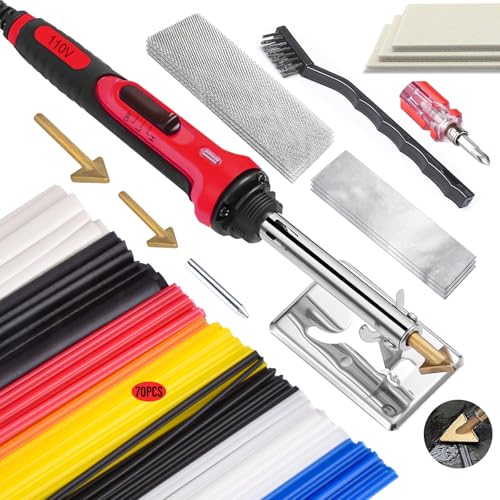
- Heats to about 1,112°F in 15–20 seconds
- Three-speed temperature control
- Includes three repair tips and 70 rods
Best For: Detail-oriented DIY plastic and electronics repairs
Complete Staple and Rod System

- 1,200 staples plus 40 plastic rods
- Hot stapler and flat iron in one kit
- Heats to about 752°F in roughly three seconds
Best For: Multi-step repairs on 2mm–6mm ABS, PP, TPE, PA, and PC plastics
Digital Temperature Control

- LCD-adjustable heat from 392°F to 1,112°F
- Temperature-locking function and rapid heating
- Includes four tips and 106 welding rods
Best For: Repeatable heat-controlled plastic and light electronics repairs
Best Certified Pick

- UL-certified 80W plastic welder
- Includes tips, mesh, tape, rods, and sandpaper
- Heats to 525°F and weighs about 1.12 lb
Best For: General home, automotive, kayak, and tank repairs
Best Hot-Air Versatility

- 1600W power with heat up to 1202°F
- Includes multiple nozzles, roller, and floor groover
- Suitable for PVC, PE, PP, PVDF, and similar plastics
Best For: Roofing, flooring, tarps, membranes, and larger seam repairs
Best Hot-Staple Value

- 100W tool heats to 752°F in 2–3 seconds
- Includes 900 staples and repair accessories
- Designed for bumpers and cracked plastic parts
Best For: Fast crack reinforcement and automotive bumper repairs
Best Cordless Pick
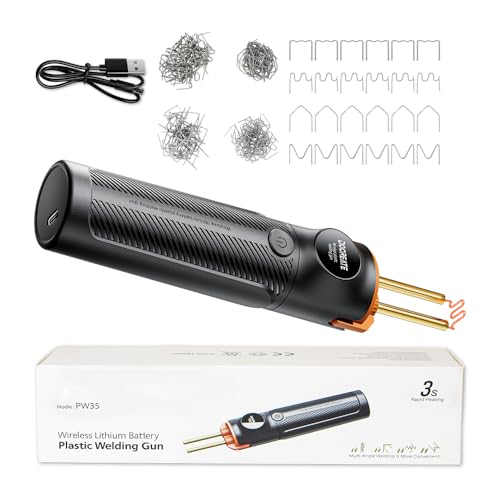
- Cordless 4000mAh operation
- Heats in about three seconds
- Includes 400 assorted staples
Best For: Portable bumper repairs and DIY plastic projects
Best Versatility

- 220W corded heating power
- Supports staples and plastic rods
- Includes 1002 staples and 100 rods
Best For: Multi-material automotive and household plastic repairs
Best Compact Staple Kit

- Built-in LED work light
- Includes 200 assorted staples
- Comes with pliers and overheating protection
Best For: ABS, bumper, and household crack repairs
Versatile Staple Repairer – ATOLS Plastic Welder Kit
For plastic welders for home workshops, the ATOLS kit is a practical choice when you primarily need to reinforce cracks with hot staples. It is designed for common automotive and household plastic repairs and includes six staple shapes for different damage patterns.
Best For: Bumper, dashboard, lamp housing, kayak, motorcycle, and general plastic crack repairs.
Pros:
- Includes 1,000 stainless steel staples in six shapes, including flat, wave, and corner styles.
- Heats staples in about 1–2 seconds for quick repairs.
- Front light, ergonomic rubber handle, pliers, and carrying case support convenient operation.
- Designed to repair a broad range of common plastics and parts.
Cons:
- This is primarily a hot-staple repair tool, so it may be less suitable for projects requiring extensive plastic rod filling.
- The supplied notes do not specify adjustable temperature control.
With its large staple assortment and compact case, the ATOLS is well suited to a home workshop that handles recurring cracks and splits. Choose the staple shape carefully and practice controlling insertion depth on scrap plastic first.
Compact 3-in-1 Tool – 150W Plastic Welding Kit
This 150W kit suits home workshops that want a compact plastic welder with more control than a basic hot-staple gun. Its three-speed temperature design and interchangeable tips support plastic smoothing, gap work, and selected electronics repairs.
Best For: DIY users repairing bumpers, curved plastic surfaces, gaps, and small electronic components.
Pros:
- Reaches up to about 1,112°F in 15–20 seconds.
- Three temperature settings help accommodate delicate and tougher plastic work.
- Includes pointed, small-triangle, and large-triangle tips for different repair areas.
- Comes with 70 plastic rods, mesh, tape, sanding materials, a brush, and a stand.
Cons:
- Temperature control is described as three-speed rather than a precise digital setting.
- The kit focuses on tip-based melting and filling rather than a large hot-staple assortment.
The combination of rapid heating, multiple tips, and included consumables makes this a flexible starter kit for varied home repairs. Its pen-shaped design should also be comfortable for detail work and short repair sessions.
Complete Staple and Rod System – 1200PCS Hot Stapler Kit
For plastic welders for home workshops, this kit stands out when you want both hot-staple reinforcement and flat-iron plastic filling. It combines a large staple supply with rods, mesh, tape, and finishing accessories for repairs on several common plastic types.
Best For: Bumper, dashboard, kayak, trash-can, lawn-tractor, and household repairs involving 2mm–6mm plastic.
Pros:
- Provides 1,200 staples in six types plus 40 plastic welding rods.
- Combines a hot staple gun with a separate flat iron for smoothing and filling.
- Reaches approximately 752°F in about three seconds.
- Adjustable trigger, LED light, mesh, tape, sandpaper, and cleaning brush add practical utility.
Cons:
- Not designed for TPO plastic according to the supplied notes.
- Users should practice on scrap plastic because the kit has a short learning curve.
- It is relatively substantial at about 2.97 pounds.
This is a strong all-in-one option for workshop users who need more than simple crack stitching. Confirm the plastic type and thickness before starting, and use ventilation and eye protection as recommended.
Digital Temperature Control – GNI 150W Plastic Welder
The GNI 150W kit is aimed at home workshops that value precise temperature adjustment. Its LCD display, 200°C–600°C range, and temperature-locking function make it easier to repeat settings across plastic repair and selected soldering tasks.
Best For: DIY users who want adjustable, repeatable heat for bumpers, dashboards, kayaks, household plastics, and some electronics work.
Pros:
- Heats to the selected temperature within about 15 seconds.
- LCD display and temperature lock provide more precise control than basic switch-only tools.
- Includes four tips, 106 welding rods, mesh, sandpaper, tape, stand, and cleaning brush.
- Supports listed materials including ABS, PP, PE, TPE, PC, PUR, and PA.
Cons:
- The kit is a tip-based welder and does not list a hot-staple assortment.
- Its broad temperature range may require experimentation to find the right setting for each plastic.
- Electronics use is included in the listed applications, but the supplied notes do not detail its electrical specifications beyond the 150W rating.
Choose the GNI when heat control is a priority and your projects vary from plastic restoration to light soldering. The digital interface and supplied accessories make it a capable, organized option for repeated workshop use.
Best Certified Pick – Standard Plastic Welder Kit
For home workshops looking for plastic welders for home workshops, this UL-certified corded kit offers a straightforward option for targeted repairs. Its 80W welder heats to 525°F and includes triangle tips, mesh, tape, rods, and sandpaper for projects ranging from bumpers and dashboards to tanks and recreational gear.
Best For: Home users who want a compact, certified tool for general plastic repairs and automotive projects.
Pros:
- UL-certified welder, factory, and manufacturing process.
- Includes two triangle tips, mesh, tape, 20 black rods, and sandpaper.
- Heats to 525°F in a few minutes and weighs about 1.12 pounds.
- Backed by a one-year manufacturer warranty and US customer support.
Cons:
- The included rods are general-purpose; material-specific rods are sold separately.
- Its 80W design is intended for targeted repairs rather than large hot-air welding jobs.
This is a practical starter kit when certification, portability, and included repair essentials matter. For the strongest weld, match the rod material to the plastic being repaired.
Best Hot-Air Versatility – 1600W Hot Air Plastic Welder
For broader plastic welding tasks in home workshops, this 1600W hot-air kit provides adjustable heat from 104°F to 1202°F and a selection of nozzles and accessories. It is designed for shaping, bending, welding, and seam work on materials such as PVC, PE, PP, and related thermoplastics.
Best For: Users handling roofing membranes, vinyl, tarps, pool liners, tanks, bumpers, and other larger or seam-oriented repairs.
Pros:
- 1600W output with nine-level temperature adjustment up to 650°C/1202°F.
- Includes flat, round, and speed-welding nozzles, a silicone roller, and a floor groover.
- Built-in fan, automatic cooling system, and stainless-steel nozzles.
- Supports shaping and welding of PVC, PE, PP, PVDF, and similar materials.
Cons:
- At about 4.77 pounds packaged, it is less compact than a basic plastic-welding iron.
- Requires practice with heat settings to avoid burning plastic.
- The heating element requires a specific cool-down procedure before shutdown.
This is the most capable choice here for hot-air welding and continuous seam work. Its power and accessory set add versatility, but beginners should practice on scrap material and follow the cooling instructions.
Best Hot-Staple Value – 2-in-1 Plastic Repair Kit
Among plastic welders for home workshops, this 100W 2-in-1 kit is focused on reinforcing cracks and broken plastic parts with hot staples. It reaches 400°C/752°F in two to three seconds and includes a large assortment of staples plus tools for bumper and household repairs.
Best For: DIY users repairing cracked automotive bumpers and reinforcing household plastic components with embedded staples.
Pros:
- Reaches 400°C/752°F in approximately two to three seconds.
- Includes 900 staples along with pliers, a knife, rods, mesh, tape, and abrasive paper.
- Front light supports visibility during repairs.
- Portable 100W design with a one-year quality guarantee.
Cons:
- The supplied details identify 900 staples in the included components, despite the 1000-piece product highlight.
- Hot-staple repair is more specialized than a conventional rod-welding kit.
- At about 2.05 kg, it is heavier than the compact standard welder.
This kit makes sense when crack reinforcement is the priority, especially for bumper work. Its rapid heating and generous staple supply are useful for repeated repairs, while the included tools help cover basic finishing and reinforcement tasks.
Best Cordless Pick – Portable Hot Staple Welder
For plastic welders for home workshops that need mobility, this cordless kit offers a convenient way to handle bumper repairs and DIY plastic fixes without staying near an outlet. It heats in about three seconds and includes assorted staples for different crack shapes.
Best For: Portable repairs, automotive bumpers, and quick DIY plastic projects.
Pros:
- Cordless lithium-ion operation with a 4000mAh battery.
- Rapid three-second heating helps minimize waiting.
- Includes 400 staples in four shapes for varied repairs.
- Adjustable welding angles can improve access in tight areas.
Cons:
- Battery-powered operation requires recharging.
- Designed around hot-staple repairs rather than plastic rods.
This is a compact, lightweight option for occasional workshop repairs where portability matters most. Its included staple assortment makes it ready to use, though users seeking rod welding may prefer a more versatile corded kit.
Best Versatility – 220W Plastic Repair Kit
Among plastic welders for home workshops, this 220W corded kit stands out for covering both hot-staple and plastic-rod repairs. Its large accessory set supports work on several plastic types, from automotive parts to household items.
Best For: Home workshops needing broad repair capability for automotive, recreational, and household plastics.
Pros:
- 220W output and 110V corded power support rapid heating.
- Offers both hot-staple and plastic-rod repair methods.
- Includes 1002 hot staples, 100 plastic rods, mesh, and finishing tools.
- Supports repairs involving ABS, PP, TPO, TPE, and other listed plastics.
Cons:
- Corded design limits portability compared with a cordless model.
- The extensive accessory set may be more than needed for simple repairs.
This is the most adaptable choice in the group for users who want one kit for different plastic materials and repair styles. The included smoothing tips, pliers, and cleaning accessories also make it better suited to more involved projects.
Best Compact Staple Kit – WEP 960-V Plastic Welder
This WEP kit is a straightforward option for plastic welders for home workshops, especially when the main task is joining cracks with hot staples. Its built-in LED light, included cutters, and overheating protection add practical value for repair work in less-than-ideal lighting.
Best For: Automotive repairs, ABS plastic fixes, and household crack repairs with hot staples.
Pros:
- Built-in LED light illuminates the weld point.
- Includes 200 staples in four shapes for different cracks.
- Comes with pliers for trimming excess staple material.
- Includes overheating protection and one-year USA technical support.
Cons:
- 110–127V USA specification limits compatibility with other power systems.
- Does not include plastic rods for rod-based welding.
- Plastic welding produces fumes, so appropriate protection and ventilation are needed.
With a focused design and useful lighting, the WEP 960-V is well suited to routine hot-staple repairs rather than broad material welding. It is a practical pick for users who value a compact kit and support over a large accessory selection.
How We Picked These Plastic Welders for Home Workshops
We compared the selected kits by heating power, temperature control, staple capacity, included accessories, portability, and intended repair type. We also considered whether each tool is better suited to occasional household projects, automotive trim and bumper work, or larger plastic-sheet and roofing repairs.
A useful kit should heat consistently, provide practical accessories, and make it possible to reinforce or join plastic without excessive guesswork. Because plastic types behave differently, versatility and control mattered as much as maximum wattage.
Quick Comparison
- Best for basic crack reinforcement: Hot-stapler kits with multiple staple shapes and a simple trigger-controlled design.
- Best for varied materials: Adjustable-temperature 3-in-1 kits that support stapling, plastic welding, and related repair tasks.
- Best for portability: Cordless models with rechargeable batteries for work away from an outlet.
- Best for larger surfaces: High-wattage hot-air welders designed for plastic sheet, vinyl, PVC, TPO, or similar materials.
- Best for visibility: Kits with LED lighting or digital temperature displays for more precise work.
Key Buying Factors for Plastic Welders for Home Workshops
Power and Temperature Control
Higher wattage generally supports faster heating and heavier work, but it does not automatically make a tool better. For bumpers, trim, bins, and small household repairs, moderate power with adjustable temperature can be easier to control. Hot-air welding of thicker sheet materials typically requires substantially more power.
Hot Staples and Accessories
Staples reinforce the back of cracked plastic while the surrounding material softens. Look for a broad selection of staple shapes and enough pieces for repeated repairs. Pliers, cutters, plastic rods, smoothing tips, and storage cases can also improve the kit’s practical value.
Tool Design and Safety
Choose a comfortable handle, stable trigger, clear controls, and a stand or safe resting method. Overheating plastic can create fumes, so work in a well-ventilated area, wear suitable eye protection and heat-resistant gloves, and follow the manufacturer’s instructions. UL certification or other recognized safety information is a useful consideration, but it does not replace safe operating practices.
Repair Compatibility
Identify the plastic before starting whenever possible. Welding works best when the filler rod and base material are compatible. A hot stapler may reinforce many cracked parts, while a hot-air welder is more appropriate for joining plastic sheets or using matching filler rod.
Who Should Buy Which Plastic Welders for Home Workshops?
Choose a basic hot-stapler kit if you mainly repair automotive bumpers, dashboards, storage containers, or small cracked plastic parts. These kits are usually straightforward and offer good value for occasional projects.
Choose an adjustable 150W or 220W kit if you want more control and expect to handle different plastic types or repair sizes. Digital displays and multiple operating modes are particularly useful for repeat work.
Choose a cordless welder when portability matters more than maximum runtime or power. It is convenient for driveway repairs, remote projects, and quick touch-ups, provided the battery is charged.
Choose a 1600W hot-air model for larger plastic-sheet, vinyl, PVC, or TPO work. These tools are more specialized, run hotter, and demand more practice and ventilation than compact automotive repair kits.