The best OBD2 car head-up displays put useful driving data—such as speed, RPM, coolant temperature, and voltage—within your line of sight. They can make everyday driving more convenient without requiring constant glances at the instrument cluster.
This roundup compares 10 popular HUD options, including OBD2-only models and dual-system units that add GPS support for broader vehicle compatibility. Use the guide below to choose the right display for your car, truck, or SUV.
Table of Contents
- Best 10 Obd2 Car Head Up Displays Picks for 2026
- Best Overall Versatility – wiiyii P6 OBD2/GPS HUD
- Best Feature-Packed Display – 5.5-Inch Multi-Color OBDII HUD
- Best Simple Modern Option – POCREATION Auto-Dimming OBD2 HUD
- Best Plug-and-Play Choice – A8 5.5-Inch OBD2 HUD
- Best USB-Powered Pick – GPS Windshield HUD
- Best Basic OBD2 Monitor – Multifunction OBD2 HUD
- Best Dual-System Option – OBD2/GPS Multifunction HUD
- Most Versatile – Dual-Mode RGB OBD2 HUD
- Windshield Projection Pick – MAIMEIMI OBD2 Windshield HUD
- Best for Adjustable Alerts – MH OBD2+GPS Gauge HUD
- How We Picked the Best Obd2 Car Head Up Displays
- Quick Comparison
- Key Buying Factors for OBD2 Car Head-Up Displays
- Who Should Buy Which Obd2 Car Head Up Displays?
Best 10 Obd2 Car Head Up Displays Picks for 2026
Best Overall Versatility
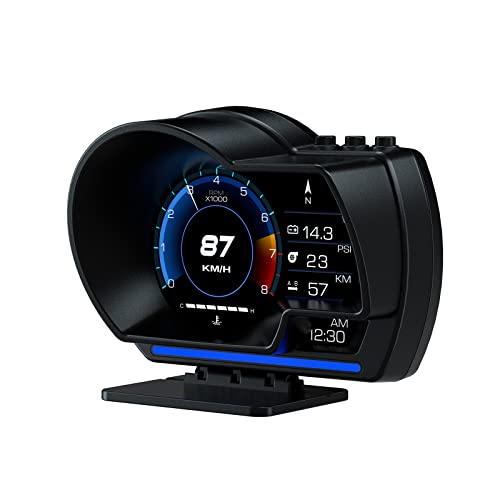
- Dual OBD2+GPS operation
- Displays multiple vehicle metrics
- Adjustable mounting and brightness
Best For: Drivers wanting broad vehicle data with GPS backup
Best Feature-Packed Display
5.5-Inch Multi-Color OBDII HUD
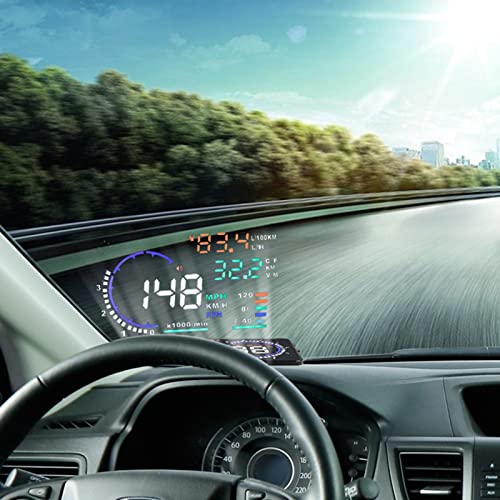
- Large multi-color display
- Multiple safety and vehicle alerts
- Automatic and manual brightness control
Best For: Drivers wanting extensive reminders and readouts
Best Simple Modern Option
POCREATION Auto-Dimming OBD2 HUD
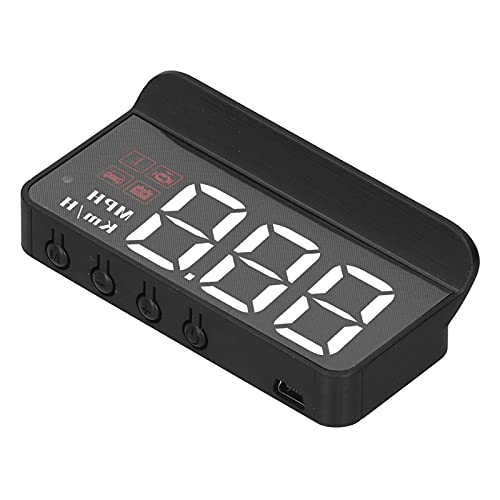
- Displays essential driving metrics
- Auto-dims for day and night
- Includes driver alert functions
Best For: Daily drivers wanting a compact, readable gauge
Best Plug-and-Play Choice
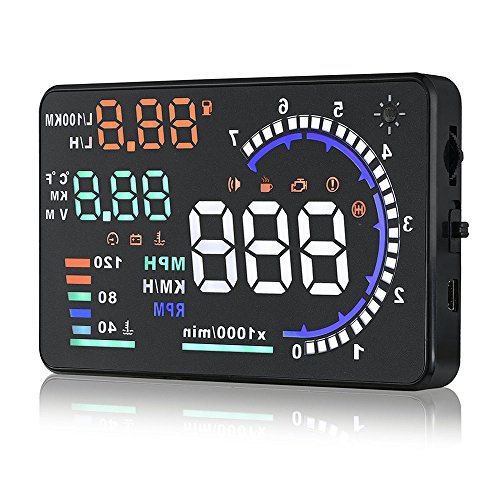
- Simple OBD II/EUOBD setup
- Projects key engine metrics
- Includes clear compatibility exclusions
Best For: Owners of compatible gasoline vehicles
Best USB-Powered Pick

- USB power avoids OBD2 installation
- Large MPH display with auto brightness
- GPS/BDS tracking with 10Hz refresh
Best For: Simple windshield speed display without OBD2 data
Best Basic OBD2 Monitor

- Reads speed, temperature, voltage, and mileage
- Offers multiple driving and fault alarms
- Plug-and-play connection for compatible vehicles
Best For: Basic OBD2 vehicle monitoring and alerts
Most Versatile

- OBD2 and GPS operating modes
- 11-color adjustable RGB backlight
- Diagnostics, alarms, and performance tests
Best For: Drivers wanting extensive data and flexible installation
Windshield Projection Pick

- Projects speed onto the windshield
- Four configurable safety alarms
- Automatic brightness adjustment
Best For: Compatible gasoline-car owners wanting clear projection
Best for Adjustable Alerts

- Configurable speed, RPM, voltage, and temperature alarms
- Scans and clears engine fault codes
- OBD2 and GPS modes with flexible mounting
Best For: Compatible drivers wanting customizable monitoring and warnings
Best Overall Versatility – wiiyii P6 OBD2/GPS HUD
The wiiyii P6 is a flexible choice for drivers comparing obd2 car head up displays. Its dual OBD2+GPS operation provides speed and vehicle information, while the adjustable brightness and blue-to-red overspeed warning help keep key data visible without looking down at the instrument panel.
Best For: Drivers who want broad vehicle data and a backup GPS mode.
Pros:
- Combines OBD and GPS modes for broader compatibility.
- Displays speed, voltage, fuel consumption, RPM, and water temperature.
- Includes dashboard or windshield mounting options.
- Automatically adjusts ambient brightness and changes color for overspeed alerts.
Cons:
- Its many interfaces may take time to configure.
- Vehicle data depends on OBD2 protocol compatibility.
The P6 stands out when versatility matters. It is especially useful for buyers who want diagnostic-style information as well as a simple speed display, with GPS available when the vehicle cannot provide OBD2 data.
Best Feature-Packed Display – 5.5-Inch Multi-Color OBDII HUD
This 5.5-inch unit is a feature-rich option among obd2 car head up displays, showing vehicle information in the driver’s forward view. It adds configurable brightness, overspeed and fatigue reminders, plus alerts for temperature, voltage, and shifting.
Best For: Drivers who want a large display with multiple warning prompts.
Pros:
- Displays speed, engine speed, water temperature, voltage, fuel consumption, and mileage.
- Supports OBD II and EUOBD vehicles.
- Offers automatic and manual brightness adjustment with anti-reflection technology.
- Includes overspeed, fatigue, high-temperature, low-voltage, and shift reminders.
Cons:
- Requires an OBD II or EUOBD-compatible vehicle.
- The supplied details do not identify specific vehicle exclusions.
Choose this model if you prefer a larger screen and extensive alerts over a minimalist readout. Its automatic power behavior also makes it convenient for routine driving.
Best Simple Modern Option – POCREATION Auto-Dimming OBD2 HUD
The POCREATION gauge keeps the core benefits of obd2 car head up displays straightforward: speed, coolant temperature, voltage, and trip miles appear on one screen. Auto light sensing adjusts the display for daylight and nighttime use, while the included reflector sticker is designed to reduce ghosting.
Best For: Daily drivers seeking a compact, easy-to-read OBD2 gauge.
Pros:
- Shows four useful driving metrics in real time.
- Automatically adjusts brightness based on ambient light.
- Includes speed, drowsy-driver, and anti-sleep alerts.
- Uses a reflector sticker for a clear, no-ghosting image.
Cons:
- Requires an OBD2 interface and compatible protocol.
- Offers fewer displayed metrics than some larger multi-function HUDs.
This is a practical pick for buyers who want essential information without an overly complicated interface. Confirming OBD2 compatibility before purchase is the key consideration.
Best Plug-and-Play Choice – A8 5.5-Inch OBD2 HUD
The A8 is a plug-and-play choice for shoppers comparing obd2 car head up displays. It projects speed, RPM, water temperature, voltage, and mileage, and adds automatic power control, brightness adjustment, and an anti-ghosting reflective film for clearer viewing.
Best For: Owners of compatible gasoline vehicles who want a straightforward windshield projector.
Pros:
- Supports OBD II/EUOBD gasoline vehicles with simple plug-and-play setup.
- Displays speed, RPM, water temperature, voltage, and mileage.
- Provides automatic and manual brightness control.
- Includes overspeed alerts and ignition-linked power on/off.
Cons:
- Not compatible with several listed makes, including Dodge, Jeep, Mazda, Suzuki, and French or Italian vehicles.
- Compatibility varies among some Hyundai and Kia models.
- Designed for gasoline vehicles rather than all vehicle types.
The A8 makes sense when your vehicle is confirmed compatible and you want a familiar set of driving metrics. Its stated exclusions make checking the vehicle list especially important before ordering.
Best USB-Powered Pick – GPS Windshield HUD
For drivers comparing obd2 car head up displays, this model is a straightforward alternative that skips the OBD2 port entirely. Its GPS and BDS positioning system projects speed onto the windshield, while USB power makes it broadly compatible with vehicles that have a USB port.
Best For: Drivers who want a simple, large-font GPS speed display without connecting to the vehicle’s OBD2 system.
Pros:
- USB-powered plug-and-play setup with no OBD port required
- 10Hz GPS/BDS refresh rate and connection to up to 32 satellites
- Automatic brightness adjustment for daytime and nighttime use
- Large, anti-reflective MPH display
Cons:
- Displays GPS-based information rather than OBD2 engine data
- Speed may vary by about 0.6–1.8 MPH
- GPS performance can be affected by tunnels, garages, weather, or metallic windshield film
This is a practical choice when speed visibility matters more than advanced vehicle diagnostics. Its USB compatibility and simple installation make it accessible, but satellite reception is an important consideration.
Best Basic OBD2 Monitor – Multifunction OBD2 HUD
Obdii Hud, Car Speedometer, Obd2 Hud Projector Multifunction Gauge Alarm Fatigue Driving Reminder
Check Price On AmazonThis multifunction unit fits shoppers specifically seeking obd2 car head up displays with more than speed information. It connects to compatible OBD2 vehicles and can show speed, water temperature, voltage, and one-way mileage, along with several warning functions.
Best For: Drivers with an OBD2-compatible car who want basic engine and driving information projected in front of them.
Pros:
- Plug-and-play OBD2 connection with a buckled plug for a secure fit
- Displays speed, water temperature, voltage, and one-way mileage
- Includes overspeed, temperature, voltage, fatigue-driving, and fault alerts
- Adaptive lighting provides a brighter daytime and softer nighttime display
Cons:
- Requires an OBD2 interface and compatible protocol
- Supplied notes do not specify exact vehicle-year or model compatibility
- Its feature set is described broadly, so buyers should verify compatibility before purchase
Compared with a GPS-only display, this model offers useful vehicle-related readings through the OBD2 connection. Confirming your car’s protocol compatibility is the key step before buying.
Best Dual-System Option – OBD2/GPS Multifunction HUD
For shoppers comparing obd2 car head up displays with broader monitoring features, this model combines OBD2 data with an independent GPS speedometer. It supports more than 15 functions, auto-dimming, and flexible dashboard or A-pillar mounting, but its extensive vehicle exclusions make compatibility checking essential.
Best For: Owners of compatible 2008-or-newer sedan cars who want speed plus RPM, temperature, voltage, diagnostics, and configurable alerts.
Pros:
- Dual OBD2 and GPS systems provide speed information in different operating modes
- Tracks data such as RPM, voltage, fuel consumption, water temperature, and oil temperature
- Offers overspeed, high-RPM, overheating, and low-voltage alarms
- Supports dashboard-pad or adjustable A-pillar installation with auto-dimming
Cons:
- OBD2 mode is limited to OBDII/EOBD-compliant vehicles and has model restrictions
- Not compatible with several listed brands and vehicle types, including trucks, RVs, hybrids, and diesels
- GPS mode may not provide the same engine metrics as OBD2 mode
This is the most feature-rich option of the three when your vehicle is supported. The dual-system design adds flexibility, but the detailed exclusions mean buyers should verify their exact make, model, engine, and ECU configuration first.
Most Versatile – Dual-Mode RGB OBD2 HUD
This dual-system option is a flexible pick among OBD2 car head up displays. It can show extensive vehicle data through OBD2 or switch to GPS mode for speed, direction, altitude, and performance testing when a vehicle does not support the OBD2 protocol.
Best For: Drivers who want broad data monitoring, GPS fallback, and customizable lighting.
Pros:
- Displays extensive OBD2 data, including speed, RPM, temperatures, fuel consumption, and vehicle load.
- GPS mode provides speed, voltage, direction, altitude, satellite count, and acceleration or brake tests.
- Offers 11 RGB backlight colors, brightness adjustment, unit selection, and configurable alarms.
- Includes fault-code reading and clearing, plus speed and voltage calibration settings.
Cons:
- The many data points and settings may require time to configure.
- OBD2 functionality depends on vehicle protocol compatibility.
Choose this model if customization and diagnostic information matter as much as basic speed display. Its GPS mode also adds flexibility for vehicles that cannot use the OBD2 connection.
Windshield Projection Pick – MAIMEIMI OBD2 Windshield HUD
This MAIMEIMI model is designed for drivers who prefer a windshield-projected display. As one of the OBD2 car head up displays, it shows speed in large characters while also providing selectable vehicle data such as RPM, water temperature, trip information, voltage, and fuel-use readings.
Best For: Drivers with a compatible gasoline car who prioritize a direct windshield view and automatic brightness.
Pros:
- Projects key speed information onto the windshield in large font.
- Displays multiple data modes, including RPM, water temperature, trip, voltage, and fuel consumption.
- Includes overspeed, fatigue-driving, speed, and engine-failure alarms.
- Uses a light sensor for automatic brightness adjustment and supports manual fine-tuning.
Cons:
- Compatibility is limited to supported OBDII/EOBD gasoline vehicles, generally made after 2008.
- The notes list incompatibilities including hybrids, diesel vehicles, pickups, RVs, and several brands or models.
- It does not support OBDI or JOBD systems.
This is a focused choice for compatible gasoline vehicles and buyers who specifically want windshield projection. Check the detailed compatibility exclusions before ordering.
Best for Adjustable Alerts – MH OBD2+GPS Gauge HUD
The MH Head Up Display combines OBD2 gauges with GPS backup in a compact unit. It suits shoppers comparing OBD2 car head up displays who want real-time driving information, fault-code functions, adjustable alerts, and multiple mounting or display options.
Best For: Drivers seeking configurable warning thresholds and a dual-mode gauge for a compatible vehicle.
Pros:
- Monitors speed, tachometer, fuel consumption, water temperature, voltage, mileage, altitude, and more.
- Can scan and clear engine fault codes and perform acceleration or brake tests.
- Provides adjustable alarms for speed, temperature, voltage, and RPM.
- Offers OBD2 and GPS modes, multiple interfaces, adjustable brightness, unit selection, and two installation methods.
Cons:
- OBD2 operation is limited to compatible OBDII/EOBD vehicles produced after 2008.
- The notes identify diesel, hybrid, pickup, RV, and modified vehicles as incompatible.
- GPS mode provides a more limited set of information than the OBD2 mode.
The MH model stands out for alert customization and fault-code features. It is worth considering when you want more than speed display, provided your vehicle meets the listed compatibility requirements.
How We Picked the Best Obd2 Car Head Up Displays
We focused on the features that matter most in daily use: vehicle compatibility, display readability, installation simplicity, data coverage, warning functions, and power options. The selection includes compact speed displays, multifunction gauges, and OBD2+GPS models for vehicles that may not support a standard OBD2 connection.
Because product specifications can vary by seller and model revision, confirm the listing’s supported protocol, connector type, units, and included accessories before ordering. OBD2 compatibility is common in modern vehicles, but older cars, hybrids, electric vehicles, and some imported models may require GPS mode or may not support every gauge function.
Quick Comparison
| Type | Best For | Typical Information | Main Advantage |
|---|---|---|---|
| Basic OBD2 HUD | Simple speed monitoring | Speed, RPM, alerts | Easy setup and direct vehicle data |
| Multifunction OBD2 HUD | Drivers who want engine information | Speed, temperature, voltage, fuel data | More useful diagnostics at a glance |
| OBD2+GPS HUD | Broader compatibility | GPS speed plus OBD2 readings | Backup speed source and flexible installation |
| Large or multicolor HUD | High-visibility displays | Speed, warnings, selected gauges | Easier reading in varying light |
Key Buying Factors for OBD2 Car Head-Up Displays
Compatibility and Data Accuracy
Check whether the display supports OBDII, EUOBD, or a specific protocol used by your vehicle. A dual-system model can be a safer choice when compatibility is uncertain, but GPS speed may not provide the same engine data as an OBD2 connection.
Display Visibility
Look for adjustable brightness, automatic dimming, anti-glare construction, and a clear projection film or screen. Multicolor displays can separate speed, warnings, and engine readings, while overly bright units may be distracting at night.
Information and Alerts
Decide which readings you actually need. Speed and overspeed alerts suit most drivers; RPM, coolant temperature, voltage, fuel consumption, and fault-code warnings are more useful for enthusiasts or vehicles without an easy-to-read factory gauge.
Installation and Placement
Most units connect through the OBD port, while GPS models may need an additional receiver and cable. Choose a position that does not block the road, airbags, controls, or windshield visibility. A compact unit is often easier to place cleanly.
Units and Power Management
Confirm that the HUD supports MPH or km/h as needed and has suitable sleep or low-voltage protection. These features help prevent unwanted battery drain when the vehicle is parked.
Who Should Buy Which Obd2 Car Head Up Displays?
- Choose a basic OBD2 HUD if you mainly want a larger speed readout and straightforward installation.
- Choose a multifunction gauge if monitoring RPM, temperature, voltage, or fuel-related information is important.
- Choose an OBD2+GPS model if you drive multiple vehicles, own an older car, or want a backup speed source.
- Choose an auto-dimming or multicolor display if you drive frequently at night or in changing lighting conditions.
- Choose a unit with fatigue, overspeed, or fault alerts if reminders and preventive information are more valuable than a minimal display.
Before buying, verify the exact vehicle year, engine, connector location, and supported functions. The best option is the one that supplies the readings you need without adding visual clutter or complicated setup.