Finding the right natural gas garage heater means balancing heat output, efficiency, installation requirements, and the size of your workspace. The models in this roundup range from compact wall-mounted heaters to high-output forced-air units for large garages and shops.
Use the comparison and buying advice below to narrow your options by heating capacity, heater type, venting, controls, and installation needs.
Table of Contents
- Best 10 Natural Gas Garage Heaters Picks for 2026
- Maximum-Coverage Pick – Mr. Heater 80,000 BTU Forced-Air Unit Heater
- Power-Outage Pick – Heatstar 25,000 BTU Radiant Garage Heater
- Quiet Residential Pick – Modine Hot Dawg 45,000 BTU Heater
- Three-Car Garage Pick – Mr. Heater 50,000 BTU Forced-Air Unit Heater
- Best Compact Radiant Pick – ProCom 30,000 BTU Infrared Heater
- Best High-Output Shop Heater – Reznor 60,000 BTU Garage Heater
- Best Simple Vent-Free Option – Mr. Heater 30,000 BTU Blue Flame
- Best High-Output Pick – Reznor 45K BTU Natural Gas Garage Heater
- Best Compact Direct-Vent Pick – Comfort Glow 17,000 BTU Wall Heater
- Best for Large Garages – Mr. Heater 125,000 BTU Unit Heater
- How We Picked These Natural Gas Garage Heaters
- Quick Comparison
- Key Buying Factors for Natural Gas Garage Heaters
- Who Should Buy Which Natural Gas Garage Heaters?
Best 10 Natural Gas Garage Heaters Picks for 2026
Maximum-Coverage Pick
Mr. Heater 80,000 BTU Forced-Air Unit Heater
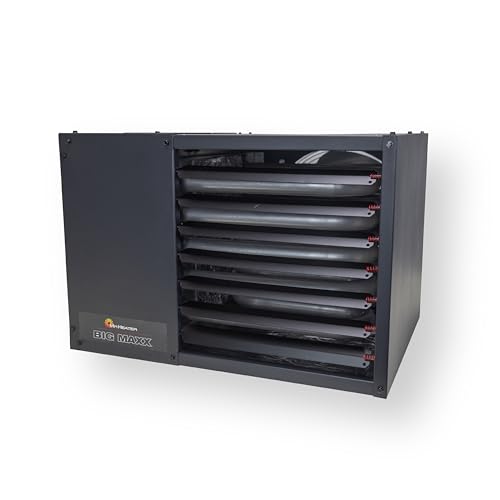
- Heats up to 2,667 square feet
- Ceiling-mounted forced-air design
- Requires 10-foot minimum ceiling
Best For: Large garages, barns, and workshops
Power-Outage Pick
Heatstar 25,000 BTU Radiant Garage Heater

- Covers up to 500–600 square feet
- Operates without electricity
- Quiet radiant heating
Best For: Small garages and low-profile workshops
Quiet Residential Pick
Modine Hot Dawg 45,000 BTU Heater
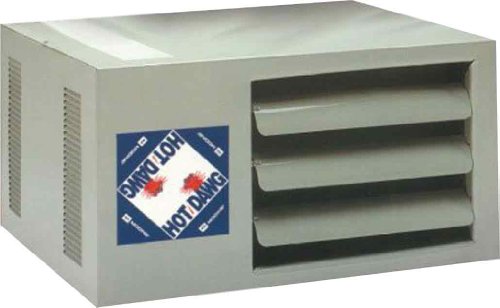
- Covers about 700 square feet
- Quiet forced-air operation
- Power exhaust for flexible venting
Best For: Residential and light commercial garages
Three-Car Garage Pick
Mr. Heater 50,000 BTU Forced-Air Unit Heater

- Covers up to 1,667 square feet
- Designed for approximately three-car garages
- Compatible with 24-volt thermostats
Best For: Medium-to-large garages and workshops
Best Compact Radiant Pick
ProCom 30,000 BTU Infrared Heater

- 30,000 BTU output rated for up to 1,400 square feet
- Three-level thermostat control
- Wall mount and base feet included
Best For: Residential rooms, offices, and smaller garages needing radiant heat
Best High-Output Shop Heater
Reznor 60,000 BTU Garage Heater

- 60,000 BTU forced-air heating
- 83% thermal-efficiency rating
- Ceiling- or wall-mount capable
Best For: Larger garages, workshops, warehouses, and commercial spaces
Best Simple Vent-Free Option
Mr. Heater 30,000 BTU Blue Flame

- 30,000 BTU output for up to 1,000 square feet
- Adjustable thermostat and electronic ignition
- No electricity or outdoor venting required
Best For: Indoor spaces up to 1,000 square feet needing simple vent-free heat
Best High-Output Pick
Reznor 45K BTU Natural Gas Garage Heater
- 45,000 BTU forced-air output
- 83% thermal efficiency rating
- Ceiling- or wall-mount capable
Best For: Large garages, workshops, and utility spaces
Best Compact Direct-Vent Pick
Comfort Glow 17,000 BTU Wall Heater

- 17,000 BTU convection heat
- Direct vent and no electricity required
- Vent kit included
Best For: Smaller garages and rooms up to about 500 square feet
Best for Large Garages
Mr. Heater 125,000 BTU Unit Heater
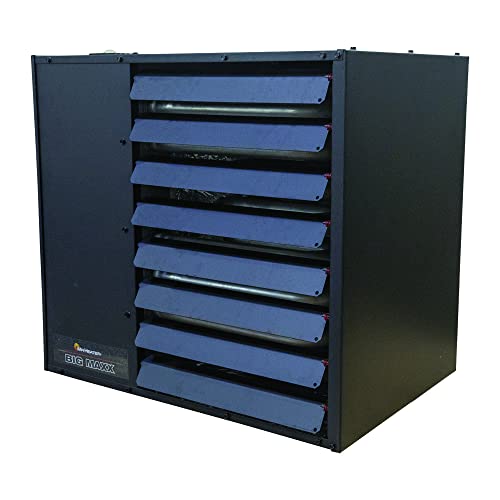
- 125,000 BTU forced-air output
- Covers up to 2,000 square feet
- Propane conversion kit included
Best For: Large garages and expansive work areas
Maximum-Coverage Pick – Mr. Heater 80,000 BTU Forced-Air Unit Heater
For large garages, barns, and workshops, this 80,000-BTU Mr. Heater is a powerful natural gas garage heater with forced-air circulation. It is rated to heat up to 2,667 square feet and supports standard 24-volt or Wi-Fi-enabled thermostats, sold separately.
Best For: Large, well-ventilated garages and workspaces with ceilings at least 10 feet high.
Pros:
- High 80,000-BTU output covers up to 2,667 square feet.
- Ceiling-mounted, low-profile design helps preserve floor space.
- Includes high-temperature and gas-safety shutoff features.
- Includes an NG-to-LP conversion kit.
Cons:
- Requires a 10-foot minimum ceiling and 8 feet of floor clearance.
- Thermostat is sold separately.
- Its 78.2-pound weight may make installation more involved.
This is the strongest coverage option in the group, but its installation requirements make it better suited to larger spaces than compact residential garages.
Power-Outage Pick – Heatstar 25,000 BTU Radiant Garage Heater
This Heatstar radiant natural gas garage heater delivers 25,000 BTUs for spaces up to 500–600 square feet. Because it uses no electricity, it can continue heating during power outages while directly warming people and objects.
Best For: Smaller garages, workshops, and low-profile buildings where quiet, electricity-free heat is useful.
Pros:
- Heats up to 500–600 square feet.
- Requires no electricity and can operate during power outages.
- Radiant heat directly warms people and objects.
- No moving parts to service and quiet operation.
Cons:
- Lower output and coverage than the forced-air models here.
- Thermostat wiring is not included.
- Not intended for sleeping quarters, mobile homes, or recreational vehicles.
Its compact coverage and electricity-free operation make it a practical choice for a smaller garage, especially where dependable radiant heat matters more than whole-room air circulation.
Quiet Residential Pick – Modine Hot Dawg 45,000 BTU Heater
Modine HD45AS0111Natural Gas Hot Dawg Garage Heater 45,000 BTU with 80-Percent Efficiency Grey
Check Price On AmazonThe Modine Hot Dawg is a 45,000-BTU natural gas garage heater designed for quiet forced-air operation. It covers about 700 square feet and adds a power exhaust system for side-wall or roof venting with small-diameter vent pipe.
Best For: Residential, commercial, or industrial garages needing a relatively compact ceiling-mounted heater.
Pros:
- Quiet operation for a forced-air unit.
- Rated to heat approximately 700 square feet.
- Low-profile cabinet and neutral gray finish.
- Power exhaust supports side-wall or roof venting.
Cons:
- Coverage is more limited than the larger Mr. Heater units.
- Requires gas, electrical, and venting connections.
- No thermostat is listed among the supplied details.
With its modest footprint, quiet operation, and flexible venting approach, the Hot Dawg is a balanced fit for garages where comfort and installation practicality are priorities.
Three-Car Garage Pick – Mr. Heater 50,000 BTU Forced-Air Unit Heater
This 50,000-BTU Mr. Heater offers forced-air heating for garages, barns, and workshops, with coverage up to 1,667 square feet—approximately a three-car garage. It mounts to the ceiling and works with standard 24-volt or Wi-Fi-enabled thermostats, sold separately.
Best For: Medium-to-large garages that need broad coverage without stepping up to an 80,000-BTU unit.
Pros:
- Heats up to 1,667 square feet.
- Ceiling-mounted design keeps the floor clear.
- Compatible with standard 24-volt and Wi-Fi-enabled thermostats.
- Includes high-temperature and gas-safety shutoff features.
Cons:
- Requires a minimum 10-foot ceiling and 8 feet of clearance from the floor.
- Thermostat is sold separately.
- At 60.3 pounds, installation may require additional handling help.
This model occupies a useful middle ground: it delivers substantially more coverage than compact garage heaters while remaining less powerful than the largest unit in this roundup.
Best Compact Radiant Pick – ProCom 30,000 BTU Infrared Heater
For shoppers comparing natural gas garage heaters for smaller indoor spaces, the ProCom MN300TPA-B combines radiant infrared heat with a compact, flexible design. Its 30,000-BTU output is rated for areas up to 1,400 square feet, and it can be wall-mounted or placed on the floor with the included base feet.
Best For: Residential rooms, offices, and smaller garages needing no-electricity radiant heat.
Pros:
- 30,000 BTU output with listed coverage up to 1,400 square feet.
- Three-level thermostat control helps adjust heat output.
- Includes wall-mount hardware and base feet for flexible placement.
- Built-in oxygen depletion sensor and overheat protection add safety features.
Cons:
- Ventless indoor design may not suit spaces that require a vented heater.
- Its radiant heating approach may be less suitable when broad forced-air circulation is preferred.
- Supplied notes emphasize residential use rather than commercial or industrial applications.
The ProCom is a practical choice when compact size, flexible mounting, and operation without electricity matter most. Confirm that a ventless natural-gas appliance is appropriate for your space before installation.
Best High-Output Shop Heater – Reznor 60,000 BTU Garage Heater
Among natural gas garage heaters, the Reznor UDXC-60 stands out for larger garages, workshops, and commercial spaces that need 60,000 BTU of forced-air heat. It is designed for ceiling or wall mounting, with venting options that depend on the installation layout.
Best For: Larger garages, workshops, warehouses, and other indoor commercial or industrial spaces.
Pros:
- 60,000 BTU output and an 83% thermal-efficiency rating.
- Forced-air fan distributes heat across larger indoor areas.
- Supports ceiling or wall mounting, depending on the bracket used.
- Features a titanium-stabilized aluminized steel heat exchanger and integrated status display.
Cons:
- Mounting hardware or brackets are sold separately.
- The listing includes the main unit only.
- Requires compatible B-vent or single-wall vent piping based on the installation route.
The Reznor is the strongest fit here for demanding shop and garage applications, but it requires more involved planning than a ventless portable-style heater. Account for mounting, electrical power, and professional venting requirements when budgeting.
Best Simple Vent-Free Option – Mr. Heater 30,000 BTU Blue Flame
The Mr. Heater F299731 is a straightforward option for shoppers seeking natural gas garage heaters with vent-free operation. It delivers 30,000 BTU per hour for spaces up to 1,000 square feet, includes an adjustable thermostat and battery-operated electronic ignition, and does not require electricity or outdoor venting.
Best For: Indoor spaces up to 1,000 square feet where simple wall-mounted, vent-free heating is preferred.
Pros:
- 30,000 BTU output is rated to heat up to 1,000 square feet.
- Adjustable built-in thermostat supports temperature control.
- Battery-operated electronic ignition works without household electricity.
- Includes wall-mounting hardware and a low-oxygen safety shutoff.
Cons:
- Blower fan kit is sold separately.
- Coverage is lower than the 1,400-square-foot rating of the ProCom model.
- Its vent-free design may not be appropriate for every garage or installation situation.
This Mr. Heater model makes sense for buyers who value uncomplicated controls and installation flexibility. If air circulation is important, remember that the optional blower kit is not included.
Best High-Output Pick – Reznor 45K BTU Natural Gas Garage Heater
For larger garages, workshops, and utility spaces, this Reznor is a powerful option among natural gas garage heaters. Its 45,000-BTU forced-air design is rated for 83% thermal efficiency and can be mounted from the ceiling or on a wall with the appropriate bracket.
Best For: Garages, workshops, warehouses, and other indoor spaces needing high-output, permanently installed heat.
Pros:
- 45,000 BTU output with an 83% thermal efficiency rating.
- Supports ceiling or wall mounting, depending on the bracket used.
- Includes a durable TCORE2 titanium-stabilized aluminized steel heat exchanger.
- Features an integrated circuit board with display, built-in disconnect, and status LED.
Cons:
- Mounting hardware or bracket is sold separately.
- Requires compatible venting for vertical roof or horizontal sidewall installation.
- Includes the main unit only.
The Reznor UDXC-45 is a strong fit when dependable, high-capacity forced-air heating matters more than a simple installation. Review venting requirements and mounting needs before purchase.
Best Compact Direct-Vent Pick – Comfort Glow 17,000 BTU Wall Heater
This Comfort Glow is a compact choice for smaller garages and rooms where a wall-mounted heater is preferred. As one of the more space-conscious natural gas garage heaters, it delivers 17,000 BTU of thermostatically controlled convection heat and operates without electricity.
Best For: Garages and indoor rooms up to roughly 500–570 square feet where direct venting and power-outage operation are useful.
Pros:
- Heats up to approximately 500 square feet with 17,000 BTU output.
- Direct-vent design requires no chimney and operates without electricity.
- Includes a professional vent kit with vent pipe, air intake pipe, cap, flashing, and connection rod.
- Electronic ignition, safety pilot, and built-in pressure regulator support safer operation.
Cons:
- Lower output than larger forced-air garage heaters.
- Requires wall installation and direct venting through a 4.5- to 10-inch-thick wall.
- Its coverage is intended for smaller spaces.
The Comfort Glow emphasizes compact installation, quiet operation, and heating during power outages. It is best suited to smaller enclosed areas rather than large, open workshops.
Best for Large Garages – Mr. Heater 125,000 BTU Unit Heater
For expansive garages that need substantial heating capacity, the Mr. Heater MHU125 provides 125,000 BTU of forced-air output. It is designed for ceiling mounting, covers up to 2,000 square feet, and can use propane or natural gas with the included conversion kit.
Best For: Large garages and sizable work areas requiring high-output ceiling-mounted heat.
Pros:
- 125,000 BTU output with stated coverage of up to 2,000 square feet.
- Forced-air heating helps distribute warmth through a large garage.
- Electronic ignition and powered exhaust are included.
- Includes two ceiling-mount angle brackets and a liquid-propane conversion kit.
Cons:
- Its 109.1-pound weight and large cabinet require planning for ceiling installation.
- Higher output may be excessive for small garages.
- Conversion and installation requirements should be reviewed before switching fuels.
The MHU125 stands out for maximum heating capacity in this group. Choose it when a large garage needs powerful forced-air heating, and confirm that the mounting setup and fuel configuration suit the space.
How We Picked These Natural Gas Garage Heaters
We selected heaters across several common garage-heating formats, including forced-air unit heaters, radiant overhead models, vent-free infrared and blue-flame heaters, and direct-vent wall heaters. The lineup covers approximately 17,000 to 125,000 BTU, giving shoppers options for small garages, insulated workshops, and larger commercial-style spaces.
We considered stated heat output, fuel flexibility, efficiency information, mounting style, thermostat or control options, and the practical installation requirements associated with each design. Because garage construction, climate, ceiling height, insulation, and local codes vary, treat these products as a starting point rather than a substitute for professional sizing.
Quick Comparison
| Heater type | Typical strengths | Best suited for |
|---|---|---|
| Forced-air unit | Fast, powerful heat distribution | Medium to large garages and shops |
| Radiant overhead | Directly warms people and surfaces | Work areas with high ceilings or frequent door opening |
| Vent-free infrared or blue flame | Simpler installation and efficient room heating | Suitable approved spaces where vent-free use is permitted |
| Direct-vent wall heater | Sealed combustion and wall-mounted installation | Smaller enclosed rooms and finished workspaces |
Key Buying Factors for Natural Gas Garage Heaters
BTU Output and Garage Size
BTU rating is a useful starting point, but it is not the only sizing factor. Larger, poorly insulated garages and spaces with tall ceilings or frequent door opening generally need more capacity. An oversized heater may cycle frequently, while an undersized model can run constantly without reaching a comfortable temperature. A heating professional can calculate the load for your specific climate and building.
Venting and Combustion Safety
Forced-air and many direct-vent heaters require flue or vent connections. Vent-free models release combustion products into the room and may be restricted by local regulations or unsuitable for some garages. Always follow the manufacturer’s clearance requirements, provide any required ventilation, and install carbon monoxide detectors. Fuel-line and gas-appliance work should be handled by a qualified professional where required.
Heating Pattern and Comfort
Forced-air heaters warm air quickly and distribute heat across a larger area, while radiant heaters warm people, floors, and equipment more directly. Blue-flame heaters primarily warm the surrounding air. Consider whether you need rapid recovery after opening the garage door or steady comfort in a smaller enclosed room.
Controls, Efficiency, and Installation
Thermostat compatibility, adjustable controls, ignition type, mounting hardware, and electrical requirements all affect everyday convenience. Compare efficiency ratings when available, but also account for installation cost, venting materials, gas-line capacity, ceiling height, and service access.
Who Should Buy Which Natural Gas Garage Heaters?
- Choose a forced-air unit if you need fast heating for a medium or large garage, workshop, or shop.
- Choose a radiant overhead heater if you spend time at a fixed workbench or want direct warmth without heating every cubic foot equally.
- Choose a vent-free heater only when its use is approved for your location and the room has the required ventilation and safety provisions.
- Choose a direct-vent wall heater for a smaller, more finished space where sealed combustion and compact installation are priorities.
- Choose a higher-BTU model for large or drafty spaces, but confirm the heat-load calculation and gas supply before buying.