Choosing among high-capacity solar charge controllers can be difficult when system voltage, panel input, battery chemistry, and charging current all affect compatibility. The right controller can improve harvest while protecting an expensive battery bank.
This roundup compares 10 high-output MPPT options, from established Victron and Renogy models to controllers designed for larger 48V and multi-voltage installations.
Table of Contents
- Best 10 High Capacity Solar Charge Controllers Picks for 2026
- High-Capacity Smart Pick – Victron SmartSolar 150V 70A
- Maximum-Amperage Choice – POWLAND 120A MPPT Controller
- Balanced Smart Option – Victron SmartSolar 150V 45A
- Versatile Compact Pick – Renogy Rover 40A MPPT
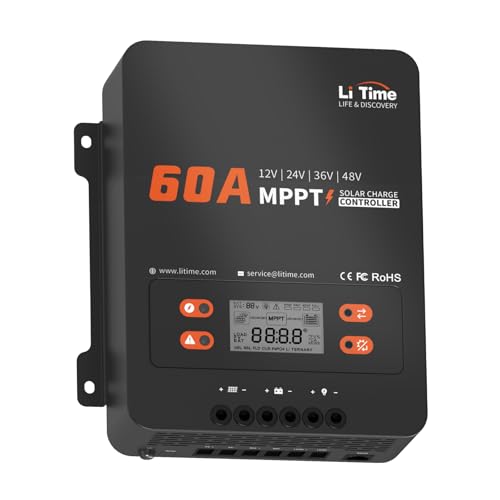
- High-Capacity MPPT Flexibility – LiTime 60A MPPT
- Maximum Output Power – 48V 140A MPPT Controller
- Reliable Large-System Value – Renogy Rover Lite 60A
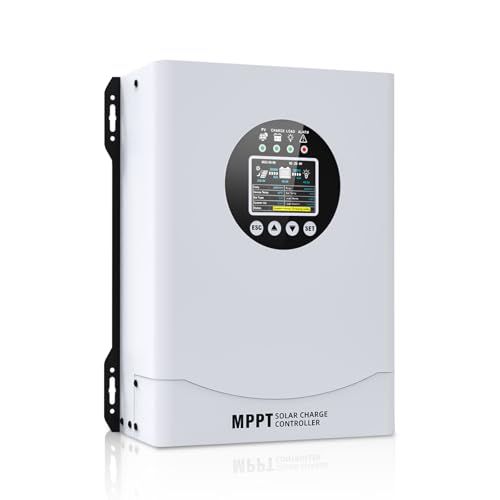
- Maximum Voltage Flexibility – 120A MPPT Controller
- Connected High-Voltage Choice – 100A MPPT Controller
- Configurable Off-Grid Powerhouse – 120A Smart MPPT
- How We Picked the Best High Capacity Solar Charge Controllers
- Quick Comparison
- Key Buying Factors for High-Capacity Solar Charge Controllers
- Who Should Buy Which High Capacity Solar Charge Controllers?
Best 10 High Capacity Solar Charge Controllers Picks for 2026
High-Capacity Smart Pick

- 70A MPPT capacity
- 12V–48V system support
- Bluetooth app and synchronized charging
Best For: Expandable off-grid and RV solar systems
Maximum-Amperage Choice

- 120A charging capacity
- Supports 12V–96V systems
- LCD monitoring with 230V solar input
Best For: Large, high-voltage off-grid installations
Balanced Smart Option

- 45A MPPT charging
- 12V–48V support
- Bluetooth app and controller synchronization
Best For: Mid-sized connected solar systems
Versatile Compact Pick

- 40A MPPT charging
- 12V/24V auto-detection
- LCD and four battery-type support
Best For: 12V/24V off-grid systems in varied climates
High-Capacity MPPT Flexibility
- Up to 3,480W at 48V
- 12V–48V system support
- LCD, cooling, and protection features
Best For: Flexible high-output LiFePO4 or lead-acid systems
Maximum Output Power

- Up to 6,500W PV input
- 500V open-circuit PV rating
- Charging current adjustable to 140A
Best For: Large 48V storage systems and high-voltage arrays
Reliable Large-System Value

- 150V maximum solar input
- 12V–48V automatic support
- Full-load operation to 113°F
Best For: Flexible DIY systems with series-connected panels
Maximum Voltage Flexibility
- Supports battery systems from 12V to 96V
- Up to 11,520W PV input at 96V
- Works with lithium and lead-acid batteries
Best For: Large off-grid systems with varied battery-voltage requirements
Connected High-Voltage Choice

- 250VDC maximum PV input
- Up to 5,200W at 48V
- Optional app and RS485 monitoring
Best For: 48V systems using longer solar-panel strings
Configurable Off-Grid Powerhouse

- Supports 12V through 96V systems
- Up to 11,520W PV input at 96V
- User charging mode and RS485 data access
Best For: Customized large off-grid systems needing communication features
High-Capacity Smart Pick – Victron SmartSolar 150V 70A
For high capacity solar charge controllers, the Victron SmartSolar 150/70 stands out with 70A charging capacity, support for 12V through 48V systems, and MPPT tracking designed to capture available solar power even in partial shade.
Best For: Larger off-grid, RV, and multi-controller solar systems that benefit from app-based monitoring and synchronized charging.
Pros:
- 70A capacity supports higher-output solar installations.
- Works with 12V, 24V, 36V, and 48V battery systems.
- Bluetooth connectivity enables real-time data, history, configuration, firmware updates, and alarms through VictronConnect.
- Multiple units can synchronize charging stages, and the intelligent load output can disconnect loads at low battery voltage.
Cons:
- Its broad capabilities may be more than smaller systems require.
- The listed display type is LCD, but primary monitoring and configuration are emphasized through the app.
Choose this model when system capacity, expandable architecture, and detailed remote management matter more than keeping the controller simple.
Maximum-Amperage Choice – POWLAND 120A MPPT Controller
If you need high capacity solar charge controllers for an unusually large or flexible battery bank, the POWLAND 120A MPPT controller offers one of the highest charging ratings in this group and automatically supports systems from 12V to 96V.
Best For: Large solar installations, mobile power stations, RV systems, and off-grid setups requiring broad voltage compatibility and high charging current.
Pros:
- 120A charging capacity is suited to high-demand systems.
- Auto-senses 12V, 24V, 36V, 48V, 60V, 72V, 84V, and 96V systems.
- Claims up to 98% MPPT conversion efficiency and includes a maximum solar input of 230V.
- LCD dashboard shows PV input, charging stage, warnings, and diagnostics.
Cons:
- The unusually high current and voltage range may be unnecessary for smaller installations.
- The supplied notes do not specify a mobile monitoring app or wireless connectivity.
This is the capacity-first option for shoppers who need extensive voltage flexibility, a high current rating, and on-controller status information.
Balanced Smart Option – Victron SmartSolar 150V 45A
The Victron SmartSolar 150/45 is a practical choice among high capacity solar charge controllers when you want MPPT performance, 12V-to-48V flexibility, and connected system management in a more moderate 45A package.
Best For: Mid-sized off-grid and RV systems where app monitoring, synchronized controllers, and flexible battery-voltage support are priorities.
Pros:
- 45A MPPT charging capacity balances output and system size.
- Supports 12V, 24V, 36V, and 48V battery systems.
- VictronConnect provides real-time data, 30-day history, settings, firmware updates, and alarms.
- Can synchronize with other SmartSolar MPPT controllers and provides configurable low-voltage load disconnection.
Cons:
- Its 45A rating is lower than the 70A and 120A options in this roundup.
- No built-in display is listed, so status access relies more heavily on connected monitoring.
Consider this controller when you want Victron’s connected ecosystem and multi-voltage support without moving to the larger 70A model.
Versatile Compact Pick – Renogy Rover 40A MPPT
For shoppers comparing high capacity solar charge controllers for 12V or 24V systems, the Renogy Rover 40A combines MPPT charging with an LCD, broad battery chemistry support, and protection features for off-grid use.
Best For: 12V/24V off-grid systems using AGM, gel, flooded lead-acid, or lithium batteries, especially in demanding outdoor climates.
Pros:
- 40A MPPT controller automatically detects 12V or 24V systems.
- Supports gel, AGM, flooded, and lithium batteries with distinct charging stages.
- Rated for operation from -40°F to 149°F and includes low-temperature protection.
- LCD status display, remote temperature sensor, and multiple electrical protections are included.
Cons:
- It supports only 12V and 24V systems, not the higher voltages offered by the Victron and POWLAND models.
- App connectivity requires the separately sold BT-2 module.
This model is a sensible fit for smaller high-output battery banks when environmental durability, battery flexibility, and straightforward local monitoring are more important than maximum amperage.
High-Capacity MPPT Flexibility – LiTime 60A MPPT
For shoppers comparing high capacity solar charge controllers, the LiTime 60A MPPT model stands out with support for up to 3,480W of solar input on a 48V system and a maximum 200V PV input. Its selectable voltage options and compatibility with LiFePO4 and lead-acid batteries make it adaptable to several off-grid configurations.
Best For: High-output 12V, 24V, 36V, or 48V systems that need broad battery compatibility and on-device monitoring.
Pros:
- Supports up to 3,480W at 48V, 2,610W at 36V, 1,740W at 24V, and 870W at 12V.
- Offers at least 99% tracking efficiency and up to 96% peak conversion efficiency.
- Includes an LCD screen, LED status indicators, dual forced cooling, and multiple protection features.
- Supports LiFePO4 and adjustable lead-acid charging profiles.
Cons:
- Bluetooth is not built in.
- The 60A rating is lower than some ultra-high-current controllers.
The LiTime is a well-rounded choice when you want substantial solar capacity without moving to an unusually complex controller. Its 200V PV ceiling, multiple system voltages, and cooling hardware make it especially practical for larger DIY battery systems.
Maximum Output Power – 48V 140A MPPT Controller
Among high capacity solar charge controllers, this 48V model is designed for demanding energy-storage installations. It accepts up to 500V open-circuit PV input and up to 6,500W of solar power, while letting users set charging current from 10A to 140A.
Best For: Large 48V battery banks and high-voltage solar arrays where minimizing transmission losses and maximizing charging capacity are priorities.
Pros:
- Handles up to 6,500W of PV power and 500V open-circuit voltage.
- Adjustable charging current from 10A to 140A supports different battery capacities.
- Works with 48V lead-acid and lithium batteries, including customizable charging parameters.
- Large LCD displays PV and battery data, power generation, and error codes.
Cons:
- It is designed for 48V systems rather than lower-voltage setups.
- The 18A maximum PV input current means panels should generally be connected in series.
- Its large housing measures 12 by 7.09 by 16 inches.
This controller is the strongest fit here for maximum charging throughput. Its high-voltage PV architecture can help reduce long-run transmission losses, but installation requires careful attention to array voltage, recommended wiring, and the substantial physical size.
Reliable Large-System Value – Renogy Rover Lite 60A
The Renogy Rover Lite 60A is a practical option for buyers seeking high capacity solar charge controllers for larger DIY installations. Its 150V maximum solar input supports up to six Renogy 200W panels in series, while automatic 12V-to-48V compatibility gives it room to grow across different system designs.
Best For: DIY solar systems that need 60A charging, series-panel flexibility, and dependable operation across a wide temperature range.
Pros:
- Supports 12V, 24V, 36V, and 48V battery systems.
- 150V maximum solar input can accommodate up to six Renogy 200W panels in series.
- Designed for full-load operation from -31°F to 113°F, with lithium low-temperature protection.
- Includes an LCD, buttons, battery temperature sensor, and a two-year warranty.
Cons:
- Bluetooth monitoring requires a separately purchased module.
- It is compatible only with BT-2 Bluetooth modules sold separately.
- The 60A charging rating is below the capacity of the 140A controller in this roundup.
The Rover Lite balances broad system compatibility with straightforward operation. It is a sensible pick for a larger DIY array, particularly when cold-weather performance and a 150V PV limit matter more than exceptionally high charging current.
Maximum Voltage Flexibility – 120A MPPT Controller
This high capacity solar charge controller is designed for unusually broad battery-bank configurations, supporting systems from 12V through 96V. Its 120A MPPT design, LCD display, and compatibility with both lithium and lead-acid batteries make it a practical option for larger off-grid installations.
Best For: Large off-grid systems needing high charging current and support for multiple battery voltages.
Pros:
- Supports 12V, 24V, 36V, 48V, 60V, 72V, 84V, and 96V systems.
- Handles up to 11,520W of listed PV input at 96V, with 230V maximum PV voltage.
- Compatible with FLD, LiFePO4, SLD, Gel, and AGM batteries.
- Includes MPPT tracking, LCD monitoring, lithium activation, and multiple protection features.
Cons:
- The extensive voltage range may be more capability than smaller systems need.
- The supplied information does not mention app monitoring or wireless connectivity.
With broad voltage support and a high 120A rating, this controller is suited to substantial solar arrays. Verify your battery voltage, PV limits, and wiring requirements before installation.
Connected High-Voltage Choice – 100A MPPT Controller
This high capacity solar charge controller combines a 100A continuous-output design with 250VDC PV input and up to 5,200W of solar capacity on 48V systems. It is a strong fit for installations that benefit from longer panel strings, lower wiring current, and app-based monitoring.
Best For: 48V off-grid, RV, marine, cabin, and backup systems using higher-voltage solar arrays.
Pros:
- Supports 12V, 24V, 36V, and 48V systems with automatic recognition.
- Accepts up to 250VDC PV input and 5,200W at 48V.
- Offers up to 99.9% tracking efficiency and more than 98% conversion efficiency according to the supplied specifications.
- Supports optional app monitoring, RS485 Modbus communication, and several lithium and lead-acid battery types.
Cons:
- The Bluetooth module for app monitoring is optional.
- Its maximum listed PV capacity is lower than the 120A models in this roundup.
The combination of high-voltage PV input, 100A output, and expandable monitoring makes this a flexible choice for 48V installations. Confirm the optional accessories and compatibility with your planned communication setup.
Configurable Off-Grid Powerhouse – 120A Smart MPPT
This high capacity solar charge controller is built for medium-to-large off-grid systems, combining 120A charging with support for battery voltages from 12V to 96V. Its user-defined charging mode, LCD interface, RS485 connection, and smart cooling provide useful control for more customized installations.
Best For: Large off-grid battery banks requiring adjustable charging parameters and RS485 data access.
Pros:
- Supports up to 11,520W of PV input at 96V and 230V maximum PV open-circuit voltage.
- Works with LiFePO4, lithium-ion, lead-acid, and GEL batteries.
- User mode allows adjustment of charging voltage, float voltage, and charging current.
- Includes LCD monitoring, RS485 communication through an RJ12 port, and multiple protection functions.
Cons:
- Communication uses an RJ12 RS485 interface, so integration may require setup or technical support.
- The controller weighs 8.7 pounds and may require a sturdy mounting location.
This model stands out when system customization and data communication matter as much as charging capacity. Its wide voltage range is valuable for expandable installations, but careful configuration is important before connecting the battery bank.
How We Picked the Best High Capacity Solar Charge Controllers
We focused on controllers with substantially higher output than basic small-system units, prioritizing models rated from 40A to 140A. We compared supported battery voltages, maximum PV voltage, charging-current capacity, MPPT functionality, monitoring options, battery-chemistry support, and installation flexibility.
Ratings and specifications should still be verified against the manufacturer’s current documentation before purchase. Maximum ratings are not recommendations to operate continuously at the limit; array design, ambient temperature, wiring, and ventilation can reduce practical capacity.
Quick Comparison
| Priority | What to look for | Best suited to |
|---|---|---|
| Trusted ecosystem | Established monitoring and configuration tools | Users building a long-term system |
| High current | 100A–140A charging ratings | Large battery banks and 48V installations |
| Flexible PV design | Higher maximum PV voltage | Longer series strings and larger arrays |
| Budget capacity | High current with LCD or RS485 features | DIY systems where value matters |
Key Buying Factors for High-Capacity Solar Charge Controllers
Match Battery Voltage and Charging Current
Confirm that the controller supports your battery bank’s nominal voltage—12V, 24V, 36V, or 48V—and that its charging current is appropriate for the bank. A 60A controller does not deliver the same usable power at every voltage, so calculate output wattage as battery voltage multiplied by charging current.
Check PV Voltage and Array Power
Never exceed the controller’s maximum open-circuit PV voltage, especially in cold weather when panel voltage rises. Also compare the array’s expected operating power with the controller’s rated input. Higher PV voltage can reduce cable losses and make series-string layouts practical, but it requires careful string calculations.
Confirm Battery Chemistry and Settings
Lead-acid, lithium, and specialty batteries need different charging profiles. Look for adjustable absorption, float, equalization, and low-temperature settings where applicable. Lithium systems may also require communication or external battery-management protection.
Consider Monitoring, Wiring, and Cooling
Bluetooth, app monitoring, LCD screens, and RS485 can simplify setup and troubleshooting. High-current systems need correctly sized conductors, overcurrent protection, disconnects, grounding, and adequate airflow. A controller with a high rating is only useful when the complete installation supports it.
Who Should Buy Which High Capacity Solar Charge Controllers?
Choose a Victron model if refined monitoring, configuration, and ecosystem support are more important than the lowest purchase price. Renogy options are practical for users who want familiar MPPT features, broad battery compatibility, and accessible displays in residential or RV systems.
Consider the 60A to 70A models for medium-to-large 12V, 24V, or 48V banks where installation simplicity matters. The 100A to 140A controllers are better suited to substantial 48V battery banks or large off-grid arrays, provided their PV limits and thermal requirements fit the design. Multi-voltage units with LCD or RS485 can appeal to DIY builders, but verify documentation, protection features, and support before committing to a demanding installation.