Excess moisture can cause rust, mildew, musty odors, and damage to tools, vehicles, stored belongings, and building materials. The best desiccant garage dehumidifier depends on your space size, temperature, drainage options, and how much hands-on maintenance you want.
This roundup compares rotary desiccant units, conventional dehumidifiers, passive absorbers, and rechargeable silica gel products so you can choose a practical moisture-control solution for your garage or adjacent storage space.
Table of Contents
- Best 10 Desiccant Garage Dehumidifiers Picks for 2026
- Best Compact Rotary Performer – AEOCKY X1-Pro 2000 Sq. Ft.
- Best Passive Moisture Absorber – DampRid Hi-Capacity Fragrance-Free Buckets
- Best for Cold Garages – Eva-Dry EDV-4000H Rotary Desiccant
- Best for Large Garages – Waykar 34-Pint Energy Star Dehumidifier
- Best Reusable Pick – Wisedry 1,000g Rechargeable Silica Gel Bags
- Best Compact Powered Option – Ivation 13-Pint Desiccant Dehumidifier
- Best for Comfort – Gasbye DryPrime 115-Pint Dehumidifier
- Best Compact Desiccant Option – Ivation 19-Pint Small-Area Dehumidifier
- Best Reusable Moisture Absorber – Wisedry 4-Pack Rechargeable Silica Gel Bags
- Best High-Capacity Garage Unit – CADPXS 125-Pint Crawl Space Dehumidifier
- How We Picked These Desiccant Garage Dehumidifiers
- Quick Comparison
- Key Buying Factors for Desiccant Garage Dehumidifiers
- Who Should Buy Which Desiccant Garage Dehumidifiers?
Best 10 Desiccant Garage Dehumidifiers Picks for 2026
Best Compact Rotary Performer

- Frost-free rotary desiccant operation
- Sleep mode rated as low as 25 dB
- Designed for compact spaces
Best For: Small garages and basements needing quiet, cold-weather moisture control
Best Passive Moisture Absorber
DampRid Hi-Capacity Fragrance-Free Buckets

- No electricity or operating noise required
- Fragrance-free granules
- Two buckets for multi-room use
Best For: Small to medium damp spaces needing simple passive control
Best for Cold Garages
Eva-Dry EDV-4000H Rotary Desiccant

- Works in temperatures down to 34°F
- Compact 7-inch-deep design
- Continuous drain and 2-liter tank
Best For: Unheated garages, crawl spaces, and basements up to 444 square feet
Best Reusable Pick
Wisedry 1,000g Rechargeable Silica Gel Bags

- Two 500g reusable silica gel bags
- Helps reduce car-window condensation
- Microwave or oven reactivation in 10–16 minutes
Best For: Localized garage moisture, vehicles, cabinets, and storage
Best Compact Powered Option
Ivation 13-Pint Desiccant Dehumidifier
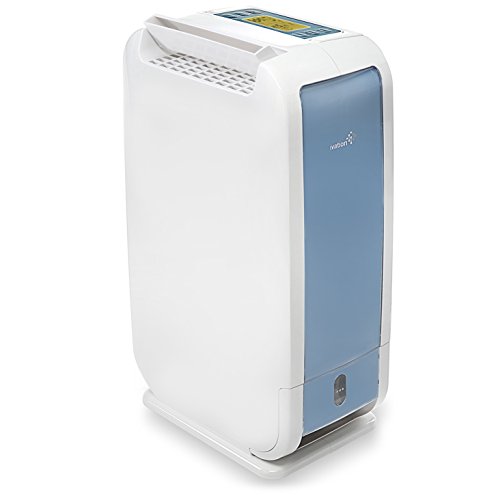
- Covers spaces up to 270 square feet
- Desiccant rotor suits colder conditions
- Reservoir or continuous-drain operation
Best For: Small garages and enclosed areas needing automated moisture removal
Best for Comfort
Gasbye DryPrime 115-Pint Dehumidifier
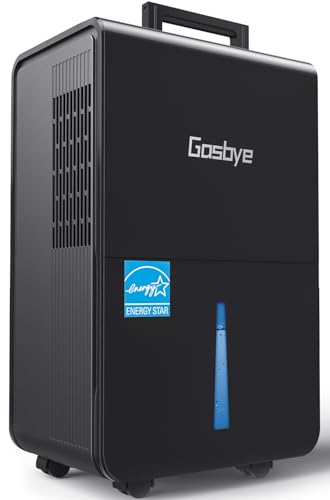
- Rated for spaces up to 4,500 square feet
- Three drainage options for extended use
- Energy Star 2026 and automatic restart
Best For: Large, persistently damp garages and basements
Best Compact Desiccant Option
Ivation 19-Pint Small-Area Dehumidifier

- Desiccant rotor removes moisture while warming air
- Covers spaces up to 410 square feet
- Offers reservoir or continuous-drain operation
Best For: Small garages and cold-season moisture control
Best Reusable Moisture Absorber
Wisedry 4-Pack Rechargeable Silica Gel Bags
- Includes four 500-gram reusable bags
- Each bag absorbs up to 150 grams of moisture
- Recharges in about 10–16 minutes
Best For: Enclosed garage storage and localized condensation
Best High-Capacity Garage Unit
CADPXS 125-Pint Crawl Space Dehumidifier

- Rated for up to 125 pints per day
- Covers areas up to 1,500 square feet
- Includes continuous gravity drainage and auto-defrost
Best For: Large garages and heavy, ongoing moisture
Best Compact Rotary Performer – AEOCKY X1-Pro 2000 Sq. Ft.
For shoppers comparing desiccant garage dehumidifiers, the AEOCKY X1-Pro stands out for frost-free rotary technology, compact-space performance, and low operating noise. It is designed for small spaces and small basements rather than large areas, with extraction performance that varies by temperature and humidity.
Best For: Small garages, compact basements, and other spaces that need quiet, cold-weather moisture control.
Pros:
- Rotary desiccant technology continues working in conditions where compressor and Peltier units may frost.
- Rated for operation from 34°F to 95°F, with a reported sleep-mode noise level as low as 25 dB.
- Compact 340W design offers up to 10 pints per day in stated laboratory conditions.
Cons:
- It is intended for compact spaces and small basements, not large areas.
- Warmth and a slight scent may occur during first use or after extended storage.
- Collected water can freeze below 34°F, affecting usability.
The X1-Pro is a strong choice when quiet operation and cold-weather reliability matter more than whole-garage coverage. Place it with some ventilation during initial use and verify that its capacity matches your space.
Best Passive Moisture Absorber – DampRid Hi-Capacity Fragrance-Free Buckets
DampRid Hi-Capacity Fragrance Free Absorber Bucket, 2 lb. 15.5 oz. with Detection Strip, 2 Pack
Check Price On AmazonDampRid offers a simple alternative to powered desiccant garage dehumidifiers. These fragrance-free absorber buckets use granules to attract and trap excess moisture, making them easy to place in garages, closets, basements, RVs, and other damp areas without electricity or operating noise.
Best For: Small to medium spaces where passive, unscented moisture control is preferred.
Pros:
- Fragrance-free granules suit sensitive environments and leave no added scent.
- Bucket format is easy to place on a shelf or floor.
- The two-pack supports moisture control in multiple locations.
Cons:
- As a passive granule absorber, it does not provide powered air circulation or adjustable humidity control.
- It is better suited to small and medium spaces than demanding whole-garage drying.
This is a practical low-maintenance option for localized dampness, storage areas, and spaces without convenient power. For persistent or heavy garage humidity, a powered unit may be more suitable.
Best for Cold Garages – Eva-Dry EDV-4000H Rotary Desiccant
The Eva-Dry EDV-4000H is one of the more garage-focused desiccant garage dehumidifiers in this roundup. Its rotary desiccant system is rated to work down to 34°F, while the narrow 7-inch depth and 13-pound weight make it easier to fit in crawl spaces, garages, cabins, and other tight service areas.
Best For: Unheated garages, crawl spaces, basements, and cabins up to 444 square feet.
Pros:
- Cold-rated to 34°F, where conventional compressor units may stop working effectively.
- Compact 7-inch-deep body and 13-pound weight suit tight access areas.
- Offers a 2-liter tank with auto shut-off or continuous drainage, plus a clothes-drying setting.
Cons:
- The listed coverage is limited to 444 square feet, so it may not suit larger garages.
- It has only two fan speeds and three preset humidity levels rather than fully customized control.
- The built-in ionizer and clothes-drying setting may be unnecessary for buyers seeking basic dehumidification.
Choose this model when winter garage conditions, portability, and drainage flexibility are priorities. Its smaller coverage area makes measuring the space especially important before purchase.
Best for Large Garages – Waykar 34-Pint Energy Star Dehumidifier
For larger garages and high-demand spaces, the Waykar 34-pint model offers broader coverage than compact desiccant garage dehumidifiers. It is a compressor-based unit rated for up to 2,000 square feet, with adjustable humidity settings, 90-degree airflow direction, and options for either tank emptying or continuous drainage.
Best For: Garages, basements, and commercial or whole-home areas up to 2,000 square feet.
Pros:
- Removes up to 34 pints per day under the stated test conditions.
- Wide 30%–80% humidity range supports targeted drying and everyday comfort.
- ENERGY STAR certification, a 24-hour timer, two fan speeds, and dual drainage add operating flexibility.
Cons:
- It is a compressor dehumidifier, not a rotary desiccant model, so cold-weather performance may differ from desiccant units.
- The removable tank holds 2.5 liters, which may require regular emptying without continuous drainage.
- Its larger-space capacity may be excessive for small storage areas.
The Waykar is the more practical pick for broad garage coverage and sustained humidity management when a drain hose is available. Buyers in very cold, unheated spaces should compare its compressor design with a cold-rated rotary desiccant unit.
Best Reusable Pick – Wisedry 1,000g Rechargeable Silica Gel Bags
These Wisedry bags are a simple, electricity-free option among desiccant garage dehumidifiers. The two 500-gram silica gel packs can help reduce condensation in garages, storage rooms, tool shops, basements, RVs, and boats, while their portable design makes placement easy.
Best For: Car windows, cabinets, tool storage, and smaller garage areas where reusable moisture absorption is more practical than a powered appliance.
Pros:
- Two 500-gram bags can each adsorb up to 150 grams of moisture under the stated conditions.
- Reusable more than 10 times when reactivated according to the instructions.
- Can be recharged in a microwave or oven in about 10–16 minutes, depending on power.
- Double packaging helps protect unused desiccant from moisture.
Cons:
- Requires manual reactivation rather than continuous automatic operation.
- Moisture capacity is limited compared with powered dehumidifiers for large, persistently damp garages.
- Users must weigh the bag and follow the recharge instructions to avoid overheating.
Choose this set when portability, reuse, and low-maintenance moisture control matter most. It is better suited to localized condensation and storage protection than whole-garage dehumidification.
Best Compact Powered Option – Ivation 13-Pint Desiccant Dehumidifier
The Ivation is a compact powered choice for shoppers comparing desiccant garage dehumidifiers for smaller areas. Its desiccant rotor technology removes up to 13 pints per day at 60% relative humidity and 68°F, and it is designed for spaces up to 270 square feet.
Best For: Small garages, closets, attics, crawlspaces, and other enclosed areas that need quiet, continuous moisture removal, especially in colder seasons.
Pros:
- Desiccant technology is designed to operate effectively in colder conditions where compressor units may struggle.
- Rated for spaces up to 270 square feet and removes up to 13 pints per day under stated conditions.
- Offers a removable 3.8-pint reservoir or continuous drainage with the included hose.
- LCD controls provide humidity, fan-speed, timer, vent-swing, and temperature-setting options.
Cons:
- Its 270-square-foot coverage is limited for a large or open garage.
- High-power operation uses 470 watts, while low-power operation uses 280 watts.
- The reservoir requires emptying unless continuous drainage is set up.
This model provides more automated control than passive desiccant bags while retaining a relatively compact footprint. Verify your garage size and drainage setup before choosing it for ongoing moisture control.
Best for Comfort – Gasbye DryPrime 115-Pint Dehumidifier
For a large or especially damp garage, the Gasbye DryPrime offers substantially more capacity than compact desiccant garage dehumidifiers. It is rated to remove up to 115 pints per day at 86°F and 80% relative humidity, with additional drainage and humidity-control features for extended operation.
Best For: Large garages, basements, and other indoor spaces where high moisture output, automatic cycling, and flexible drainage are priorities.
Pros:
- Rated for areas up to 4,500 square feet, with stated outputs of 115 pints per day at 86°F/80% RH and 73 pints at 80°F/60% RH.
- Offers a 1.7-gallon tank, included 5-foot drain hose, or threaded connection for a standard 3/4-inch garden hose.
- Energy Star 2026 certification is listed, with claimed efficiency up to 30% higher than non-Energy Star models.
- Automatic humidity cycling, power-outage restart, and approximately 45 dB operation support unattended use.
Cons:
- At 43 pounds and 24 inches tall, it is substantially larger and heavier than compact models.
- Its performance figures vary with temperature and relative humidity.
- The supplied details identify it as a compressor dehumidifier, so it is not a desiccant-rotor design.
This is the strongest fit for buyers prioritizing coverage and drainage flexibility over portability. Although it does not use desiccant technology, its high stated capacity makes it a practical alternative for large, damp garages.
Best Compact Desiccant Option – Ivation 19-Pint Small-Area Dehumidifier
For smaller garages and nearby utility spaces, the Ivation is one of the more compact desiccant garage dehumidifiers to consider. Its desiccant rotor removes moisture while warming ambient air, and it works across temperatures from 33°F to 104°F. The unit covers up to 410 square feet and offers both reservoir and continuous-drain operation.
Best For: Small garages, workshops, laundry rooms, attics, and other spaces up to 410 square feet where quiet operation and cold-weather performance matter.
Pros:
- Desiccant technology removes moisture, odors, and mold while warming surrounding air.
- Adjustable humidity, fan speed, timer, sleep mode, and vent swing provide flexible control.
- Includes a connection hose, washable filter, carry handle, and auto-shutoff features.
Cons:
- Its 410-square-foot coverage is better suited to smaller garages than large open areas.
- The 0.5-gallon capacity may require frequent emptying when continuous drainage is not used.
The Ivation is a practical pick when you need a portable, relatively quiet dehumidifier for a compact garage. Its low-temperature operating range and warming effect are useful in colder seasons, while the LCD controls make adjustment straightforward.
Best Reusable Moisture Absorber – Wisedry 4-Pack Rechargeable Silica Gel Bags
For enclosed storage areas rather than whole-garage air treatment, these Wisedry bags offer a simple alternative to powered desiccant garage dehumidifiers. Each 500-gram silica gel bag can absorb up to 150 grams of moisture, helping reduce window fogging and moisture in garages, tool shops, storage spaces, and vehicles.
Best For: Targeted moisture protection in garages, cabinets, gun safes, tool storage, RVs, boats, and other enclosed spaces.
Pros:
- Four reusable 500-gram bags provide flexible placement around storage areas.
- Each bag absorbs up to 150 grams of moisture under the stated conditions.
- Can be reactivated in a microwave or oven in approximately 10–16 minutes, following the instructions.
Cons:
- These manual bags do not actively circulate or dehumidify an entire garage.
- They require weighing and periodic recharging when saturated.
- The product is most practical for enclosed or localized spaces rather than large open areas.
Wisedry’s four-pack is a low-maintenance way to address localized condensation without electricity or a drain hose. It makes the most sense for storage cabinets, vehicles, and small garage zones where reusable moisture absorbers are sufficient.
Best High-Capacity Garage Unit – CADPXS 125-Pint Crawl Space Dehumidifier
For large, persistently damp garages, the CADPXS provides substantially more capacity than small desiccant garage dehumidifiers. It is rated for up to 125 pints per day, covers areas up to 1,500 square feet, and uses a built-in gravity drainage system with a 6.56-foot hose for continuous operation without an internal reservoir.
Best For: Large garages, crawl spaces, basements, warehouses, and other expansive areas with heavy or continuous moisture.
Pros:
- High-capacity moisture removal is rated at up to 125 pints per day.
- Continuous gravity drainage eliminates the need to empty a water tank.
- Includes adjustable humidity control, automatic defrost, memory restart, timer, and a MERV-1 filter.
- Handles tight installations with leveling feet, ergonomic handles, and a 6-inch pipe-compatible exhaust outlet.
Cons:
- Its commercial-oriented capacity may be excessive for a small residential garage.
- It is a 453-watt powered unit, so it requires an electrical connection and suitable drainage placement.
- The supplied notes describe it as a compressor-based unit with automatic defrost rather than a desiccant model.
The CADPXS is the stronger choice when garage moisture is severe and continuous drainage is essential. Its large coverage, automatic defrost, and five-year limited warranty support demanding installations, though smaller spaces may not need this level of capacity.
How We Picked These Desiccant Garage Dehumidifiers
We selected products across several moisture-control categories rather than treating every garage as the same. The lineup includes rotary desiccant dehumidifiers for cooler environments, compressor-style units for larger or warmer spaces, passive absorber buckets for low-maintenance spot control, and rechargeable silica gel packs for vehicles, cabinets, safes, and enclosed storage.
We focused on stated coverage, moisture-removal capacity, operating temperature suitability, portability, drainage, regeneration or emptying requirements, noise, and energy considerations. Because manufacturer ratings can vary by temperature and humidity, use coverage figures as comparison points rather than guarantees.
Quick Comparison
- Best for cold garages: Rotary desiccant models generally maintain performance better than compressor units in lower temperatures.
- Best for large, damp spaces: High-capacity compressor dehumidifiers with continuous drainage are better suited to basements, crawl spaces, and larger garages.
- Best for small enclosed areas: Rechargeable silica gel packs work well in vehicles, gun safes, cabinets, and storage bins.
- Best for no electricity: Passive absorber buckets provide simple, quiet moisture collection but require replacement or disposal.
- Best for flexible placement: Compact units are easier to move between a garage, workshop, attic, or utility area.
Key Buying Factors for Desiccant Garage Dehumidifiers
Garage Size and Moisture Load
Match the unit to the actual area and the severity of the problem. A mildly damp single-car garage needs less capacity than a leaky, uninsulated space with condensation or standing moisture. For unusually wet areas, prioritize continuous drainage and a larger rated capacity.
Temperature and Dehumidifier Type
Desiccant technology is often a strong choice for unheated garages because it does not rely on a cold evaporator coil that can frost. Compressor models may remove more water efficiently in warm, humid conditions, but can be less suitable in cold spaces. Passive and silica gel products are useful for localized moisture, not whole-garage humidity control.
Drainage and Maintenance
Check whether the product uses a removable tank, a continuous drain hose, replaceable crystals, or rechargeable packs. A hose connection is especially valuable when the unit will run unattended. Rechargeable desiccant packs reduce recurring waste but need periodic heating or microwave reactivation according to the manufacturer’s instructions.
Noise, Energy Use, and Controls
For workshops or attached garages, consider operating noise, humidistat controls, automatic shutoff, timers, and restart behavior after a power interruption. Energy use matters most when a unit runs continuously, so compare wattage and operating modes rather than relying only on the product category.
Who Should Buy Which Desiccant Garage Dehumidifiers?
Choose a rotary desiccant unit if your garage is cold, you need steady whole-area control, or frost resistance is a priority. Choose a high-capacity compressor unit if the space is warm, very damp, and equipped for continuous drainage. Select a passive absorber bucket for closets, corners, or short-term odor and moisture reduction. For cars, safes, toolboxes, and sealed cabinets, rechargeable silica gel packs are usually the most convenient option.
Before buying, identify the moisture source—condensation, leaks, poor ventilation, or groundwater. A dehumidifier can control symptoms, but sealing leaks and improving airflow will usually produce better long-term results.