Compact reciprocating saws make quick work of pipe, lumber, drywall, branches, and demolition tasks where a full-size saw feels bulky. Their shorter bodies and one-handed designs are easier to maneuver in tight spaces, while cordless platforms keep the work area free of cables.
This roundup compares 10 standout models across professional, homeowner, and budget categories, with attention to cutting speed, battery compatibility, control, ergonomics, and included accessories.
Table of Contents
- Best 10 Compact Reciprocating Saws Picks for 2026
- Best Overall – DEWALT 20V MAX XR Compact Reciprocating Saw
- Best One-Handed Control – Milwaukee M18 FUEL Hackzall
- Best Ready-to-Use Value – Greenworks 24V Compact Reciprocating Saw
- Best Lightweight Option – Makita 12V Max CXT Recipro Saw
- Best Value Kit – SEESII 21V Brushless Reciprocating Saw
- Best One-Handed Design – Makita XRJ08Z Compact Recipro Saw
- Best Stroke Length – FULLYEA 21V Cordless Reciprocating Saw
- Best One-Handed Pick – Milwaukee M18 Hackzall
- Best Starter Kit – 20V Cordless Reciprocating Saw
- Best Compact Professional Pick – DEWALT 20V MAX DCS387B
- How We Picked the Best Compact Reciprocating Saws
- Quick Comparison
- Key Buying Factors for Compact Reciprocating Saws
- Who Should Buy Which Compact Reciprocating Saws?
Best 10 Compact Reciprocating Saws Picks for 2026
Best Overall
DEWALT 20V MAX XR Compact Reciprocating Saw

- 14.5-inch compact body fits between studs
- 5.0Ah battery and charger included
- Brushless motor with four-position blade clamp
Best For: All-around renovation and construction use
Best One-Handed Control
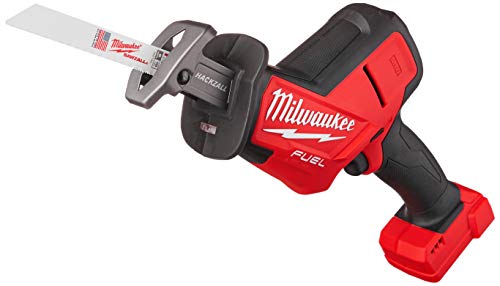
- One-handed design improves control
- Brushless motor delivers strong cutting performance
- Pivoting shoe helps reduce bucking and vibration
Best For: Controlled cutting on the M18 platform
Best Ready-to-Use Value
Greenworks 24V Compact Reciprocating Saw

- Battery and charger included
- One-inch stroke with variable speed
- Brushless, one-handed compact design
Best For: Homeowners starting a cordless tool collection
Best Lightweight Option
Makita 12V Max CXT Recipro Saw

- 2.9 pounds with battery
- Paddle or trigger switch operation
- Variable speed up to 3,300 SPM
Best For: Lightweight, comfortable cutting
Best Value Kit
SEESII 21V Brushless Reciprocating Saw

- Two 4.0Ah batteries and fast charger included
- 3,500 RPM brushless motor with LED light
- Six blades plus case and safety accessories
Best For: DIY users wanting a complete multi-material cutting kit
Best One-Handed Design
Makita XRJ08Z Compact Recipro Saw

- Brushless motor reaches 3,100 SPM
- Low-vibration, one-handed design
- Three cutting blades included; battery sold separately
Best For: Makita 18V LXT users needing compact control
Best Stroke Length
FULLYEA 21V Cordless Reciprocating Saw
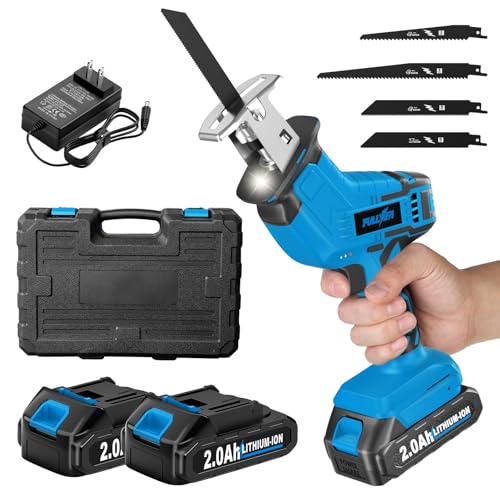
- 28mm stroke for wood, metal, plastic, and branches
- Variable speed up to 3,500 SPM
- Two 2.0Ah batteries, four blades, and case included
Best For: General DIY and home maintenance cutting
Best One-Handed Pick

- One-handed compact design
- Anti-vibration handle
- Tool-free blade changes
Best For: M18 users cutting in tight spaces
Best Compact Professional Pick
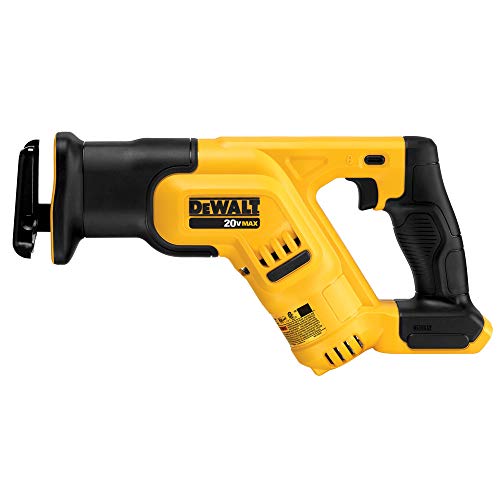
- 14-inch compact design
- Four-position blade clamp
- Variable speed up to 2,900 SPM
Best For: DEWALT users working in confined spaces
Best Overall – DEWALT 20V MAX XR Compact Reciprocating Saw
DEWALT 20V MAX XR Compact Reciprocating Saw, 5.0-Amp Hour, Cordless (DCS367P1)
Check Price On AmazonAmong compact reciprocating saws, the DEWALT DCS367P1 is a versatile kit for users who want strong cutting capability without a full-size tool. Its 14.5-inch body is designed to fit between studs and into other tight spots, while the included 5.0Ah battery and charger make it ready to use.
Best For: DIYers and tradespeople who need a compact, well-equipped saw for renovation, framing, and general cutting tasks.
Pros:
- Compact 14.5-inch length fits between studs and in tight work areas
- Brushless 20V motor delivers up to 2,900 SPM with a 1-1/8-inch stroke
- Includes a 5.0Ah battery, charger, kit bag, LED light, and four-position blade clamp
Cons:
- At 5 pounds without the battery, it is heavier than the lightest compact options
- Uses DEWALT’s 20V battery platform
This is the strongest all-around choice in the group for buyers who value reach, runtime, and included accessories. The four-position clamp also adds useful cutting flexibility in awkward positions.
Best One-Handed Control – Milwaukee M18 FUEL Hackzall
Milwaukee 2719-20 M18 FUEL Hackzall (Bare Tool), Red, Black, | Saw (Tool Only) Model 2719-20
Check Price On AmazonThe Milwaukee M18 FUEL Hackzall is a one-handed alternative to conventional compact reciprocating saws. Its 7/8-inch stroke, 4,500-rpm speed, pivoting shoe, and brushless motor are suited to controlled cutting in metal and other demanding applications, though this listing is for the bare tool.
Best For: Users who prioritize one-handed handling, control, and power on the Milwaukee M18 battery platform.
Pros:
- One-handed design offers control and versatility
- POWERSTATE brushless motor and REDLINK Plus electronics provide cutting performance and overload protection
- Pivoting shoe helps maintain contact and reduce bucking and vibration
- 4,500-rpm speed supports fast cutting
Cons:
- Bare tool does not include a battery or charger
- Its 7/8-inch stroke is shorter than the DEWALT and Greenworks options
- Requires a compatible M18 battery system
The Hackzall stands out when maneuverability matters more than maximum stroke length. Buyers already invested in M18 batteries can get a particularly practical compact saw, while new users should factor in the battery and charger cost.
Best Ready-to-Use Value – Greenworks 24V Compact Reciprocating Saw
The Greenworks 24V compact reciprocating saw combines a one-handed form factor with a brushless motor and a complete starter kit. Its 1-inch stroke, variable speed up to 3,000 SPM, LED worklight, 2.0Ah battery, and compact charger make it a convenient option for tight-space projects.
Best For: Homeowners who want a compact, cordless saw with the battery and charger included.
Pros:
- One-handed compact design suits tight spaces
- Brushless motor is rated for up to 50% more runtime and increased performance
- 1-inch stroke and variable speed up to 3,000 SPM handle varied materials
- Includes a 2.0Ah battery and compact charger
Cons:
- Included 2.0Ah battery is smaller than the DEWALT kit’s 5.0Ah battery
- Uses the Greenworks 24V battery platform
This is a sensible pick for buyers starting a cordless tool collection or replacing a small corded saw. It offers useful compact handling and ready-to-use convenience without requiring a separate battery purchase.
Best Lightweight Option – Makita 12V Max CXT Recipro Saw
The Makita RJ03Z is one of the lighter compact reciprocating saws, weighing 2.9 pounds with a battery according to the supplied notes. Its 12V platform, 1/2-inch stroke, dual-position switch, rubberized grip, and 0-3,300 SPM variable speed make it suitable for convenient, controlled cutting.
Best For: Users who value low weight, comfortable handling, and flexible trigger or paddle-switch operation.
Pros:
- Lightweight design weighs 2.9 pounds with a battery
- Dual-position on/off switch supports paddle or trigger operation
- Rubberized soft grip improves handling comfort
- Variable speed reaches 3,300 SPM
Cons:
- Bare tool does not include a battery or charger
- Its 1/2-inch stroke is shorter than the other listed saws
- 12V platform may offer less cutting capacity for demanding work
The RJ03Z is a good fit when minimizing hand and arm fatigue is more important than maximizing stroke length. It is especially appealing to existing Makita 12V CXT users, but new buyers must add a battery and charger.
Best Value Kit – SEESII 21V Brushless Reciprocating Saw
For shoppers comparing compact reciprocating saws, the SEESII stands out as a ready-to-use kit with two 4.0Ah batteries, six blades, and a fast charger. Its 200W brushless motor reaches up to 3,500 RPM, while the lightweight 2.0-pound design is suited to one-handed cutting around the home.
Best For: DIY users who want a complete cordless setup for wood, plastic, metal, pipes, and branches.
Pros:
- Includes two 4.0Ah batteries, charger, case, gloves, and safety glasses.
- Brushless motor offers variable speeds up to 3,500 RPM.
- Tool-free blade changes and a built-in LED support convenient cutting.
- Six included blades provide options for multiple materials.
Cons:
- The listed item weight is 3.48 kg, despite the product notes describing the saw itself as 2.0 pounds.
- Its included accessories may be more than needed for buyers who already own blades and batteries.
The SEESII is a practical all-in-one choice when convenience matters. Its dual-battery package and broad accessory set make it especially appealing for longer home projects.
Best One-Handed Design – Makita XRJ08Z Compact Recipro Saw
Makita XRJ08Z 18V LXT® Lithium-Ion Brushless Cordless Compact One-Handed Recipro Saw, Tool Only
Check Price On AmazonThe Makita XRJ08Z is a strong contender among compact reciprocating saws for users who prioritize controlled one-handed operation. Its brushless motor delivers up to 3,100 strokes per minute, and the low-vibration design is rated for up to 40% less vibration.
Best For: Makita 18V LXT users seeking a compact, maneuverable saw for efficient cutting.
Pros:
- One-handed grip is positioned to help transmit force to the workpiece.
- Brushless motor combines 0–3,100 SPM with a 7/8-inch stroke length.
- Low-vibration design can improve comfort during use.
- Includes wood, all-purpose, and metal-cutting blades.
Cons:
- Sold as a tool only, so the battery and charger are not included.
- The listed 16-ounce item weight may not represent the complete operating weight with a battery.
This is the most specialized option in the group for compact, one-handed control. It makes the most sense for shoppers already invested in Makita’s 18V LXT battery platform.
Best Stroke Length – FULLYEA 21V Cordless Reciprocating Saw
The FULLYEA combines a compact footprint with a 28mm stroke and variable speed up to 3,500 SPM. For buyers comparing compact reciprocating saws, its two 2.0Ah batteries, tool-free blade lever, LED light, and included case create a convenient package for routine cutting tasks.
Best For: Home maintenance and DIY work involving wood, metal, plastic, and branches.
Pros:
- 28mm stroke supports multi-material cutting.
- Stepless trigger control adjusts speed from 0 to 3,500 SPM.
- Includes two 2.0Ah batteries, fast charger, four blades, and a tool box.
- Tool-free blade changes and LED lighting add convenience.
Cons:
- Battery capacity is lower than the 4.0Ah batteries included with the SEESII.
- The handle is listed as plastic, which may feel less premium than rubberized designs.
- Only four blades are included.
The FULLYEA offers a useful balance of portability and cutting reach. Its longer stroke and complete cordless package make it a flexible choice for general-purpose home projects.
Best One-Handed Pick – Milwaukee M18 Hackzall
Milwaukee 2625-20 M18 18-Volt Lithium-Ion Cordless Hackzall Reciprocating Saw, Bare Tool
Check Price On AmazonFor shoppers comparing compact reciprocating saws, the Milwaukee 2625-20 stands out for its one-handed design and compact form. It is a bare tool, so you will need a compatible M18 battery and charger, but the design is well suited to controlled cutting in tight spaces and overhead work.
Best For: M18 users who want a compact, maneuverable saw for tight areas and overhead cuts.
Pros:
- One-handed design provides control and versatility in confined conditions.
- Anti-vibration handle helps reduce fatigue during heavier cuts.
- QUIK-LOK clamp enables fast, tool-free blade changes.
- Built-in LED light helps illuminate the cutting surface.
Cons:
- Bare-tool package does not include a battery or charger.
- Battery compatibility is limited to Milwaukee M18 batteries.
This is a practical choice for buyers already invested in Milwaukee’s M18 platform and prioritizing compact handling over an all-inclusive kit.
Best Starter Kit – 20V Cordless Reciprocating Saw
Among compact reciprocating saws, this cordless model is aimed at buyers who want a ready-to-use package. It includes a battery and charger, two batteries according to the listing, and four blades for wood, PVC, metal, and pipe-cutting tasks.
Best For: DIY users seeking an affordable, versatile kit for household, garden, and general cutting projects.
Pros:
- Cordless design provides mobility without a power cord.
- Variable speed is listed from 0 to 3,500 SPM.
- Includes four blades and a battery-and-charger setup.
- Designed for cutting wood, metal, PVC, pipe, and other materials.
Cons:
- The supplied details are less specific about blade-clamp and lighting features than the other models.
- Its listed dimensions are comparatively bulky for a compact-saw category.
Its broad accessory package makes it convenient for occasional home projects, especially when you do not already own a compatible battery platform.
Best Compact Professional Pick – DEWALT 20V MAX DCS387B
The DEWALT DCS387B is a strong option for shoppers comparing compact reciprocating saws for confined work. Its 14-inch overall length is designed to fit between studs, while the 4-position blade clamp, pivoting shoe, and variable-speed trigger add flexibility for controlled cuts.
Best For: DEWALT 20V MAX users who need a compact saw for construction, remodeling, and flush-cutting tasks.
Pros:
- Compact 14-inch design fits between studs and in confined spaces.
- Four-position clamp supports flush cutting and positional versatility.
- 1-1/8-inch stroke length and up to 2,900 SPM support fast cutting.
- LED light and pivoting shoe improve visibility and cutting flexibility.
Cons:
- Bare-tool model does not include a battery or charger.
- Requires a DEWALT 20V MAX battery platform.
Choose this model when compact reach and cutting-position flexibility matter most, particularly if you already have DEWALT 20V MAX batteries.
How We Picked the Best Compact Reciprocating Saws
We evaluated these Compact Reciprocating Saws by comparing the features that matter most during real cutting jobs: overall size and weight, stroke length, maximum strokes per minute, variable-speed control, brushless motor design, tool-free blade changes, shoe adjustment, vibration management, and battery-system compatibility. We also considered whether each listing includes a battery and charger, since a bare tool can be a good value for existing platform users but a poor choice for first-time buyers.
Because the selected models cover several voltage classes and price points, the best option depends on the intended workload rather than specifications alone. Professional users may prioritize runtime, durability, and service support, while occasional users may get more value from a complete kit with batteries and blades.
Quick Comparison
| Best For | What to Look For | Recommended Type |
|---|---|---|
| Frequent remodeling and demolition | Brushless motor, strong battery platform, low vibration | Premium 18V or 20V model |
| Overhead or tight-space cutting | Compact body, light weight, one-handed balance | 12V or compact 18V model |
| Pruning and yard maintenance | Variable speed, comfortable grip, suitable wood blade | Lightweight cordless kit |
| Occasional household repairs | Included battery, charger, and multiple blades | Complete budget kit |
Key Buying Factors for Compact Reciprocating Saws
Battery Platform and Runtime
Choose a tool that matches batteries you already own whenever possible. Bare-tool pricing is attractive for users invested in DeWalt, Milwaukee, or Makita systems. If you are starting from scratch, compare the total kit cost and check whether the included battery has enough capacity for repeated cuts.
Speed, Stroke, and Control
A high strokes-per-minute rating can improve cutting speed, but it is not the only performance measure. Longer strokes can remove material quickly, while variable-speed triggers help prevent blade wandering and improve control in delicate materials. For pruning, remodeling, and mixed materials, adjustable speed is generally more useful than maximum speed alone.
Size, Weight, and Vibration
A shorter, lighter saw is easier to position between studs, under cabinets, or above shoulder height. However, compact tools can transmit noticeable vibration during extended cuts. Look for a well-balanced grip, a stable adjustable shoe, and vibration-reduction features if you expect long demolition sessions.
Blade Changes and Included Accessories
Tool-free blade clamps save time, especially when switching between wood and metal blades. Confirm that the clamp accepts common reciprocating-saw blades and inspect the included blade selection. Accessory-heavy kits may be useful for occasional jobs, but professional users may prefer to choose higher-quality blades separately.
Who Should Buy Which Compact Reciprocating Saws?
Choose a premium DeWalt or Milwaukee model if you already use that battery ecosystem or need a durable tool for regular construction and demolition. Choose a Makita compact saw if balance, refined handling, and compatibility with an existing LXT or CXT collection are priorities. Choose the Greenworks option for a lighter-duty yard and home-maintenance tool within its 24V platform.
Choose a complete SEESII, FULLYEA, or similar kit if you need a battery, charger, and blades immediately and expect occasional use. These kits can reduce upfront cost, but check replacement-battery availability and warranty coverage before buying. For any model, match the blade to the material, wear eye protection, secure the workpiece, and let the saw’s shoe stay firmly against the surface for better control.