Finding the right CCS to NACS EV charging adapter can make public DC fast charging far more convenient, but connector direction, vehicle compatibility, and safety ratings matter. The options in this roundup cover popular adapters designed for NACS-equipped EVs using CCS1 fast-charging stations.
Below, compare charging limits, interlock designs, certifications, and compatibility claims so you can choose an adapter that fits your vehicle and charging routine.
Table of Contents
- Best 10 Ccs to Nacs Ev Charging Adapters Picks for 2026
- Top Certified Pick – Lectron Vortex Plus NACS to CCS Adapter
- Best for Tesla Flexibility – Raylix CCS1 to Tesla Adapter
- Best for CCS Network Access – LENZ CCS1 to NACS Adapter
- Best Feature Set – Fluxelle NACS to CCS1 Adapter
- Top Tesla Network Pick – Lectron Vortex NACS-to-CCS Adapter
- V3 Supercharger Value Pick – NACS-to-CCS1 Fast-Charging Adapter
- Certified Tesla Charging Pick – Lectron CCS1-to-NACS Adapter
- High-Power Supercharger Access – 500A CCS1 Adapter
- Travel-Ready Charging Expansion – EVBASE 500A Adapter
- Secure, Safety-Focused Design – FOCSPROD Interlock Adapter
- How We Picked the Best Ccs to Nacs Ev Charging Adapters
- Quick Comparison
- Key Buying Factors for Ccs to Nacs Ev Charging Adapters
- Who Should Buy Which Ccs to Nacs Ev Charging Adapters?
Best 10 Ccs to Nacs Ev Charging Adapters Picks for 2026
Top Certified Pick
Lectron Vortex Plus NACS to CCS Adapter

- UL 2252 certified by SGS
- 500A/1,000V DC fast-charging rating
- Built-in interlock for supported CCS1 EVs
Best For: CCS1 drivers with automaker-enabled Tesla Supercharger access
Best for Tesla Flexibility

- Up to 250kW and 400A DC charging
- Thermal monitoring and six-layer protection
- Supports compatible Tesla and NACS vehicles
Best For: CCS-enabled Tesla owners using third-party DC fast chargers
Best for CCS Network Access

- For NACS EVs at CCS1 DC stations
- UL 2251 and CSA C22.2 certification claims
- Not for Superchargers or Level 2 AC
Best For: NACS EV drivers relying on public CCS1 fast-charging networks
Best Feature Set
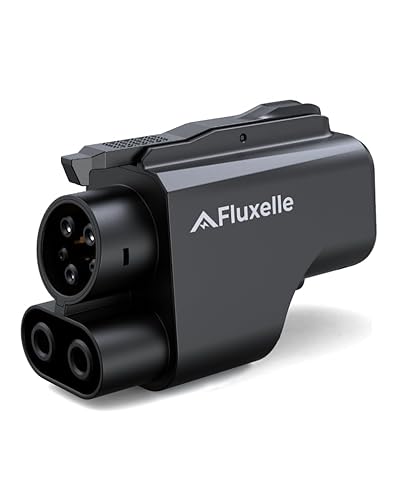
- UL2252 certification claim and 500A/1,000V rating
- Dual locking and triple temperature monitoring
- Listed support for many CCS EV brands
Best For: CCS EV drivers wanting monitored, high-power DC fast charging
Top Tesla Network Pick
Lectron Vortex NACS-to-CCS Adapter

- 500A/1,000V DC fast-charging rating
- Supports eligible access to V3 and V4 Superchargers
- Locking connections and two-year warranty
Best For: CCS1 EV owners with confirmed Tesla Supercharger access
V3 Supercharger Value Pick
NACS-to-CCS1 Fast-Charging Adapter

- For compatible Tesla V3 Superchargers
- Rated up to 500A/1,000V and 500kW
- Automatic shutoff at 194°F
Best For: Supported CCS1 EVs using Tesla V3 charging locations
Certified Tesla Charging Pick

- Accesses 12,000+ CCS1 fast-charging stations
- UL 2252 certified with thermal shutoff
- IP67-rated and supports up to 500A/1,000V
Best For: Compatible Tesla and NACS EVs needing CCS1 fast-charging access
High-Power Supercharger Access

- Up to 500A, 1,000V, and 250kW
- Access to compatible V3/V4 Superchargers
- Portable design for CCS1 EVs
Best For: Compatible CCS1 EV owners seeking high-current Tesla Supercharger access
Travel-Ready Charging Expansion

- Supports up to 500A and 1,000V
- Portable bag included
- Tested with select non-Tesla NACS stations
Best For: Traveling CCS1 EV drivers wanting portable DC charging flexibility
Secure, Safety-Focused Design

- Interlock structure for added stability
- SGS-certified UL 2252 compliance claim
- Three-year warranty stated
Best For: Compatible CCS1 EV owners prioritizing stability and warranty support
Top Certified Pick – Lectron Vortex Plus NACS to CCS Adapter
For CCS1 drivers comparing ccs to nacs ev charging adapters, the Lectron Vortex Plus is a safety-focused option for supported vehicles with Tesla Supercharger access. It is rated at 500A/1,000V and includes a built-in interlock for a more secure DC fast-charging connection.
Best For: CCS1 EV owners whose automaker has enabled Tesla Supercharger access.
Pros:
- UL 2252 certified by SGS (NRTL), according to the supplied product information.
- Designed to access more than 25,000 V3 and V4 Tesla Superchargers when supported by the vehicle and automaker.
- 500A/1,000V rating and built-in interlock mechanism.
- Includes a two-year warranty.
Cons:
- Not compatible with Tesla vehicles or AC charging stations.
- Supercharger access depends on vehicle and automaker compatibility.
- Charging speed varies by Supercharger generation and vehicle specifications.
The Vortex Plus stands out when certification and secure connector design are priorities. Confirm your vehicle’s approved compatibility before buying, since the adapter is intended only for supported CCS1 EVs.
Best for Tesla Flexibility – Raylix CCS1 to Tesla Adapter
The Raylix is a CCS1-to-Tesla adapter for CCS-enabled Tesla and NACS vehicles that need access to more DC fast-charging networks. It supports Level 3 DC charging only and is advertised for charging up to 250kW and 400A, subject to vehicle and station limits.
Best For: CCS-enabled Tesla owners who want to use compatible third-party CCS fast-charging stations.
Pros:
- Advertised compatibility with CCS-enabled Tesla Model 3, Y, S, X, and Cybertruck models, plus select next-generation NACS EVs.
- Supports up to 250kW and 400A DC charging, according to the supplied notes.
- Six-layer thermal protection with real-time temperature monitoring.
- Designed for CCS DC fast-charging networks including ChargePoint, Blink, EVgo, and Electrify America.
Cons:
- Only works with CCS-enabled Tesla or NACS vehicles.
- Owners of Teslas built before 2021 should verify CCS compatibility before use.
- Not intended for AC or Level 2 charging.
Raylix is the more network-flexible choice for compatible Tesla drivers, especially those who regularly encounter CCS stations. Check the vehicle’s CCS support setting and confirm station compatibility before relying on it for a trip.
Best for CCS Network Access – LENZ CCS1 to NACS Adapter
The LENZ is designed for NACS-port EVs that need to connect to CCS1 DC fast-charging stations. Among ccs to nacs ev charging adapters, this model is specifically positioned for public CCS networks rather than Tesla Superchargers or AC charging.
Best For: NACS-port EV drivers who frequently use Electrify America, EVgo, ChargePoint, or similar CCS1 DC fast-charging networks.
Pros:
- Designed for NACS vehicles using CCS1 DC fast-charging stations.
- UL 2251 and CSA C22.2 certification claims are included in the supplied product information.
- Supports up to 500V and is described as capable of consistent performance up to 500kW.
- Reinforced locking interface for stable alignment.
Cons:
- Not compatible with Tesla Superchargers.
- Not intended for Level 2 AC charging.
- Compatibility is focused on supported NACS-port vehicles, including select 2026 and newer models.
The LENZ makes sense for drivers transitioning to NACS who still depend on the established CCS1 fast-charging network. Its clearest limitation is also its defining use case: it is for CCS1 DC stations, not Superchargers or AC equipment.
Best Feature Set – Fluxelle NACS to CCS1 Adapter
The Fluxelle NACS-to-CCS1 adapter combines broad listed vehicle compatibility with a 500A/1,000V design for DC fast charging. It is intended to help supported CCS EVs use Tesla Superchargers V3 and V4 as well as standard DC fast-charging ports.
Best For: CCS EV drivers seeking a feature-rich adapter with dual locking and expanded fast-charging access.
Pros:
- SGS UL2252 certified, according to the supplied product information.
- Dual locking, automatic charging-lock release, and triple temperature monitoring.
- Rated for 500A/1,000V and advertised for charging up to 250kW.
- Lists compatibility across brands including Ford, Rivian, GM, Volvo, Polestar, Nissan, Mercedes, Hyundai, and Kia.
Cons:
- Tesla Supercharger compatibility is limited to V3 and V4 stations.
- Vehicle compatibility still needs to be confirmed before purchase.
- Warranty coverage is listed as one year, with two years of customer support.
Fluxelle is appealing if connector security and monitoring features matter as much as charging access. Its long compatibility list is useful, but drivers should verify their exact vehicle and charging permissions before using the adapter.
Top Tesla Network Pick – Lectron Vortex NACS-to-CCS Adapter
For CCS to NACS EV charging adapters, the Lectron Vortex Plug is designed for CCS1 EVs that have been granted access to the Tesla Supercharging network. Its 500-amp, 1,000-volt rating supports high-power DC fast charging, while compatibility and charging speeds still depend on your vehicle and the Supercharger.
Best For: CCS1 EV owners with confirmed Tesla Supercharger access who want a high-rated adapter for V3 and V4 locations.
Pros:
- Designed to access more than 25,000 V3 and V4 Tesla Superchargers where supported.
- Rated for up to 500 amps and 1,000 volts.
- Locking mechanisms on both sides help secure the connection.
- Includes a two-year warranty.
Cons:
- Only works with CCS1 EVs approved for Tesla Supercharging access.
- Charging rates vary by vehicle and Supercharger generation.
- The adapter may require a 30-minute cool-down after a heat-related charging fault.
This is a strong option when your automaker has enabled Tesla network access and you want broad V3/V4 Supercharger coverage. Confirm vehicle approval before buying.
V3 Supercharger Value Pick – NACS-to-CCS1 Fast-Charging Adapter
Among CCS to NACS EV charging adapters, this NACS-to-CCS1 model focuses specifically on compatible Tesla V3 Superchargers. It is rated at up to 500 amps and 1,000 volts, but buyers should verify both vehicle eligibility and station generation before relying on it for trips.
Best For: Owners of supported CCS1 EVs who primarily plan to use Tesla V3 Superchargers.
Pros:
- Designed for access to more than 15,000 Tesla V3 Supercharger ports.
- Supports a stated maximum rating of 500 amps, 1,000 volts, and 500 kW.
- Includes a temperature shutoff at 194°F (90°C).
- IP55 water resistance and a flame-retardant housing support outdoor use.
Cons:
- Works only with Tesla V3 Superchargers, not V1, V2, V4, home, destination, or mobile chargers.
- Several vehicle categories and model years are excluded, including certain PHEVs and older EVs.
- Requires checking both the Tesla app and your EV’s app for compatible locations.
This adapter can make sense for a narrowly defined V3 charging route, but its station-generation limitation is significant. Confirm your exact model and planned chargers before purchase.
Certified Tesla Charging Pick – Lectron CCS1-to-NACS Adapter
This Lectron model reverses the connection direction of typical CCS to NACS EV charging adapters: it lets compatible Tesla and other NACS EVs connect to CCS1 fast-charging stations. It supports up to 500 amps and 1,000 volts, with UL 2252 certification and automatic over-temperature protection.
Best For: Tesla Model S, 3, X, and Y owners, plus compatible NACS EV drivers seeking access to CCS1 fast chargers.
Pros:
- Connects compatible NACS EVs to more than 12,000 CCS1 fast-charging stations.
- Supports up to 500 amps, 1,000 volts, and 500 kW depending on the vehicle and station.
- UL 2252 certified with thermal protection and automatic over-temperature shutoff.
- IP67-rated and tested for demanding temperature, impact, crush, and high-power conditions.
Cons:
- Not compatible with the Tesla Cybertruck.
- Tesla vehicles must show “CCS Adapter Support: Enabled.”
- Other NACS EVs require confirmation through vehicle settings, the manufacturer app, or the owner’s manual.
For eligible Tesla and NACS vehicles, this is the most certification-focused choice in the group and expands access to CCS1 fast chargers. Verify the required vehicle setting before ordering.
High-Power Supercharger Access – 500A CCS1 Adapter
For CCS to NACS EV charging adapters, this Aipechy model is designed to connect compatible CCS1 electric vehicles to Tesla Supercharger DC fast-charging stations. It is rated for up to 500A, 1,000V, and 250kW, but your vehicle must support the Tesla Supercharger protocol and have network access enabled by its manufacturer.
Best For: CCS1 EV drivers who want a high-current adapter for compatible Tesla V3 and V4 Supercharger locations.
Pros:
- Supports up to 500A, 1,000V, and 250kW.
- Designed for access to 25,000+ V3 and V4 Superchargers.
- Simple, portable connection for compatible CCS1 vehicles.
Cons:
- Vehicle and automaker approval for Tesla Supercharger access is required.
- Not compatible with Level 1 or Level 2 AC chargers.
- Actual charging speed depends on the vehicle and charging station.
This adapter offers strong stated electrical capacity and broad Supercharger-network access, making it a practical road-trip option when compatibility has been confirmed. Check your automaker’s current requirements before purchase.
Travel-Ready Charging Expansion – EVBASE 500A Adapter
This EVBASE adapter is one of the practical CCS to NACS EV charging adapters for compatible CCS1 vehicles, offering a way to connect to NACS Tesla Supercharger stations. It supports up to 500A and 1,000V, includes a portable bag, and has been tested with some non-Tesla NACS stations as well.
Best For: EV owners who prioritize portable storage and broader DC fast-charging access during travel.
Pros:
- Rated for up to 500A, 1,000V, and 250kW.
- Provides access to over 15,000 V3 and V4 Supercharger ports where approved.
- Compact design, portable bag, and stated operating range of -22°F to 122°F.
- Tested with some non-Tesla NACS chargers, including certain IONNA dual-standard stations.
Cons:
- Automaker approval and vehicle compatibility must be confirmed.
- Charging speed depends on the station, battery, and vehicle specifications.
- It is intended for DC charging, not Level 1 or Level 2 AC charging.
The EVBASE stands out for travel convenience and its stated testing with select non-Tesla NACS stations. Its usefulness still depends on whether your specific CCS1 vehicle is authorized for the networks you plan to use.
Secure, Safety-Focused Design – FOCSPROD Interlock Adapter
Among CCS to NACS EV charging adapters, this FOCSPROD model emphasizes connection stability with an interlock structure and SGS certification for compliance with the UL 2252 standard. It is designed for compatible CCS1 EVs using Tesla Supercharger DC fast chargers and is rated up to 500A and 1,000V.
Best For: Compatible Ford, GM, Rivian, and other CCS1 EV owners who want an interlock-equipped adapter and extended warranty coverage.
Pros:
- Interlock structure is designed for added connection stability.
- SGS certified to comply with the UL 2252 safety standard.
- Rated for up to 500A and 1,000V DC fast charging.
- Includes a stated three-year warranty.
Cons:
- Not currently compatible with several listed makes, including Audi, BMW, Kia, Nissan, Porsche, Toyota, Volkswagen, and Honda.
- Automaker approval for Tesla Supercharger access is required.
- Not compatible with Level 1 or Level 2 AC chargers.
The interlock design, UL 2252 compliance claim, and three-year warranty make this a compelling option for buyers focused on stability and support. However, the compatibility exclusions are especially important, so verify your exact vehicle before ordering.
How We Picked the Best Ccs to Nacs Ev Charging Adapters
We focused on adapters intended for CCS1 DC fast charging and NACS-equipped electric vehicles, prioritizing clear connector specifications, stated voltage and amperage limits, safety certifications, and compatibility information. We also considered practical details such as an interlock, build quality, portability, and whether the product is designed specifically for high-power charging.
Product listings can use different naming conventions, so verify the connector direction carefully. A CCS-to-NACS adapter lets an NACS vehicle connect to a CCS1 charger; a NACS-to-CCS adapter is intended for a CCS1 vehicle using a NACS charger. Those terms are not interchangeable.
Quick Comparison
- Best for broad compatibility: Choose a model with explicit support for your vehicle make, model, and charging network.
- Best for high-power charging: Look for clearly stated 500A/1,000V specifications, while remembering that your vehicle and charger may impose lower limits.
- Best for safety-conscious buyers: Prefer an adapter with a verifiable UL 2252 certification or listing and built-in locking or interlock hardware.
- Best for occasional travel: Select a compact, easy-to-store adapter with protective caps and a durable cable-free housing.
Key Buying Factors for Ccs to Nacs Ev Charging Adapters
Connector Direction and Vehicle Fit
Confirm both ends before ordering. Your EV’s inlet, the charger’s plug, and the adapter’s sockets must match exactly. Also check the manufacturer’s compatibility list because some vehicles require software support or an approved adapter for DC fast charging.
Power Rating and Charging Limits
Ratings such as 500A and 1,000V describe the adapter’s stated electrical capacity, not the speed your EV will necessarily receive. Actual charging performance depends on the car, battery temperature, charger output, network settings, and charging curve.
Safety Certification and Interlock
A properly documented UL 2252 certification can provide greater confidence for EV charging equipment. An interlock or locking mechanism helps prevent accidental disconnection during charging, but never force a connector or use an adapter showing heat damage, cracks, or loose contacts.
Size, Weather Resistance, and Handling
Choose a robust, weather-resistant design suitable for outdoor charging. A manageable shape and protective storage case are useful if you regularly move between home, work, and public chargers.
Who Should Buy Which Ccs to Nacs Ev Charging Adapters?
Frequent road-trippers should prioritize a widely compatible, high-current adapter with an interlock and strong certification documentation. Drivers who use public chargers occasionally may prefer a lighter, simpler model from a brand with clear support information. Owners of newer NACS vehicles should verify that the adapter is approved for their exact vehicle and charging network before relying on it for travel.
Finally, inspect the adapter and plugs before every use, follow the vehicle and charger instructions, and stop charging if the connector becomes unusually hot or displays an error. The best adapter is the one that matches your EV and charging station precisely, not simply the model with the highest headline rating.