The right car inverter can turn a vehicle’s 12-volt outlet into a practical power source for laptops, chargers, small electronics, and travel accessories. For road trips, the best choice balances usable wattage, charging ports, safety features, and a compact design.
We selected 10 popular options ranging from lightweight 150- and 200-watt models to more capable 300- and 400-watt inverters. Use the guide below to match the inverter’s output and features to the devices you plan to bring.
Table of Contents
- Best 10 Car Inverters for Road Trips Picks for 2026
- Compact Everyday Pick – BESTEK 300W Car Inverter
- Fast-Charging Road Trip Choice – Vansoet 400W Car Inverter
- Best Monitoring Features – BMK 300W Car Inverter
- High-Output USB-C Pick – Pro Chaser 400W Inverter
- Best Compact Pick – FOVAL 150W Car Power Inverter
- Best Port Selection – DrimMek 300W Car Power Inverter
- Best Higher-Power Option – BESTEK 400W Car Power Inverter
- Compact Road-Trip Power – 200W YSOLX Car Inverter
- Six-Port Travel Charging – PiSFAU 300W Car Inverter
- Balanced Everyday Charging – PiSFAU 200W Car Inverter
- How We Picked the Best Car Inverters for Road Trips
- Quick Comparison
- Key Buying Factors for Car Inverters for Road Trips
- Who Should Buy Which Car Inverters for Road Trips?
Best 10 Car Inverters for Road Trips Picks for 2026
Compact Everyday Pick
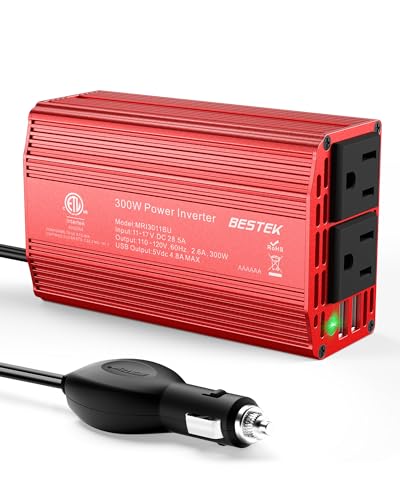
- 300W continuous and 700W peak output
- Two AC outlets plus two USB ports
- Compact aluminum body with 32-inch cord
Best For: Charging phones, laptops, tablets, and small electronics on the road
Fast-Charging Road Trip Choice

- 400W continuous and 800W peak output
- 30W USB-C PD and 18W USB-A QC ports
- Dual AC outlets with compact aluminum housing
Best For: Mixed device charging and select small appliances during travel
Best Monitoring Features

- LCD display tracks input and output voltage
- Four fast USB ports plus two AC outlets
- Independent switches for the AC outlets
Best For: Travelers managing several devices and monitoring vehicle power
High-Output USB-C Pick

- 400W continuous and 800W peak output
- 65W USB-C PD plus 18W USB-A charging
- Dual AC outlets and 30-inch cord
Best For: Charging USB-C laptops and personal electronics on road trips
Best Compact Pick
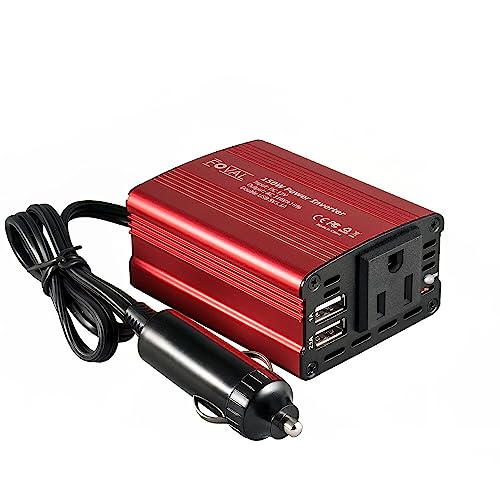
- 150W continuous, 300W peak output
- Dual USB ports plus one AC outlet
- Compact aluminum body with safety protections
Best For: Light-duty charging in cars, vans, and road-trip setups
Best Port Selection
DrimMek 300W Car Power Inverter

- 300W output with dual AC outlets
- 65W USB-C plus USB-A charging ports
- LCD battery-voltage display and quiet fan
Best For: Group travel with laptops, phones, and tablets
Best Higher-Power Option
BESTEK 400W Car Power Inverter

- 400W output with dual 110V AC outlets
- 30W USB-C PD and QC 3.0 USB-A
- ETL-certified with built-in fuse and protections
Best For: Road trips needing higher-output AC and fast USB charging
Compact Road-Trip Power

- 2 AC outlets plus 4 USB ports
- USB-QC and USB-C fast charging
- Compact design with multiple protections
Best For: Travelers charging several small electronics in the car
Six-Port Travel Charging

- Six total charging ports
- Two USB-C and two USB-A ports
- Compact 300W travel-ready design
Best For: Groups charging multiple devices during road trips
Balanced Everyday Charging

- 2 AC outlets and 4 USB ports
- Compact 200W vehicle adapter
- One-year warranty and multi-protection
Best For: Drivers powering small electronics on trips and camping outings
Compact Everyday Pick – BESTEK 300W Car Inverter
For drivers comparing car inverters for road trips, the BESTEK 300W model is a compact option with two AC outlets and two USB ports. Its 32-inch cord, aluminum housing, and compatibility with 11–17V vehicles make it practical for powering laptops, tablets, phones, cameras, and other small electronics.
Best For: Travelers who want a small, versatile inverter for charging several devices during road trips, work travel, or camping.
Pros:
- Provides 300W of continuous power and 700W of peak power.
- Includes two AC outlets and two 4.8A USB charging ports.
- Compact aluminum design with a 32-inch vehicle plug cord.
- Built-in fuse and protections against overheating, voltage issues, and short circuits.
Cons:
- Uses a modified sine wave output rather than pure sine wave.
- The 300W continuous capacity is intended for smaller electronics, not high-demand appliances.
The BESTEK stands out when portability and multiple charging connections matter more than maximum output. Its five-year replacement warranty and broad vehicle compatibility add useful reassurance for frequent travelers.
Fast-Charging Road Trip Choice – Vansoet 400W Car Inverter
The Vansoet 400W is one of the more capable car inverters for road trips, pairing dual AC outlets with USB-C PD and USB-A QC charging. It can support devices such as laptops, phones, tablets, CPAP machines, compressors, and car vacuums, provided the total load stays within the vehicle socket and inverter limits.
Best For: Road trippers who need higher output and fast USB charging for a mix of electronics and select small appliances.
Pros:
- Offers 400W continuous power and 800W peak power.
- Features two AC outlets, a 30W USB-C PD port, and an 18W USB-A QC port.
- Uses a compact aluminum housing and an intelligent cooling fan.
- Includes protection against overheating, overload, voltage problems, and short circuits.
Cons:
- USB charging power is shared when both USB ports are used.
- Vehicle socket capacity may limit what can be powered simultaneously.
Choose this Vansoet model if fast charging and a 400W capacity are priorities. Its compact format suits back-seat use, camping, and vacations, while the automatic fan is designed to reduce unnecessary noise.
Best Monitoring Features – BMK 300W Car Inverter
The BMK 300W combines AC power with four fast-charging USB ports and an LCD voltage display. For shoppers comparing car inverters for road trips, its real-time monitoring and independently switched AC outlets are useful features when charging multiple devices from a vehicle power socket.
Best For: Drivers who want detailed voltage monitoring, multiple USB connections, and separate control of two AC outlets.
Pros:
- Delivers 300W of continuous power through two 110V AC outlets.
- Includes two 36W USB-C PD ports and two USB-A QC3.0 ports.
- LCD display provides real-time input and output voltage information.
- Independent AC outlet switches can help avoid unnecessary battery drain.
Cons:
- Its 300W capacity is better suited to laptops and small appliances than high-power equipment.
- The supplied notes do not specify the cord length or cooling-fan behavior.
This BMK inverter is a strong fit when visibility and charging flexibility are more important than the simplest design. The pure sine wave specification and two-year manufacturer warranty further support its use with compatible road-trip electronics.
High-Output USB-C Pick – Pro Chaser 400W Inverter
The Pro Chaser 400W offers a useful blend of AC capacity and high-powered USB-C charging for road travel. Its dual AC outlets, 65W USB-C PD port, and 18W USB-A port can handle phones, tablets, laptops, cameras, and selected compact appliances from a vehicle socket.
Best For: Road trippers who prioritize a powerful USB-C port and need to charge laptops or several personal devices.
Pros:
- Provides 400W continuous power and up to 800W peak power.
- Includes dual AC outlets, a 65W USB-C PD port, and an 18W USB-A port.
- Compact cellphone-sized design with a 30-inch cord for back-seat access.
- Built-in protection covers short circuits, overloads, voltage issues, and overheating.
Cons:
- Uses modified sine wave output.
- Using the 65W PD port with an AC outlet may exceed the vehicle socket’s limit.
- The manufacturer recommends connecting only one high-power device at a time.
The Pro Chaser is appealing for travelers carrying USB-C laptops or other devices that benefit from faster charging. Its safety guidance is important, though, so match the connected load to the vehicle socket and avoid running multiple high-power devices together.
Best Compact Pick – FOVAL 150W Car Power Inverter
For road trips where you need basic AC power without sacrificing console space, the FOVAL 150W is a compact option. It provides one AC outlet and two USB ports from a 12V car outlet, making it suitable for phones, tablets, laptops, and other modest-power electronics.
Best For: Travelers who want a lightweight, space-saving inverter for everyday charging and smaller electronics.
Pros:
- 150W continuous output with a 300W peak rating for small electronics.
- Two USB ports provide up to 3.1A total output for charging phones and tablets.
- Compact aluminum housing weighs about 8 ounces and includes a quiet cooling fan.
- Built-in protection covers overheating, voltage issues, short circuits, overloads, and overcharging.
Cons:
- Its 150W continuous capacity is not intended for higher-power appliances.
- The modified sine wave output may not suit every sensitive electronic device.
- It has only one AC outlet.
The FOVAL is a practical choice when portability matters more than maximum output. Its limited wattage keeps it focused on personal electronics and light-duty road-trip needs.
Best Port Selection – DrimMek 300W Car Power Inverter
The DrimMek 300W stands out among car inverters for road trips when several passengers need to charge at once. It combines two AC outlets with two USB-C ports, including a 65W laptop-capable port, and two USB-A ports in a compact plug-and-play design.
Best For: Families or groups charging laptops, phones, and tablets simultaneously from a 12V vehicle outlet.
Pros:
- 300W output supports a broader range of travel electronics than lower-power models.
- Two AC outlets, two USB-C ports, and two USB-A ports support multiple devices.
- 65W USB-C port is highlighted for laptop charging.
- LCD displays real-time car battery voltage, while the fan runs only when needed.
Cons:
- It is compatible with 12V outlets and is not compatible with Tesla vehicles using 16V low-voltage systems.
- Its modified sine wave output may not be appropriate for every sensitive device.
- The warranty is limited to one year.
With the most flexible port layout of these options, the DrimMek is well suited to shared charging. Confirm your vehicle’s outlet voltage before buying, particularly if you drive a Tesla.
Best Higher-Power Option – BESTEK 400W Car Power Inverter
For road trips that call for more output, the BESTEK 400W provides two 110V AC outlets alongside fast USB charging. Its 400W DC-to-AC capacity is designed for devices such as laptops, breast pumps, DVD players, and bottle warmers, while the compact design remains travel-friendly.
Best For: Travelers who need higher continuous output and fast charging for several personal or family devices.
Pros:
- 400W output can handle devices in the stated 300W-to-400W range.
- Two AC outlets support simultaneous AC-device charging.
- USB-C PD provides 30W, while USB-A includes QC 3.0 fast charging.
- ETL-certified design includes a 40-amp fuse, safety protections, and replacement support.
Cons:
- Its 12V cigarette-lighter connection may be limited by the vehicle’s outlet capacity.
- Higher-power appliances should remain within the stated 400W output range.
- The supplied notes do not specify a display or cooling-fan feature.
The BESTEK is the strongest choice here for heavier road-trip charging, especially when two AC outlets and faster USB ports are useful. As with any vehicle inverter, stay within the inverter and vehicle outlet limits.
Compact Road-Trip Power – 200W YSOLX Car Inverter
For travelers seeking car inverters for road trips, the YSOLX 200W model offers two AC outlets and four USB ports in a compact, phone-sized design. It converts 12V DC power to 110V AC for compatible small electronics, including laptops, phones, tablets, and gaming consoles.
Best For: Road trippers who need several charging options in a lightweight, compact adapter.
Pros:
- Provides 2 AC outlets and 4 USB ports.
- Includes USB-QC 18W and USB-C 20W charging.
- Compact 5 x 2.7 x 1.4-inch design weighs about 8.5 ounces or more.
- Includes over-voltage, overload, over-temperature, under-voltage, and short-circuit protection.
Cons:
- Its 200W output is intended for small electronics rather than high-power appliances.
- Uses a modified sine wave output.
This inverter is a practical choice when portability and multiple charging ports matter most. Its built-in protection features add reassurance, while the modest 200W capacity keeps it best suited to personal electronics.
Six-Port Travel Charging – PiSFAU 300W Car Inverter
The PiSFAU 300W is one of the more versatile car inverters for road trips, with six charging ports for passengers and devices. Its layout includes two USB-C ports, two USB-A ports, and two AC outlets, making it useful when multiple electronics need power at once.
Best For: Families, groups, or travelers who want six simultaneous charging connections from one car adapter.
Pros:
- Offers 2 USB-C, 2 USB-A, and 2 AC ports.
- USB-C and USB-A ports support 24W fast charging.
- Compact 2.7 x 1.4 x 5.3-inch design weighs about 10 ounces or more.
- Protection features help guard against overheating, under-voltage, over-voltage, overload, and short circuits.
Cons:
- The supplied notes do not specify the total power allocation when all ports are used simultaneously.
- It is designed for a 12V vehicle power connection.
With the highest stated wattage in this group and six ports, the PiSFAU 300W emphasizes shared convenience. Its compact form keeps it suitable for travel, while the multi-protection system supports everyday in-car charging.
Balanced Everyday Charging – PiSFAU 200W Car Inverter
The PiSFAU 200W combines two standard AC outlets with four USB charging ports, giving road travelers a flexible way to power small electronics. It converts a vehicle’s 12V DC supply to 110V AC and fits easily into a travel or camping setup.
Best For: Drivers who want a compact six-port inverter for laptops, tablets, phones, and other small devices.
Pros:
- Includes 2 AC outlets and 4 USB ports.
- Provides up to 24W USB-A/C charging according to the supplied details.
- Compact 5 x 2.7 x 1.4-inch body weighs about 8.8 ounces.
- UL-listed and equipped with protection against overheating, under-voltage, over-voltage, overload, and short circuits.
Cons:
- The 200W rating limits it to relatively low-power electronics.
- Its output waveform is modified sine wave.
This PiSFAU model is a straightforward option for drivers who want broad device compatibility without a bulky inverter. It offers the same basic port layout as the 200W YSOLX while adding a stated one-year warranty.
How We Picked the Best Car Inverters for Road Trips
We focused on the specifications that matter most inside a moving vehicle: continuous wattage, outlet and USB options, portability, stated safety protections, and ease of use. The lineup includes compact adapters for phones and basic accessories as well as higher-output models for laptops, tablets, cameras, and other moderate-load electronics.
Because inverter performance depends on the vehicle’s outlet, wiring, and the connected device, listed wattage should be treated as a guide rather than a guarantee. We prioritized models that offer clear output ratings and practical charging features.
Quick Comparison
| Output Class | Best For | What to Expect |
|---|---|---|
| 150W | Phones, tablets, and small accessories | Most compact; limited capacity for larger chargers |
| 200W | Everyday travel electronics | A useful balance of portability and power |
| 300W | Laptops and multiple devices | More headroom, often with extra USB ports or USB-C |
| 400W | Heavier charging demands | Highest capacity in this roundup; check vehicle outlet limits carefully |
Key Buying Factors for Car Inverters for Road Trips
Continuous and Peak Wattage
Compare the inverter’s continuous rating with the wattage printed on your device’s charger. Leave some headroom instead of running at the maximum rating. Peak ratings are mainly relevant to brief startup surges and should not be confused with sustained output.
Ports and Charging Speed
Count the connections you will actually use. AC outlets suit laptop and camera chargers, while USB-A, USB-C Power Delivery, or Quick Charge ports can reduce the need for bulky adapters. A higher USB rating does not necessarily mean every port delivers that speed simultaneously.
Vehicle Compatibility and Safety
Most models here are designed for 12-volt systems, but verify the plug, input range, and your vehicle’s outlet fuse rating. Look for protections against overheating, overloading, short circuits, and low or high voltage. Avoid exceeding the vehicle socket’s stated limit.
Size, Cooling, and Noise
A compact plug-in design is convenient for front-seat use, while higher-output units may need more ventilation. Keep vents clear, avoid covering the inverter, and disconnect it when the vehicle is parked if the outlet remains powered.
Who Should Buy Which Car Inverters for Road Trips?
- Choose a 150W model if you mainly need phone, tablet, or small-device charging and want the smallest option.
- Choose a 200W model for general road-trip use, including several small electronics and occasional laptop charging.
- Choose a 300W model if you regularly charge a laptop or several devices and value extra USB capacity or USB-C charging.
- Choose a 400W model when you need the most output available in this selection, provided your vehicle’s outlet and wiring support the load.
For any of these Car Inverters for Road Trips, check your device requirements before connecting it. These plug-in units are intended for moderate electronics, not high-draw appliances such as kettles, heaters, hair dryers, or cooking equipment.