Choosing the right tester can save you from guesswork, dead-start surprises, and unnecessary battery replacements. For home garages, the best models deliver fast, readable results without making diagnostics complicated.
Below, we focus on the most practical options for common DIY battery and charging-system checks, from simple voltage testers to more advanced load testers with wider vehicle coverage.
Table of Contents
- Best 10 Car Battery Testers for Home Mechanics Picks for 2026
- Early-Breakdown Check – ANCEL BA101 12V Battery Analyzer
- Heavy-Duty Load Test – Schumacher BT-100 6V/12V Tester
- Quick Plug-In Readout – MOTOPOWER MP0514A Digital Tester
- Garage Load-Test Value – Yaegoo 6V/12V Battery Load Tester
- Professional Shop-Style Pick – TOPDON BT600 12V 24V Car Battery Tester
- Simple Value Tester – MOTOPOWER MP0515A 12V Car Battery Tester
- Guided Heavy-Duty Option – FOXWELL BT705 24V 12V Car Battery Tester
- Budget-Friendly 12V Diagnostic Pick – TOPDON BT100 12V battery tester
- All-Weather 12V/24V Upgrade – TOPDON BT200 12V/24V battery tester
- Wide-Range Multi-Voltage Diagnostic Tool – VDIAGTOOL BT500 6V/12V/24V tester
- How We Picked the Best Car Battery Testers for Home Mechanics
- Quick Comparison: Which Type of Tester Fits Your Garage?
- Key Buying Factors for Car Battery Testers for Home Mechanics
- Who Should Buy Which Car Battery Testers for Home Mechanics?
Best 10 Car Battery Testers for Home Mechanics Picks for 2026
Early-Breakdown Check
ANCEL BA101 12V Battery Analyzer

- Reads SOH, SOC, voltage, current, and CCA
- Runs cranking and charging system tests
- Supports many 12V battery standards and types
Best For: Home mechanics who want a detailed 12V battery and charging-system tester
Heavy-Duty Load Test
Schumacher BT-100 6V/12V Tester

- Tests battery, charging system, and starter motor
- Handles 6V and 12V batteries up to 1000 CCA
- Built with a steel case and heavy-duty clamps
Best For: DIY mechanics who want a durable, traditional load tester
Quick Plug-In Readout
MOTOPOWER MP0514A Digital Tester

- Plug-and-test design for fast use
- LCD reads voltage to 0.01 volts
- LED indicators show battery and alternator status
Best For: Home mechanics who want a compact, fast 12V checker
Garage Load-Test Value
Yaegoo 6V/12V Battery Load Tester

- Tests 6V and 12V batteries up to 1000 CCA
- Checks battery condition, starter draw, and charging system
- Includes insulated handle and rubber-grip clips
Best For: Home garage users who want a straightforward load tester
Professional Shop-Style Pick
TOPDON BT600 12V 24V Car Battery Tester

- 12V/24V lead-acid testing with cranking and charging checks
- 3.5-inch color screen plus built-in printer
- Works with flooded, AGM, GEL, and EFB batteries
Best For: home mechanics who want a more professional tester with print capability
Simple Value Tester
MOTOPOWER MP0515A 12V Car Battery Tester

- 12V tester for 100-2000 CCA batteries
- Checks battery, cranking, and charging systems
- Straightforward option for routine home-garage use
Best For: DIY owners who want a basic 12V tester for quick battery and alternator checks at home
Guided Heavy-Duty Option
FOXWELL BT705 24V 12V Car Battery Tester
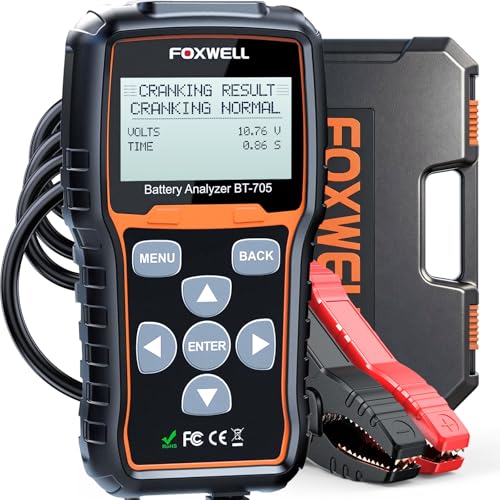
- 12V/24V testing across 100-2000 CCA
- Guided results with GOOD, RECHARGE, or REPLACE labels
- 5.9 ft cable supports solo testing from the driver’s seat
Best For: home garages and multi-vehicle users who want guided tests, long cable reach, and 12V/24V compatibility
Budget-Friendly 12V Diagnostic Pick
TOPDON BT100 12V battery tester

- Checks 12V battery health, cranking, and charging.
- Supports flooded, AGM, EFB, and GEL batteries.
- Compact, spark-proof, and easy to read.
Best For: home mechanics who want a simple 12V tester for routine checks
All-Weather 12V/24V Upgrade
TOPDON BT200 12V/24V battery tester

- Handles 12V and 24V batteries with high claimed accuracy.
- Adds cranking and charging-system testing.
- Color LCD is easy to read in sunlight.
Best For: home mechanics needing broader compatibility and a clearer display
Wide-Range Multi-Voltage Diagnostic Tool
VDIAGTOOL BT500 6V/12V/24V tester

- Tests 6V, 12V, and 24V batteries.
- Supports multiple lead-acid battery types.
- Includes safety protections and system analysis.
Best For: mixed-garage users who want one tester for several voltage levels
Early-Breakdown Check – ANCEL BA101 12V Battery Analyzer
If you want car battery testers for home mechanics that give more than a simple voltage number, the ANCEL BA101 is built for quick diagnostic checks. It reads SOH, SOC, voltage, current, CCA, and can run cranking and charging system tests, making it useful when you want a clearer picture of battery health before a no-start surprise.
Best For: Home mechanics who want a feature-rich 12V tester for battery, cranking, and charging checks.
Pros:
- Shows SOH, SOC, voltage, current, and CCA for a fuller battery snapshot.
- Includes cranking and charging system tests to help trace starting or alternator issues.
- Black-and-white screen with adjustable contrast and backlight is easy to read.
- Built-in protection covers reverse polarity, short circuits, overcurrent, and overvoltage.
Cons:
- Not for lithium batteries or non-12V systems.
- Requires the correct battery type, rating, and temperature entry for best accuracy.
- Not intended for motorcycles below 30Ah.
This is a strong all-around choice if you want one tester that can help narrow down whether the problem is the battery, cranking, or charging system. Its broad compatibility also makes it handy for more than just cars, as long as you stay within the stated 12V battery limits.
Heavy-Duty Load Test – Schumacher BT-100 6V/12V Tester
Among car battery testers for home mechanics, the Schumacher BT-100 stands out if you prefer a traditional load tester with straightforward results. It handles battery analysis, charging system checks, and starter motor testing, so you can confirm whether the issue is the battery, alternator, or starter draw.
Best For: DIY users who want a rugged load tester for battery, charging, and starter diagnostics.
Pros:
- Performs three tests with one device: battery, charging system, and starter motor.
- Supports 6V and 12V batteries up to 1000 cranking amps.
- Heavy-duty steel case and baked enamel shell improve durability.
- Works with top- and side-terminal batteries using heavy-duty clamps.
Cons:
- Bulkier and heavier than compact digital testers.
- Initial use may produce a little smoke or burning smell during burn-in.
- Uses a manual rocker switch and analog meter instead of a digital readout.
If you want a shop-style tester for garage use, this model offers a very direct way to load-test a battery and check charging or starter problems. It is less portable than small digital units, but it brings the durability and testing style many home mechanics still prefer.
Quick Plug-In Readout – MOTOPOWER MP0514A Digital Tester
If you want car battery testers for home mechanics that are quick to hook up and easy to interpret, the MOTOPOWER MP0514A keeps things simple. Its plug-and-test design provides battery status before starting and alternator status after starting, making it a practical pick for fast checks in the driveway or garage.
Best For: Home mechanics who want a compact, easy-read 12V battery and alternator checker.
Pros:
- Plug-and-test design requires very little setup.
- 4-digit LCD displays voltage to 0.01 volts.
- Eight LED indicators make battery or alternator status easy to understand.
- Reverse connection and over-voltage protection add safety.
Cons:
- Limited to vehicles with 12V batteries.
- It is mainly a voltage and charging-system checker, not a load tester.
- Shorter cable length may limit placement in some test setups.
This tester is a good fit if you want a lightweight, no-fuss tool for quick voltage and alternator checks. It is especially appealing for casual home use where fast diagnosis matters more than advanced load testing.
Garage Load-Test Value – Yaegoo 6V/12V Battery Load Tester
For home mechanics comparing car battery testers for home mechanics, the Yaegoo load tester is aimed at simple, practical garage use. It checks 6V and 12V batteries up to 1000 CCA and can help with battery condition, starter draw, and charging system diagnosis without needing a trip to the shop.
Best For: DIY users who want a straightforward load tester for home garage battery diagnosis.
Pros:
- Tests 6V and 12V batteries up to 1000 CCA.
- Handles battery condition, starter motor draw, and charging system diagnosis.
- Insulated carry handle and rubber-grip clips improve handling.
- Perforated metal surface helps ventilation during use.
Cons:
- Voltage accuracy is listed at ±0.2V, which is less precise than digital testers.
- No included accessories are listed in the supplied details.
- More of a load tester than a compact plug-in diagnostic tool.
This is a sensible pick if you want a basic, hands-on tester that covers the core checks most home mechanics need. It is especially appealing for garage use where portability and simple load testing matter more than extra digital features.
Professional Shop-Style Pick – TOPDON BT600 12V 24V Car Battery Tester
If you want car battery testers for home mechanics that feel closer to shop gear, the TOPDON BT600 is built for practical diagnostics. It handles 12V and 24V lead-acid batteries and can test battery health, rated CCA, cranking, and charging systems, which makes it useful when you need more than a simple voltage check.
Best For: Home mechanics who want a more professional tester with clear results, printouts, and support for a wider range of vehicles.
Pros:
- Tests 12V and 24V lead-acid batteries, including flooded, AGM Flat, AGM Spiral, GEL, and EFB.
- 3.5-inch color screen and built-in printer make results easier to read and save.
- Supports battery, cranking, and charging tests with up to 99.5% claimed accuracy.
- Works on sedans, motorcycles, pickup trucks, heavy-duty trucks, and boats.
Cons:
- More advanced than a basic home-use tester, so casual users may not need all the functions.
- Mini-USB software support is Windows-only.
Overall, the BT600 stands out if you want a home-garage tester that can also handle more serious diagnostic work. The built-in printer and broader battery compatibility make it especially practical for keeping records or checking multiple vehicles.
Simple Value Tester – MOTOPOWER MP0515A 12V Car Battery Tester
The MOTOPOWER MP0515A fits the needs of car battery testers for home mechanics who want a straightforward tool for everyday checks. It is designed for 12V batteries in the 100-2000 CCA range and focuses on battery, cranking, and charging-system testing, making it a practical pick for routine garage use.
Best For: DIY owners who want a basic 12V tester for quick battery and alternator checks at home.
Pros:
- Supports 12V battery testing in the 100-2000 CCA range.
- Built for battery, cranking, and charging system checks.
- Simple purpose makes it a practical home-garage diagnostic tool.
Cons:
- Supplied notes do not include extra features like a screen size, printer, or detailed interface details.
- Limited to 12V use based on the provided information.
For home mechanics who mainly need a dependable battery-and-alternator check, the MP0515A keeps the job simple. It looks best as a no-frills tester for routine maintenance rather than a feature-heavy diagnostic unit.
Guided Heavy-Duty Option – FOXWELL BT705 24V 12V Car Battery Tester
The FOXWELL BT705 is a strong fit for car battery testers for home mechanics who want guided testing and broader vehicle coverage. It checks battery health, cranking performance, and charging output on 12V and 24V systems, and the step-by-step prompts on the 2.8-inch screen help make the process easier to follow.
Best For: Home garages and multi-vehicle users who want guided tests, long cable reach, and 12V/24V compatibility.
Pros:
- Tests 12V and 24V lead-acid batteries across 100-2000 CCA.
- Step-by-step prompts and simple GOOD, RECHARGE, or REPLACE results help with interpretation.
- 5.9 ft test cable lets one person test while sitting in the driver’s seat.
- Includes a hard carrying case and protective housing for repeated use.
Cons:
- 2.8-inch screen is smaller than the larger-display options in this roundup.
- Built around lead-acid battery testing, so it is not a universal battery tool.
The BT705 is especially appealing if you work alone and want the tester close at hand during startup checks. Its guided workflow and wide compatibility make it a practical pick for home garages, RVs, boats, and other multi-vehicle setups.
Budget-Friendly 12V Diagnostic Pick – TOPDON BT100 12V battery tester
If you want car battery testers for home mechanics that keep things simple, the TOPDON BT100 is a practical 12V option for checking battery health, cranking performance, and charging-system basics. It reads SOH, SOC, voltage, current, and other key data for a straightforward diagnosis on common lead-acid batteries.
Best For: DIY drivers who need a compact, easy-to-use tester for routine 12V battery checks on cars, motorcycles, and other small vehicles.
Pros:
- Tests 12V flooded, AGM, EFB, and GEL batteries from 100-2000 CCA.
- Runs battery health, cranking, and charging-system tests.
- Compact design with LED indicators and menu-based operation.
- Passive testing approach and spark-proof, reverse-polarity clamps.
Cons:
- Limited to 12V batteries only.
- Less feature-rich than newer 12V/24V models.
For basic home-garage battery checks, the BT100 covers the essentials without adding unnecessary complexity. Its compact size and broad 12V compatibility make it a solid grab-and-go tool for regular maintenance.
All-Weather 12V/24V Upgrade – TOPDON BT200 12V/24V battery tester
Among car battery testers for home mechanics, the TOPDON BT200 stands out if you need broader vehicle coverage and a more polished display. It handles 12V and 24V batteries with conductance-based testing, then adds cranking and charging-system checks for a fuller picture of battery and alternator health.
Best For: DIYers and garage users who want a more advanced tester for both 12V and 24V batteries across cars, trucks, RVs, and marine equipment.
Pros:
- Tests 12V and 24V batteries from 100-2000 CCA.
- Supports flooded, AGM, GEL, and deep-cycle battery types.
- Includes cranking and charging-system diagnostics.
- 2.4-inch color LCD stays readable in sunlight.
Cons:
- Bulkier than the smaller BT100.
- May be more tester than casual users need for simple checks.
The BT200 makes sense if you work on more than one vehicle type or want a cleaner readout than basic testers provide. Its 12V/24V support and temperature tolerance add flexibility for year-round home-garage use.
Wide-Range Multi-Voltage Diagnostic Tool – VDIAGTOOL BT500 6V/12V/24V tester
If you want car battery testers for home mechanics that cover more vehicle types, the VDIAGTOOL BT500 is the most versatile option here. It tests 6V, 12V, and 24V batteries, supports several common lead-acid battery styles, and reports useful data like voltage, resistance, SOH, and SOC.
Best For: Home mechanics who need a multi-voltage tester for cars, trucks, motorcycles, and other mixed-garage vehicles.
Pros:
- Tests 6V, 12V, and 24V batteries.
- Supports flooded, AGM flat plate, AGM spiral, GEL, and EFB types.
- Includes cranking and charging-system analysis.
- Built-in protections and a shock-resistant ABS body.
Cons:
- Not available for lithium, deep-cycle, or golf cart batteries.
- 6V support is menu-based rather than the main focus.
The BT500 is a strong fit if your garage sees a mix of battery voltages and vehicle sizes. It combines broad compatibility with safety features and a simple interface, making it practical for regular DIY diagnostics.
How We Picked the Best Car Battery Testers for Home Mechanics
We prioritized tools that are straightforward to use, accurate enough for real-world diagnosis, and suited to typical home-garage needs. That means solid support for 12V systems, clear displays, sensible clamp designs, and the ability to test battery health, cranking performance, and charging output when applicable.
For Car Battery Testers for Home Mechanics, ease of interpretation matters as much as raw feature count. A good tester should help you confirm whether a battery is weak, whether the alternator is charging properly, or whether the issue is elsewhere.
Quick Comparison: Which Type of Tester Fits Your Garage?
Simple digital testers are best for quick voltage checks and basic charging-system screening. Load testers are better when you want a more dependable answer about battery condition under stress. Advanced multi-function units with wider CCA ranges or 6V/24V support are a smarter fit if you work on multiple vehicles, trucks, or older equipment.
If you mostly maintain one or two daily drivers, a compact 12V tester is usually enough. If you want broader coverage and more detailed results, step up to a model that includes cranking and alternator testing, and possibly a built-in printer or larger screen for easier recordkeeping.
Key Buying Factors for Car Battery Testers for Home Mechanics
Voltage and Vehicle Coverage
Check whether the tester supports the systems you actually own. Most home users need 12V, but 6V or 24V support can be useful for classic vehicles, motorcycles, RVs, diesel trucks, or mixed garages.
CCA Range and Battery Type Support
Cold cranking amps help determine how well a tester can evaluate different battery sizes. A wider CCA range gives you more flexibility across compact cars, SUVs, and higher-capacity batteries. Make sure the tester also matches your battery type when needed.
Test Functions
Look for the checks you’ll use most: battery health, cranking test, alternator/charging test, and load testing. For home repair, these functions provide the most useful snapshot of whether the battery itself or the charging system is causing the problem.
Readability and Ease of Use
Large LCDs, clear icons, and straightforward menus matter, especially if you are testing in a dim garage or outdoors. Clamp quality and cable length also affect convenience and confidence during use.
Who Should Buy Which Car Battery Testers for Home Mechanics?
If you want a simple, affordable tool for routine battery checks, choose a basic 12V digital tester. If your main goal is dependable diagnosis before replacing a battery, a load tester is the better option. If you service multiple vehicles or need broader compatibility, choose a more advanced tester with 12V/24V or 6V/12V/24V support and expanded diagnostic functions.
For most Car Battery Testers for Home Mechanics, the best choice is the one that matches your vehicles, gives fast and understandable results, and makes it easy to confirm whether the battery, starter, or alternator needs attention.